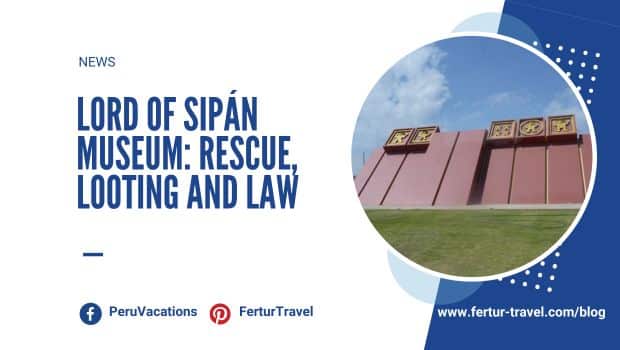
In 1987, archaeologist Walter Alva and his team helped save one of ancient Peru’s greatest…

The Ultimate Galapagos Islands and Machu Picchu Tour: Unforgettable Adventures
Combining Peru and a Galápagos Islands cruise in one trip is ambitious on paper and surprisingly manageable in practice. The two destinations sit about 2,400 km (1,500 miles) apart. A short connecting flight through Quito or Guayaquil links them. Most travelers spend 14 to 18 days on the ground. They come home having visited two of the most biologically and historically distinctive places on Earth.
Peru + Galápagos Trip at a Glance
- Destinations: Peru (Lima, Cusco, Machu Picchu, and/or Sacred Valley) + Galápagos Islands, Ecuador
- Recommended total length: 14–18 days (minimum 10 days if time is tight)
- Flight routing: Lima → Quito or Guayaquil → Baltra or San Cristóbal (Galápagos); Lima–Quito flight time: approximately 3 hours
- Exit point: Fly home from Quito or Guayaquil to avoid backtracking to Lima, or return to Lima if your international flight departs there
- Best season: June–August (dry season in Peru; cool, wildlife-rich season in the Galápagos); December–May also workable with trade-offs
- Galápagos entry fee: USD $200 per person (as of 2024); paid on arrival
- Galápagos cruise length: 5–8 nights recommended; 4-night cruises are available but limit island coverage
- Suggested Peru sequence: Lima first (acclimatize, eat well), then Sacred Valley and Cusco, then Machu Picchu — before flying to the Galápagos
- Booking lead time: Galápagos cruise cabins on quality vessels sell out 6–12 months ahead for peak season
1. Why These Two Destinations Work Together
Peru and the Galápagos appeal to overlapping but different instincts. Peru draws travelers toward history, culture, and landscape. The Galápagos, in contrast, draws them toward wildlife, evolution, and the pleasure of somewhere genuinely remote. Travelers who want both in one trip tend to find a two-week window and make it count. The combination rewards that decision.
The practical connection is straightforward. For instance, Lima’s Jorge Chávez International Airport has multiple daily flights to Quito and Guayaquil. Both cities serve as Galápagos gateways. The Lima–Quito leg takes about three hours. From Quito, domestic flights reach Baltra Island (near Santa Cruz) or San Cristóbal in roughly two more hours. In total, the Lima-to-islands transit runs five to seven hours on a smooth day — comparable to a transatlantic leg, but without the jet lag.
There is also no meaningful altitude overlap between the two destinations. The Galápagos sit at sea level. Peru’s highland sites, however, require real acclimatization. Cusco sits at 3,400 m (11,150 ft), the Sacred Valley between 2,800–3,000 m (9,200–9,800 ft), and Machu Picchu at 2,450 m (8,040 ft). Doing Peru first means you ascend early and acclimatize, then descend to sea level for the cruise — far more comfortable than the reverse.
2. How Much Time You Actually Need
Fourteen days is the workable minimum. It gives both destinations the time they need without feeling rushed. Eighteen days is comfortable. Here is how the days distribute in practice:
Peru: 7–9 days. Plan one to two nights in Lima for arrival and recovery. Then two nights in the Sacred Valley for acclimatization and site visits. Add one to two nights in Aguas Calientes to see Machu Picchu at dawn — which is how it should be seen. If you want the Inca Trail, however, budget four to five additional days and secure permits months in advance. That adds up to 18–21 days total.
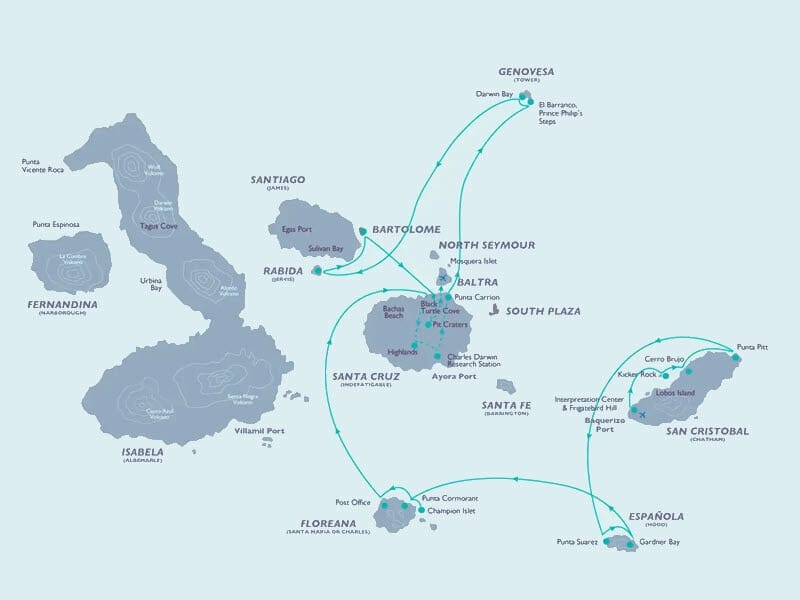
Galápagos: 5–8 nights aboard a cruise vessel. A four-night cruise is the shortest option. It tends to cover only the central islands, mainly Santa Cruz and nearby sites. Five to eight nights, by contrast, opens up the western islands (Fernandina, Isabela) and the southern route. For example, Española Island offers albatross colonies and the highest concentration of marine iguanas of any island in the archipelago. Most experienced Galápagos travelers recommend at least six nights if the budget allows.
Transit: 1–2 days. The Lima–Quito–Galápagos connection rarely causes problems. Nevertheless, building a night in Quito or Guayaquil into the itinerary is wise when a missed connection would be costly. As a bonus, Quito’s historic center is a UNESCO World Heritage Site. It is also one of the best-preserved colonial cities in Latin America — a worthwhile half-day visit in itself.
3. The Flight Routing in Detail
There are two main gateway airports for the Galápagos. Seymour Airport on Baltra Island (IATA: GPS) primarily serves Santa Cruz. San Cristóbal Airport (IATA: SCY) serves the eastern islands. Most cruise itineraries embark at one airport and disembark at the other — a practical arrangement that eliminates backtracking between islands.
Domestic Galápagos flights depart from Quito (UIO) and Guayaquil (GYE). LATAM and Avianca operate the Lima–Quito route. Quito–Baltra is additionally served by LATAM and Avianca, with connections through Guayaquil. In general, flight prices on the Lima–Quito–Galápagos routing fluctuate by season and booking lead time.
One practical note: all passengers entering the Galápagos go through a biosecurity inspection at the mainland gateway airport before boarding. Inspectors check bags and clothing for soil, seeds, and fresh food — organic material that could introduce invasive species. The inspection, therefore, adds 30–45 minutes and is non-negotiable. Account for it when booking tight connections.
Your exit point matters. After the cruise, you return to the Ecuadorean mainland before flying home. Travelers whose international flight departs from Lima must, therefore, add a return leg from Quito or Guayaquil. Those with more routing flexibility, however, can often fly home directly from Quito or Guayaquil. Both cities connect to North America, Europe, and beyond. It is worth checking both options when pricing the trip.
4. Entry Requirements and Health Formalities
Two regulatory changes introduced in 2025 affect travelers combining Peru and Ecuador. Both are worth confirming before you book flights.
Yellow fever vaccination — Ecuador requirement effective May 12, 2025. Ecuador now requires proof of yellow fever vaccination from travelers who hold nationality or residency in Peru, Colombia, Bolivia, or Brazil. The requirement also applies to anyone who has spent more than 10 days in any of those countries before entering Ecuador. On a typical combined Peru–Galápagos itinerary, 7 to 9 days in Peru is standard. As a result, most travelers will cross the 10-day threshold. The certificate must show the vaccine was given at least 10 days before arriving in Ecuador. This cannot be handled at the last minute. Confirm your vaccination status well before departure.
Galápagos Transit Control Card (TCT) — mandatory online registration. Since May 29, 2025, all visitors to the Galápagos must register for a Transit Control Card through the Governing Council of Galápagos official platform before arrival. The TCT is separate from the national park entry fee. Failure to register before boarding your Galápagos-bound flight may result in denied boarding. If you book a combined Peru–Galápagos package through Fertur, we handle this registration for you unless you prefer to complete it independently.
Full details on Peru’s entry requirements — including visa information, health documentation, and immigration — are covered in our complete guide to Peru entry requirements.
5. What to Do in Peru Before You Go
The sequence within Peru matters more than how many sites you include. The main risk is arriving in Cusco too quickly after Lima and spending the first day in bed with altitude sickness. A night in Lima on arrival, followed by a gradual ascent to the Sacred Valley rather than directly to Cusco, reduces that risk significantly.
Lima (1–2 nights)
The capital sits at sea level. It is, therefore, the right place to arrive, recover from travel, and eat. Lima’s food scene has earned it a reputation as one of South America’s best restaurant cities. Central, Maido, and Astrid y Gastón are consistently ranked among Latin America’s top tables. Beyond food, the city rewards a morning at Larco Museum — home to the largest collection of pre-Columbian ceramics in the world. Alternatively, spend an afternoon in Barranco, Lima’s early-20th-century arts and literary district along the Pacific cliffs.
Sacred Valley (1–2 nights)
Flying from Lima to Cusco and heading immediately to the Sacred Valley gives the body a gentler introduction to altitude. The valley sits at 2,800–3,000 m (9,200–9,800 ft) — notably lower than Cusco’s 3,400 m (11,150 ft). It also contains some of the most significant Inca agricultural and ceremonial sites: Pisac, Ollantaytambo, and Moray. The valley’s market-town rhythm, furthermore, is distinct from Cusco’s more tourist-dense center.
Machu Picchu (1–2 nights)
The train from Ollantaytambo to Aguas Calientes takes roughly 1.5 hours. It descends through cloud forest into the Urubamba gorge. Consequently, spending a night in Aguas Calientes means you can board the first bus up to the ruins at 5:30 a.m. — well before the midday crowds arrive. The difference in experience between the citadel at dawn and the citadel at noon is not marginal.
Cusco (1–2 nights)
Many itineraries save Cusco for after Machu Picchu. You return by train and spend a day or two in the city before flying out. Cusco’s Plaza de Armas, the Qorikancha (the Inca Temple of the Sun, partially preserved beneath a Spanish colonial church), and the San Blas artisan neighborhood all repay the time. In addition, the city is where most travelers repack and connect onward to Lima — and from there to the Galápagos.
6. Choosing a Galápagos Islands Cruise
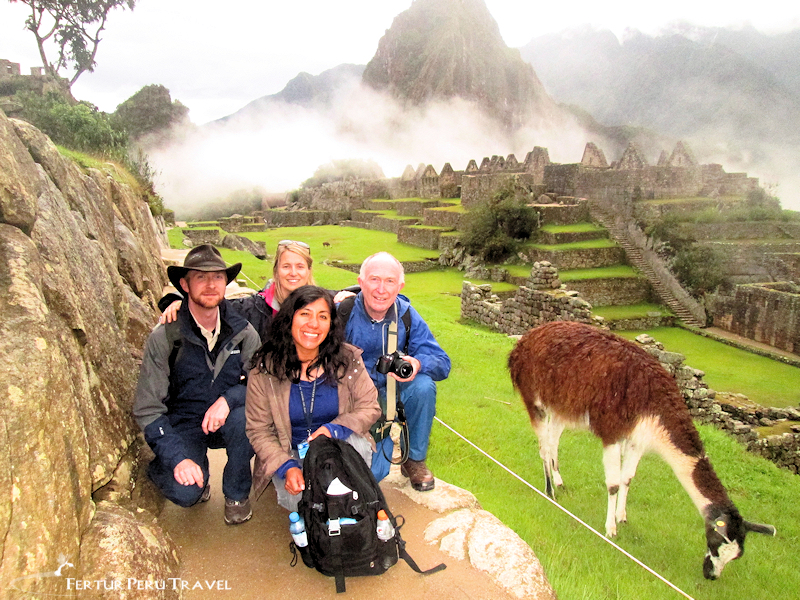
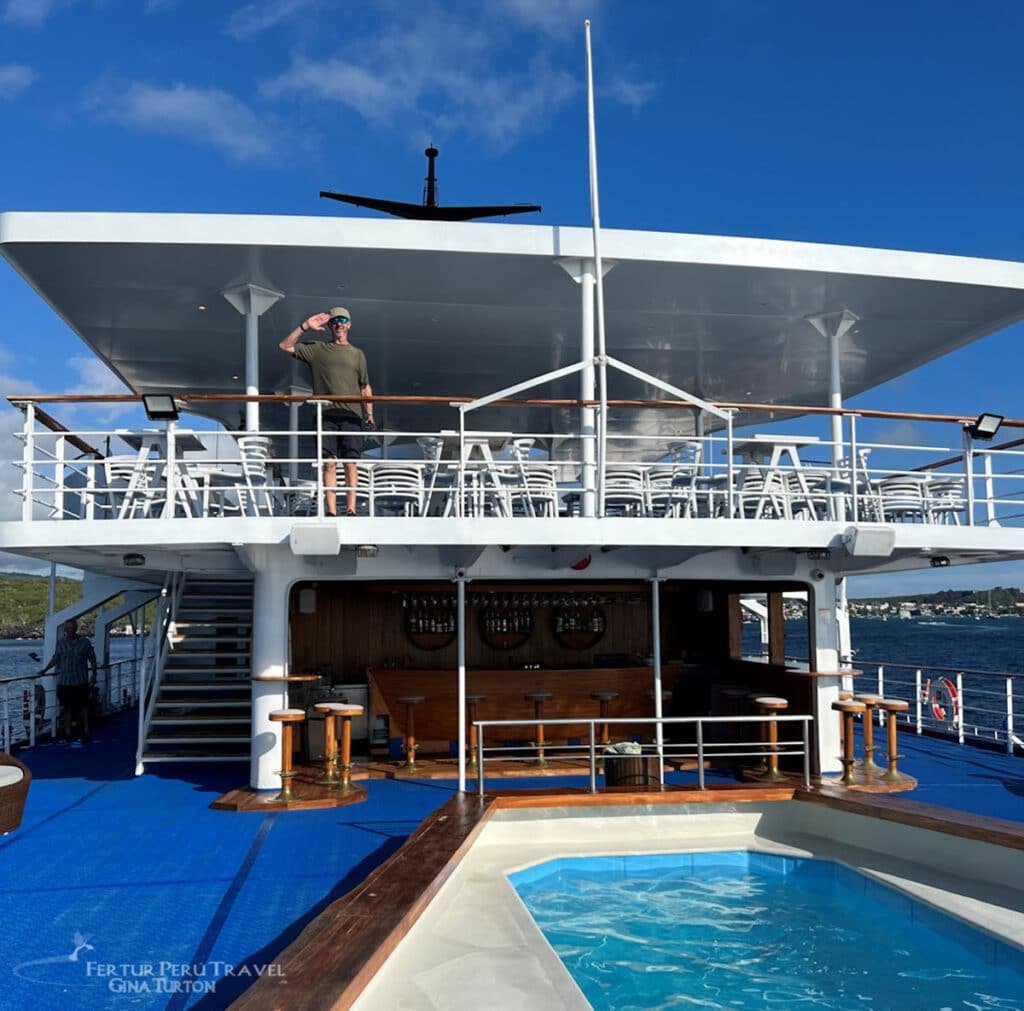
A Galápagos cruise is not a standard cruise. Vessels are small — most carry 16 to 100 passengers. The experience is built around twice-daily shore excursions to national park visitor sites, each led by a licensed naturalist guide. The ship moves overnight between islands, so you wake up somewhere different each morning. Meals, excursions, and park entry are typically included in the price.
Vessel Categories
The Ecuadorean government classifies Galápagos vessels into four categories: Economy, Tourist, Tourist Superior, and First/Luxury. The category affects cabin size, food quality, and guide experience level. However, it has less bearing on which islands you visit — itineraries are regulated by the national park and rotated among operators. For most travelers combining this with Peru, Tourist Superior or First Class is the practical range: comfortable, without the price premium of luxury vessels.
Itinerary Routes
The national park divides the archipelago into itinerary zones. Shorter cruises cover the central islands — Santa Cruz, South Plaza, Santa Fé. The western route adds Fernandina and Isabela, which have the highest concentration of flightless cormorants and the only penguins found north of the equator. The southern route, in addition, includes Española — home to the world’s only albatross colony outside New Zealand. Gardner Bay, also on the southern route, is one of the finest sea lion beaches in the archipelago. An 8-night cruise can combine all three zones.
Booking Lead Time
Quality Tourist Superior and First Class vessels sell out 6 to 12 months ahead for June–August and the December–January holiday window. Last-minute discounts do exist, but they are unpredictable and usually apply to less popular departure dates. For a combined Peru–Galápagos trip where Peru dates are also fixed, therefore, book the cruise first and build the Peru itinerary around it.
7. Best Time to Go
The two destinations follow different seasonal rhythms. In general, however, they align well — with one trade-off worth understanding.
Peru’s dry season runs May through October. June through August are the clearest months for highland trekking, Sacred Valley visits, and Machu Picchu. This is also high season. As a result, Inca Trail permits sell out furthest in advance, and Cusco is at its most crowded — particularly around Inti Raymi on June 24.
The Galápagos has two seasons, neither of which is “bad.” The warm season (December–May) brings warmer water and calmer seas. It is, therefore, good for snorkeling and for watching marine turtle nesting and hatching. The cool, dry season (June–November), by contrast, brings the Humboldt Current and a nutrient surge. That surge makes marine wildlife most active: albatross on Española, aggressive sea lion feeding, large schools of fish. Most naturalist guides consider June–November the richer wildlife season. However, the cool water (low 20s°C / low 70s°F) makes snorkeling more comfortable in a wetsuit than in a swimsuit.
The practical conclusion: June through August works best for both destinations simultaneously. Peru’s dry season coincides with the Galápagos cool season. December through January, however, suits the Galápagos warm season while falling in Peru’s rainy season. Highland conditions are wetter, and the Inca Trail closes for maintenance throughout February.
8. What It Costs
Cost varies with cruise category, hotel tier, and whether you hire a private guide in Peru. The figures below are indicative ranges for 2024–2025, per person, double occupancy.
Galápagos Cruise
A 6-night Tourist Superior cruise typically costs USD $3,500–$5,500 per person. That price is usually all-inclusive: meals, excursions, and naturalist guide. First Class and Luxury vessels run USD $6,000–$12,000+. Economy and Tourist class options start around USD $2,000–$3,000. In addition to the cruise, all visitors pay the national park entry fee of USD $200 per person (increased from $100 in 2024), paid on arrival at Baltra or San Cristóbal.
Peru Land Costs
A mid-range 7–9 day Peru itinerary costs approximately USD $1,500–$3,000 per person. This covers hotels in Lima, the Sacred Valley, Aguas Calientes, and Cusco — plus the train to Machu Picchu, site entry, and a private guide. The Machu Picchu entry ticket costs approximately USD $55–$75 depending on the circuit selected. Huayna Picchu and Machu Picchu Mountain, however, require separate, limited tickets — book those well in advance.
Flights
Budget USD $400–$700 per person for the Lima–Quito or Lima–Guayaquil leg plus the domestic Galápagos segment, when booked several months ahead. Travelers flying home from Lima rather than Ecuador must add a return leg from Quito or Guayaquil. Internal Peru flights (Lima–Cusco) add another USD $100–$250.
Total Budget
A realistic all-in budget for a 14-day combined trip at mid-range sits around USD $6,000–$9,000 per person. Luxury versions run considerably higher. Budget-conscious travelers who choose economy cruise categories and guesthouses in Peru, however, can bring the total closer to USD $4,000–$5,500.
9. Frequently Asked Questions
Is combining Peru and the Galápagos in one trip worth it, or is it too much?
The combination works well because the two destinations are genuinely different in character. Peru offers highland ruins, culture, and Andean landscapes. The Galápagos, in contrast, offers open-ocean wildlife and a sense of being somewhere utterly apart. Neither makes the other redundant. The logistics are also manageable: one connecting flight through Quito or Guayaquil, and the altitude transition runs in the easier direction — descending to sea level for the cruise. Travelers who find the itinerary too ambitious are usually those who try to compress it below 12 days or add a third destination. At 14–18 days, the pacing is comfortable.
Do I need a visa for Ecuador and the Galápagos?
Citizens of the United States, Canada, the UK, the EU, and Australia do not need a visa for Ecuador for stays of up to 90 days. The Galápagos are part of Ecuador, so there is no separate Galápagos visa. What does apply, however, is the national park entry fee — USD $200 per person as of 2024 — paid at the airport on arrival. All visitors must also carry proof of a return or onward ticket and, for cruise passengers, confirmation of their cruise booking. Note that Ecuador’s yellow fever vaccination requirement (see section 4) applies regardless of visa status.
Should I do Peru or the Galápagos first?
Peru first is the stronger choice for most travelers. The reason is altitude. Cusco sits at 3,400 m (11,150 ft) and requires acclimatization. If you visit the Galápagos first and then arrive in Cusco near the end of your trip, you face altitude adjustment while tired and short on time. Doing Peru first, by contrast, lets you acclimatize early. You see Machu Picchu while you’re fresh, then descend to sea level for the Galápagos — which is physically easier and a rewarding way to finish.
What is the difference between a Galápagos cruise and a Galápagos island-hopping trip?
A cruise keeps you aboard a small vessel that moves between islands overnight, with shore excursions each morning and afternoon. An island-hopping trip uses land-based hotels on the populated islands (Santa Cruz, San Cristóbal, Isabela) and reaches visitor sites by day-trip boat. Island-hopping costs less and suits travelers who dislike sleeping on boats. A cruise, however, covers more remote visitor sites and typically delivers a more intensive wildlife experience — you arrive at sites early, before day-trip boats show up. As a result, for a combined Peru–Galápagos trip where time is limited, a cruise generally delivers more Galápagos per day.
How far in advance should I book a combined Peru and Galápagos trip?
For travel in June through August or December through January, book 9 to 12 months ahead. The constraining factor is the Galápagos cruise: quality vessels at Tourist Superior and above sell cabin inventory early, and your Peru dates must align with the cruise embarkation. If you plan to trek the Inca Trail, moreover, permits add a second early-booking constraint. They sell out within hours of the release date for peak-season departures. For shoulder season travel (March–May or September–November), 4–6 months is generally sufficient, though cruise options narrow at shorter notice.
Can Fertur Peru Travel arrange the Galápagos portion as well as Peru?
Fertur specializes in Peru itineraries and works with trusted Galápagos cruise partners to offer combined packages. A single point of contact handles routing, hotels, train tickets, guides, and cruise booking. Combined packages simplify coordination considerably — in particular when Peru and Galápagos dates must fit around cruise embarkation schedules and Inca Trail permit windows. See our Peru and Galápagos combined itineraries or reach out through WhatsApp to discuss a custom trip.

Related Posts


Comments (0)