When the June 2026 issue of National Geographic reached readers, it introduced a Peruvian archaeological…
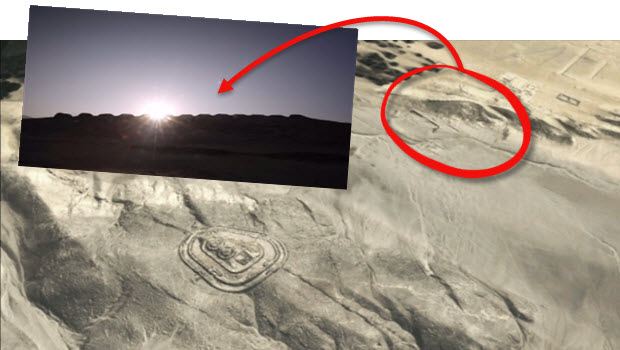
Chankillo rivals Stonehenge as true solar observatory
I’m sorry, but really… Stonehenge, schmoan-henge! Want to visit a real monumental prehistoric astronomical observatory? Check out Chankillo, on Peru’s northern coast, the oldest, grandest one in the known world.
Located near Casma, about three hours north of Caral via the Panamerican Highway, Chankillo is where a mysterious, ancient culture plotted and interpreted the movements of the sun and moon.
Archaeologist Ivan Ghezzi, director of the Chankillo Executing Unit within Peru’s Ministry of Culture, along with fellow archaeologist Clive Ruggles proved in 2007 what Thor Heyerdahl famously theorized in his book Kon-Tiki six decades earlier: that Chankillo’s 13 ridged towers were actually a solar observatory.
Ghezzi called it “a great Eureka moment.”
Chankillo was officially designated a UNESCO World Heritage Site in 2021, recognizing its exceptional universal value as humanity’s earliest-known astronomical observatory in the Americas.
“It doesn’t function as a sundial because it doesn’t measure the hours of the day. It’s a monumental solar calendar,” Ghezzi recently told Discovery Magazine.
From Solar to Astronomical Observatory
Recent excavations have revealed that Chankillo is even more remarkable than initially understood. Preliminary findings suggest structures beneath the currently visible observatory that may predate the main complex, with distinct construction techniques reflecting earlier forms of astronomical knowledge at the site.
More significantly, researchers have identified a corridor that may align with the moon’s major lunistice cycle. Based on this expanded evidence, Ghezzi now refers to the site more accurately as “the astronomical observatory of Chankillo” rather than simply a solar observatory.
“Other sites allow us to mark solstices, equinoxes, or perhaps an important lunar position,” says Ghezzi. “Chankillo, by contrast, functions every single day of the year. It is a complete solar calendar, and the only one of its kind in the world.”
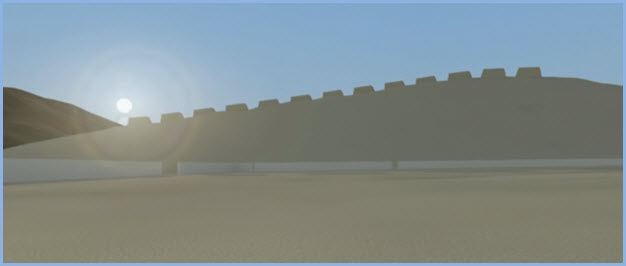
The 13 towers, ranging from roughly 10 feet to 23 feet in height, form a jagged horizon nearly 1,000 feet long. Observed from specific vantage points, they track the sun’s rising position across the entire year.
Ghezzi recalls the day he grasped how the system worked, compass in hand: “It was one of the most remarkable days of my life. Every morning before beginning the excavations, we went to watch the sunrise, and sure enough, the towers aligned with the sun’s arc. It was a true eureka moment.”
Ghezzi gave Peru’s largest daily newspaper El Comercio an extensive Q&A interview about the 2,300 year old astronomical observatory, which is translated and excerpted here:
What makes Chankillo an observatory?
“We can demonstrate with evidence that this sector of Chankillo, what we call the astronomical observatory, has as its main and perhaps only function, astronomical observation. There are many places in the world popularized as observatories like Stonehenge, but there is only one alignment that can be observed and that the scientific community accepts is the winter solstice. So how can one argue that the main function of all that construction is astronomical if only one day of the year serves to determine a date.”
Chankillo vs Stonehenge as oldest astronomical observatory
So, it can’t be said categorically that Stonehenge is an observatory? Ghezzi argues, no, it cannot.
It could be a ritual, funerary or perhaps religious space, he said, built with an alignment to mark and emphasize the winter solstice in Europe.
“There are many such examples of that, even in Peru. In a somewhat lax way they are using the term observatory, but what they mean is that they contain one or some astronomical alignments. If a site allows to identify the solstices, equinoxes or other dates throughout the year, as for example Cerro del Gentil (of the Paracas Culture) in the Chincha Valley, we know that it would be a point of observation of the sunset on several Paracas buildings. Two of these buildings coincide with the solstices and equinoxes.
Chankillo Functions Throughout the Year
“Chankillo is the only one that spans the entire year and the only solar horizon calendar we know that covers the entire annual sun route. This is the main and perhaps exclusive purpose, the most authentic observatory we can see in the world.
“The calendars of many societies are based on the astronomical movements mainly of the moon and the sun. Many societies adopted a solar calendar, others have invented them on their own. In a natural way the sun orients to a calendar of approximately 365 days. It is not an exact figure, that is why we have leap years. For what we know as ‘year’, we could also call “solar cycle” which is the time it takes the Earth to go around the sun.”
What Does the Solstice Look Like in Chankillo?
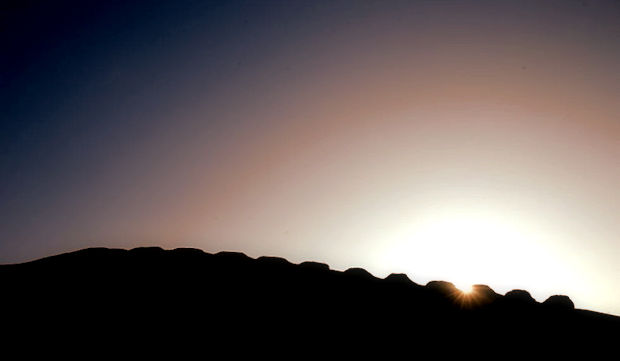
“Chankillo has a row of 13 towers. The solstices are always the extremes. In December it goes out through tower 13 and in June through tower 1. Although we don’t know exactly what it meant, we have seen that the solstices were clearly marked and probably as the most important moments. Then it returns along the same route. From a fixed point, which we call the observatory, the sun will always come out between the towers, it will never come out of that range. The space between towers 6 and 7 is where the equinox comes out; that means the change to another station.”
How Exactly Did the Chankillo Observatory Work?
“In the nomination to UNESCO to be named World Heritage of Humanity, we have called it ‘the astronomical observatory and its ceremonial center.’ This means that the observatory is a sector of a larger site that we call Chankillo and that it is a ceremonial center with other buildings. For example, there is a fortified building that we believe contains a kind of solar temple. There is a space that seems public, where thousands of people would have gathered to celebrate solar rites and other things on fixed dates, surely determined by the observatory. But at the center of this great ensemble is the astronomical observatory. It is made up of several buildings. The most outstanding are the thirteen towers.”
Warriors and Astronomers: A New Discovery
“The challenge of interpreting Chankillo has always been to reconcile the buildings that speak of warfare with those that speak of astronomy,” says Ghezzi.
Among recent discoveries, one stands out for offering an unexpected interpretive key to the observatory’s use: a ceramic vessel decorated with figures of warriors in combat. Found in fragments within a restricted-access area of the Chankillo complex, the vessel appears to provide the first material link between astronomical knowledge and military leadership.
“Its placement in a restricted-access area of the observatory points to the existence of elites who combined astronomical knowledge with military leadership, reinforcing the political and ritual role of the Fortified Temple,” Ghezzi explains.
The depictions include warriors seemingly defending a building, likely the Fortified Temple itself, suggesting an elite with both military power and high social status who were also the keepers of astronomical knowledge.
Do We Know What Culture Inhabited Chankillo?
“No, there could be more than twenty. The pre-Hispanic world had hundreds of cultures. What happens is that we cannot use cultures in the freest way. But we know of some societies that existed that have left some evidence, like the society that built Chankillo; however, we don’t know the aspects of his daily life. So, research does not allow us to talk about the Chankillo culture, because, unlike the Moche or the Nazca, we do not have an image of the Chankillo culture.”
The archaeological complex represents one of the most monumental expressions of Casma-Sechín culture tradition, among the oldest and most enigmatic in northern Peru, known for its stone sculptures depicting violent ritual scenes.
Conservation and Climate Challenges
Despite being roughly 2,300 years old, Chankillo remains an exceptional case of standing architecture. Atmospheric conditions along Peru’s coast have favored the preservation of its structures: walls partially collapsed but still visible, neither buried nor completely destroyed by time.
The main threat comes from extreme climate events. Along Peru’s coast, El Niño can bring intense rainfall that can severely damage archaeological remains. Although Chankillo lies farther south than the most vulnerable areas near the Ecuadorian border, the risk remains significant.
The research team is now in a critical phase focused on conservation, working to protect these irreplaceable structures for future generations.
Can I Visit Chankillo?
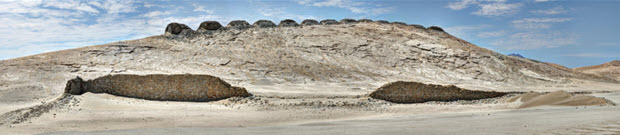
Chankillo is not yet officially open to the public as a fully developed tourist site, though it does receive daily visitors. A preliminary route allows visitors to explore part of the complex and observe this UNESCO World Heritage wonder.
Within the coming years, Peru’s Ministry of Culture expects to formally open at least the most important sector of the complex — the Astronomical Observatory. The project will include not only the protection of the structures but also visitor routes, parking areas, and public information spaces.
My friend, the intrepid South American explorer, Glen David Short calls Chankillo “One of the most desolate, haunting, yet ultimately fascinating places I have ever been to.
“No other tourists, just a hot desert wind whistling into your ears and grit into your eyes,” he writes. “Totally impressive.”
While Chankillo is off Peru’s beaten tourist path, it’s location makes it a logical northward stop following Caral, the ancient ceremonial center in the Supe Valley.
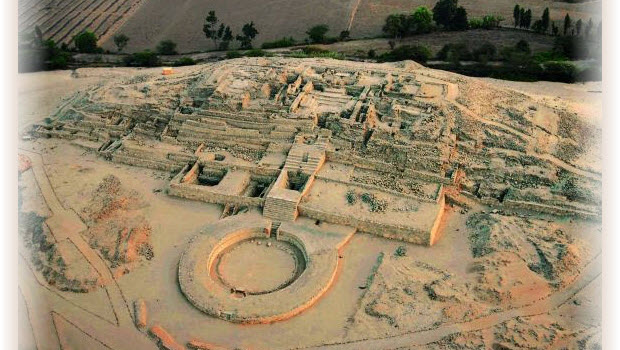
Pre-Inca Civilizations – Caral Ruins
From Chankillo, you can head east, up into the Andes to Huaraz and the gorgeous Cordillera Blanca, a majestic ice-peaked mountain range, containing about 70 percent of the world’s tropical glaciers. Or you can continue north along the coast for a more complete Peruvian archaeological program, visiting amazing Moche and Chimú sites.
Let us know if you would like us to design a custom archaeology program to visit Chankillo for your trip to Peru. Just reach out to us through Fertur Peru Travel’s Whatsapp or our Contact Us form.

Related Posts
Comments (0)