Huancayo Highlights | Top Attractions & Excursions in the Mantaro Valley
Huancayo is often described as being about eight hours from Lima by road, but the difference feels larger than distance alone. The city has modernized rapidly in recent decades, particularly since the late 2000s, with shopping centers, cinemas, and an expanding restaurant scene. New construction has reshaped much of the urban landscape.
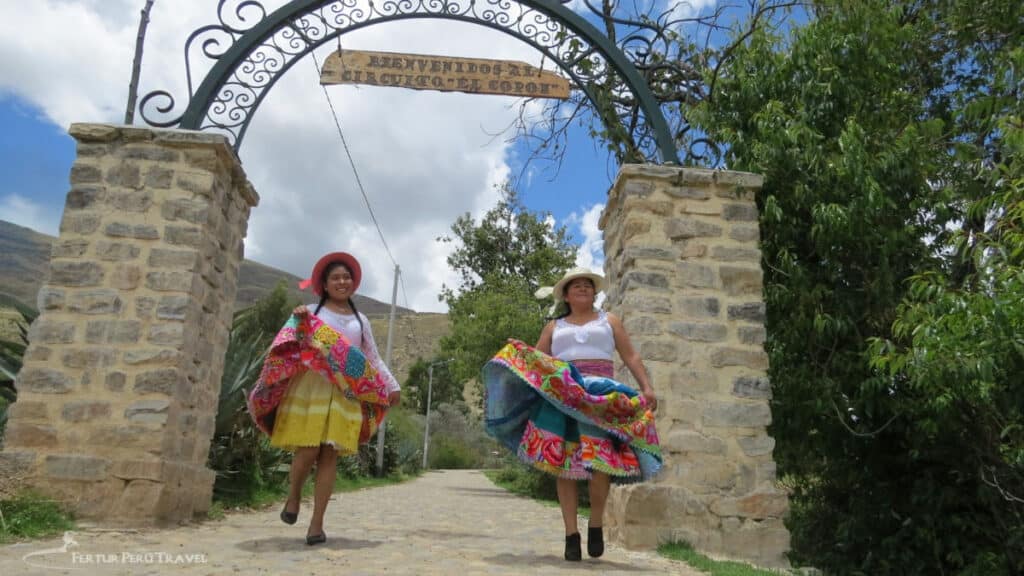
At the same time, those changes have not erased older cultural patterns. Wanka identity remains important in the region, and traditional celebrations, clothing, music, and craft practices continue to be part of everyday life and annual festivals. The huaylas dance, for example, remains one of the best-known expressions of the region’s folkloric heritage and is still performed as a living tradition rather than only as a staged attraction.
What makes Huancayo especially interesting is not that it is untouched by change, but that multiple layers of history remain visible at once.
Colonial-era churches and plazas, artisan workshops, civic monuments, markets, and agricultural landscapes all operate within the same regional system.
For many travelers, that combination is what makes the city and the Mantaro Valley worth the detour.
The city and its surrounding towns reward travelers who are willing to move at a slightly slower pace and pay attention to local context. Markets, workshops, viewpoints, and museums all add up to a more complete picture of how culture in the central highlands is lived and maintained.
Treasures of the Mantaro Valley
Capilla de la Merced
Is the chapel where Peru’s Constitutional Congress assembled in 1830. One of the few colonial-era structures remaining in Huancayo, it houses a great collection of Cusqueño style paintings.
Huancayo Cathedral and Plaza de la Constitucion
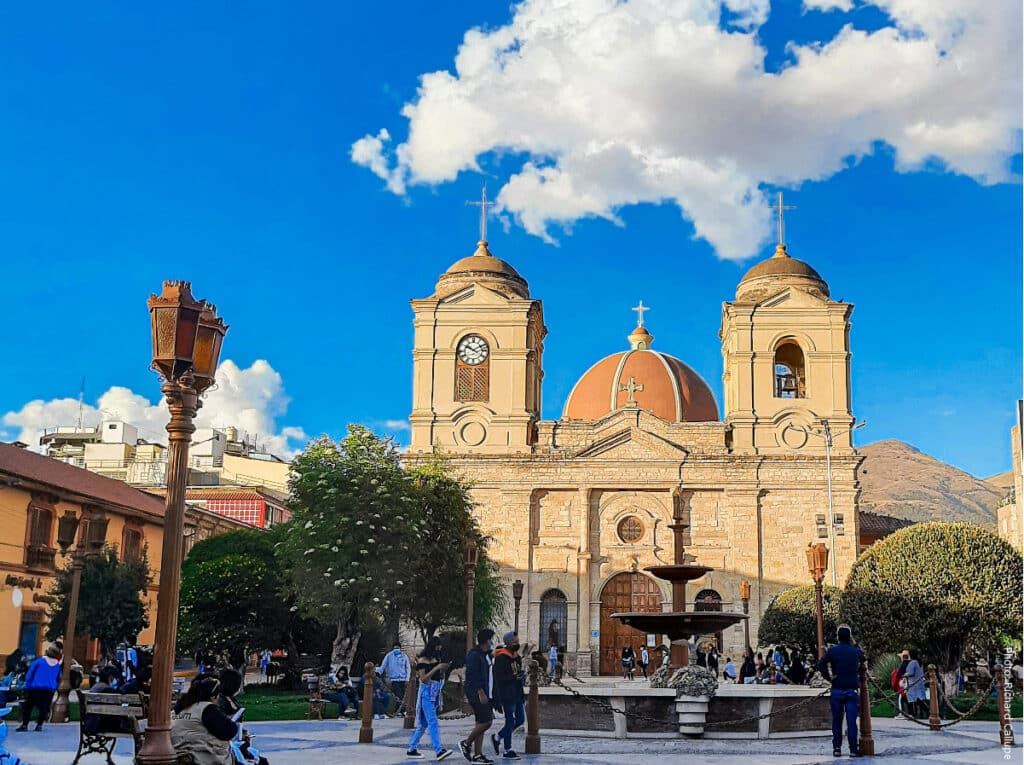
Plaza de la Constitución is the historical and civic center of Huancayo and remains one of the city’s most active public spaces.
The plaza’s name refers to events in 1813, when local residents swore allegiance to the liberal Constitution of Cádiz, tying the square to a specific moment in early nineteenth-century political history.
The Basílica Catedral de Huancayo anchors the plaza visually and institutionally.
Construction began on March 18, 1799 and concluded on March 18, 1831, a period that reflects both the scale of the project and the historical transitions of the era.
The cathedral later became the seat of the Archdiocese of Huancayo, and Pope Pius XII elevated it to cathedral status in 1955.
Parque de Identidad Wanka
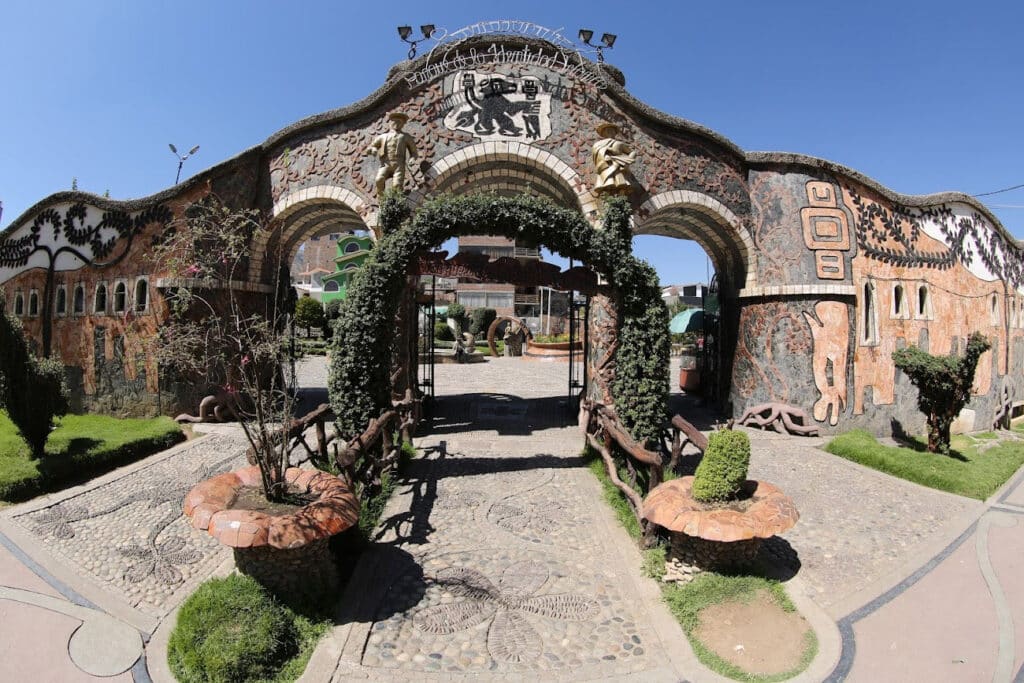
Parque de Identidad Wanka is one of Huancayo’s most distinctive public spaces and one of the clearest expressions of regional identity in urban design. Architect Pedro Morales Mancilla developed the project between 1992 and 1996, drawing inspiration from organic forms and mosaic-heavy public architecture while grounding the park in local materials and symbolism.
The park incorporates pirca stonework and materials from the Shullcas River, and artist Josué Sánchez Cerrón contributed statues honoring well-known regional musicians, including figures such as Flor Pucarina and Picaflor de los Andes. The layout uses bridges, water channels, and sculptural elements to evoke local geography and cultural memory.
One of the most notable features is a large mate burilado-inspired sculpture depicting scenes of Huanca life. The park also includes native plantings, including cantuta flowers and local tree species, reinforcing the idea that this is not just a recreational area but a cultural statement. For travelers, it provides a useful introduction to how Huancayo represents itself through public art.
Cerrito de la Libertad
Cerro de La Libertad combines panoramic views, public recreation, and historical memory. The hill is associated with key events in nineteenth-century Peruvian political history, including moments connected to Ramón Castilla and later civil conflict during the 1890s. This historical layer is part of why the site remains symbolically important.
Today, the area includes a recreational complex with multiple sectors. Visitors encounter playgrounds, older facilities such as a disused heated pool, and an acoustic shell built in local stone that has hosted events and performances. The hill is also home to a small zoo with dozens of animal species, making it a popular destination for local families.
Torre Torre Rock Formations
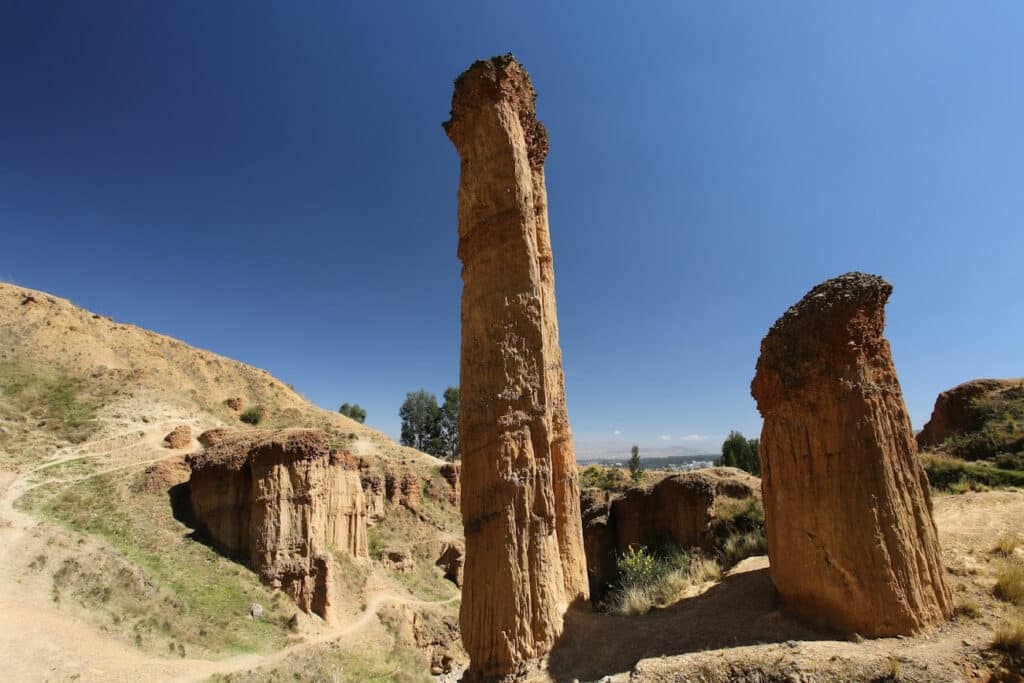
Torre Torre is one of Huancayo’s most distinctive natural sites and lies about 1.4 miles (2.3 kilometers) from Plaza Constitución. The formations are made of reddish sandstone and clay-rich deposits that have been shaped over time by wind and rain erosion, creating vertical columns and ridges that resemble towers. The name “Torre Torre” reflects that appearance directly.
The site is often compared visually to rock formations in other parts of the world because of its column-like shapes, but it remains very much a local destination and a good example of the region’s lesser-known geology. The formations can reach notable heights — roughly 33 to 98 feet (10 to 30 meters) — and the surrounding slope offers broad views over the valley and city.
Conditions are usually easiest in the drier months (often April to November), when trails are more stable. The terrain can be uneven and the sandstone fragile in places, so careful footing is important. It is also worth noting that while international tourism is limited here, local visitors may come in larger numbers on weekends and holidays.
Warivilca
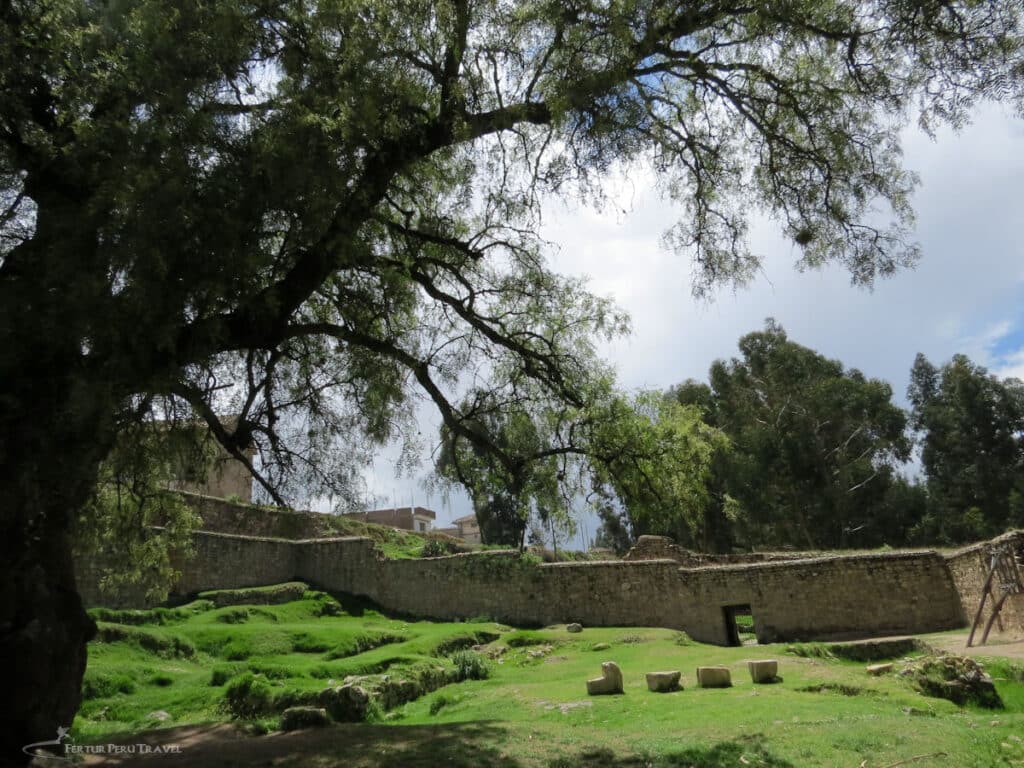
The Warivilca Archaeological Zone preserves the remains of a pre-Inca temple complex built between 800 and 1200 A.D. by the Huari-Huanca culture — a civilization that flourished in the central Andes long before the Inca arrived and absorbed the region into their empire.
Located about 4 miles (8 km) south of Huancayo in the district of Huancán, the site represents one of the most significant ceremonial centers of its era in the Mantaro Valley, and a tangible link to the deep indigenous roots of the region.
The site was brought to wider attention in 1935 by Peruvian archaeologist Federico Gálvez Durán, whose excavations revealed the scale and complexity of what had been hidden beneath centuries of overgrowth.
The structures uncovered — low stone walls enclosing ceremonial spaces, platforms, and passageways — reflect the architectural traditions of the Huari-Huanca people, who were known for their resistance to Inca expansion before eventually being incorporated into Tawantinsuyu, the Inca Empire.
The Mantaro Valley
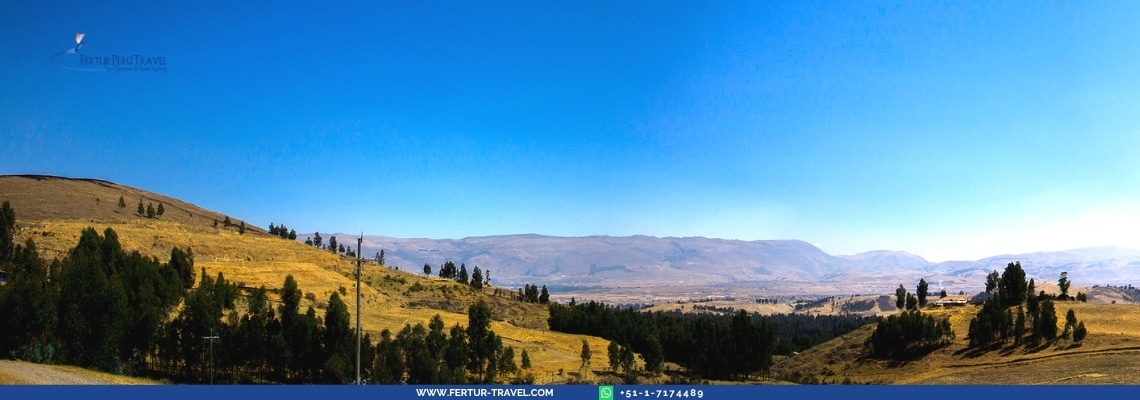
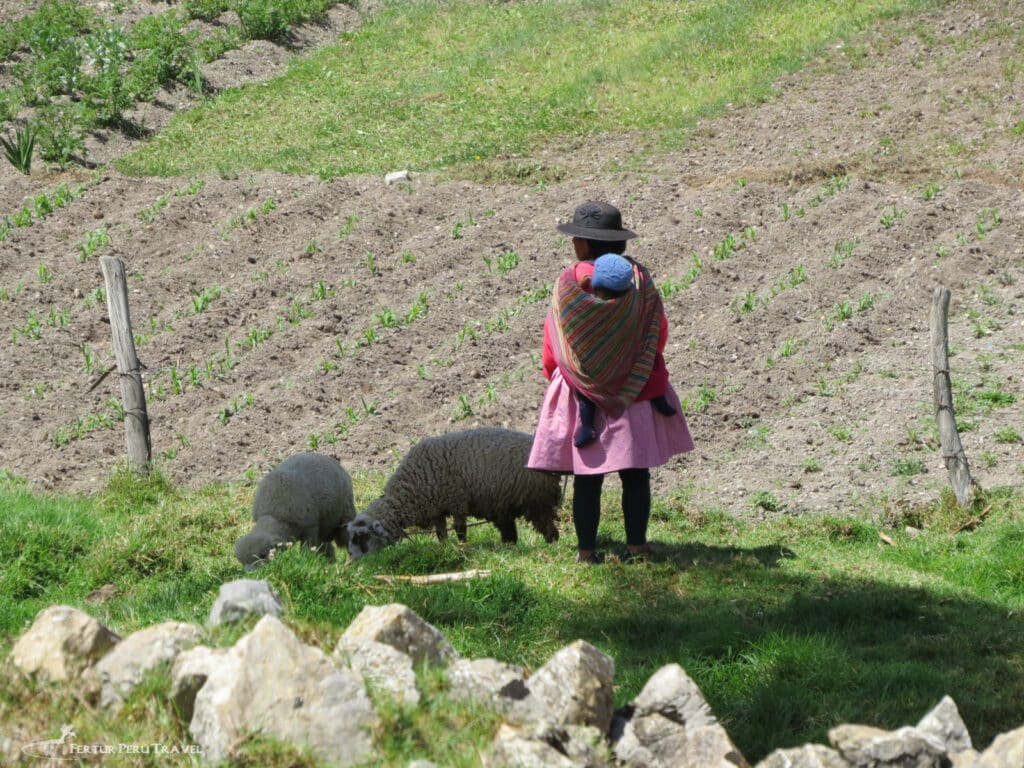
The valley itself — stretching roughly 37 miles (60 km) and fed by the Mantaro River — is the foundation of everything Huancayo offers. At an elevation where agriculture in many parts of the world becomes difficult, the Mantaro Valley defies expectations. Its exceptional fertility supports a remarkable variety of crops — potatoes in dozens of native varieties, maize, quinoa, kiwicha, broad beans, and fresh vegetables — that have sustained Andean communities for centuries and continue to supply markets across the central highlands today.
The visual character of the valley is as compelling as its agricultural productivity. A patchwork of cultivated fields in varying shades of green and gold spreads across the valley floor, giving way to hillside villages perched above the river, eucalyptus groves swaying in the highland wind, and an enormous open sky that shifts dramatically with the weather. In the wet season the landscape turns an almost implausible shade of green; in the dry season, golden light falls across the fields and the distant profile of Mt. Huaytapallana sharpens against clear blue skies.
Traveling between villages by local transport or with a knowledgeable guide reveals the valley’s full range in a way that no single attraction can. Each town has its own character, its own craft tradition, its own market day — and the journey between them, through farmland and along river roads, is very much part of the experience.
Convento de Santa Rosa de Ocopa
Was founded by Rev. San Francisco de San Jose in 1725 as a gateway for evangelizing priests to travel to lower lying Amazon jungle to convert the indigenous population. The convent, with its four cloisters, has an impressive library with some 25,000 rare volumes, and a small history museum.
Jauja — Peru's First Colonial Capital
Founded by the Spanish in 1534, Jauja, 25 miles (40 km) northwest of Huancayo, served briefly as the first capital of colonial Peru before Lima assumed that role. The town retains an unhurried, colonial-era character — well-preserved churches, quiet plazas, and lovely surrounding countryside — that makes it a pleasant complement to Huancayo’s busier energy. For most travelers, Jauja works best as part of a broader valley circuit rather than a standalone destination.
Villages and Crafts of the Mantaro Valley
North and northwest of Huancayo, the Mantaro Valley opens into a network of towns known for long-standing artisan traditions. These communities are often visited as day trips, and many travelers consider them one of the strongest reasons to spend extra time in the region.
What makes the valley especially interesting is the degree of specialization from one town to another. Rather than a single generic “artisan circuit,” different villages are associated with distinct materials and techniques—gourd carving, weaving, hat-making, furniture, silverwork, and more. In many cases, these practices continue in family workshops, where skills are passed through generations.
Visitors should keep in mind that these are working communities, not open-air museums. Some workshops are set up to receive travelers, while others operate primarily for local or wholesale trade. Going with a local guide or driver can make access easier, especially if you want to visit multiple villages in one day.
Cochas: The Gourd Carving Capital
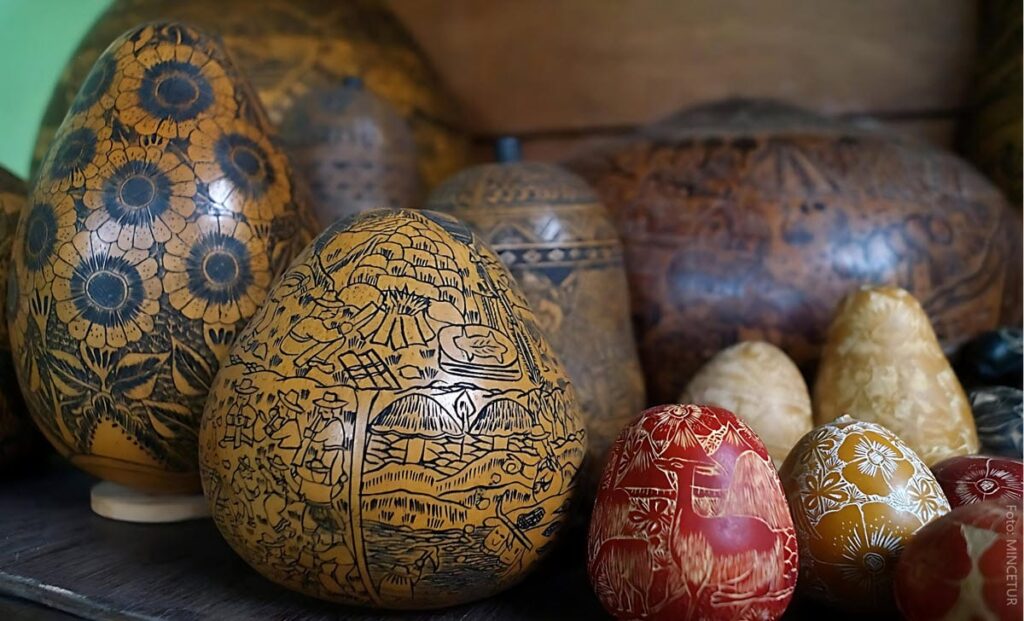
Cochas Grande and Cochas Chico, located about 7 miles (11 kilometers) north of Huancayo, are closely associated with the art of mates burilados, or carved gourds. This tradition has deep roots in Peru and remains one of the most recognizable craft forms in the Mantaro Valley.
In local workshops, artisans use simple hand tools to carve and burn intricate designs into dried gourds, creating scenes of rural life, festivals, animals, and symbolic motifs. The process looks straightforward from a distance but requires precision, patience, and a practiced hand to produce the fine line work for which the area is known.
Visitors can find works in many sizes, from small decorative pieces to large, highly detailed gourds, and prices vary widely depending on complexity and the artisan’s reputation. Cochas Chico is especially active on Friday market day, when there is more movement of goods and visitors in the area.
Hualhuas — Textiles & Weaving
Hualhuas is known for alpaca and sheep wool textiles produced on both backstrap and upright looms. In some workshops, you can follow the full process from raw wool through spinning, natural dyeing (including cochineal for rich reds), and weaving. Tuesday is the best day to visit for market activity, though workshops can be arranged throughout the week.
San Jerónimo de Tunán — Silver Filigree Jewelry
About 9 miles (15 km) northwest of Huancayo, San Jerónimo is home to silversmiths whose filigree techniques trace back to the colonial period. Delicate threaded metalwork is shaped into rings, earrings, pendants, and ornamental pieces of striking intricacy. Wednesday market day is the best time to see the widest range of work available.