Historical and Cultural Highlights
The Citadel of Chan Chan
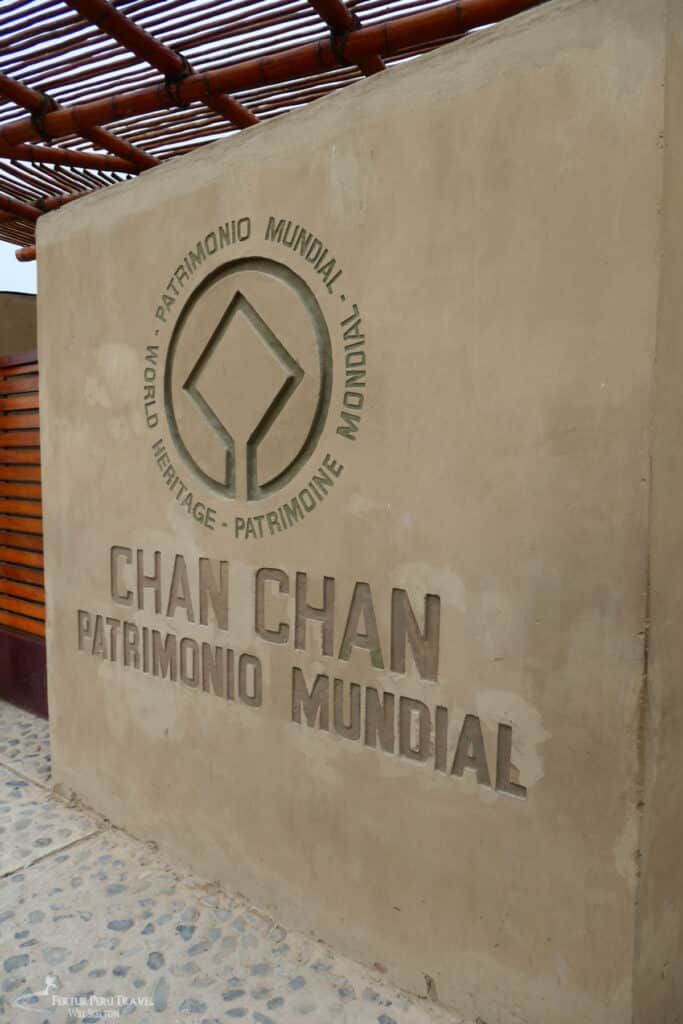
The Citadel of Chan Chan, designated a UNESCO World Heritage Site in 1986, stands as the largest mud-brick city in the pre-Hispanic Americas and the largest adobe city in the entire world — an extraordinary testament to the engineering genius and cultural sophistication of the ancient Chimú people.
Built around 1300 A.D. on the arid coastal desert just west of present-day Trujillo, Chan Chan served as the magnificent capital of the Chimú Empire, a powerful civilization that dominated the northern coast of Peru from approximately 1000 A.D. until its conquest by the Inca around 1470 A.D. At its peak, the city covered nearly 20 square kilometers and is believed to have been home to tens of thousands of inhabitants, making it one of the most populous urban centers in the pre-Columbian world.
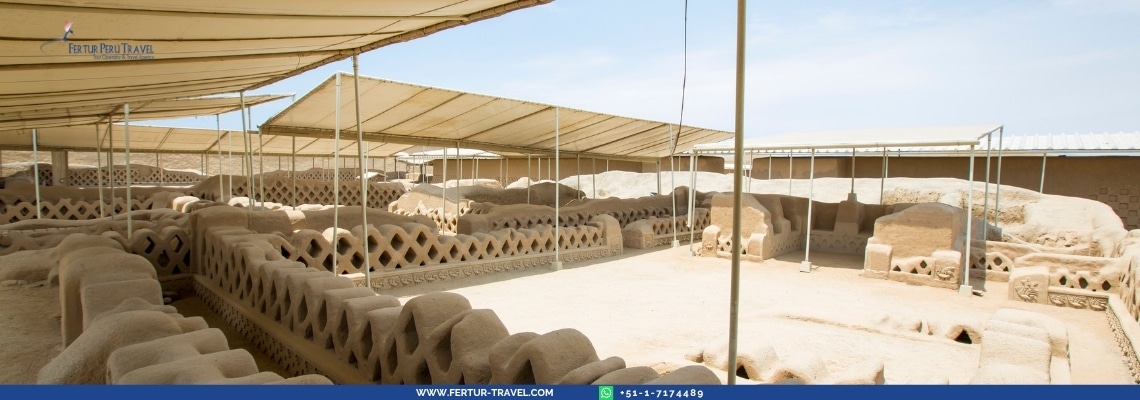
The city is organized into nine large royal compounds, or ciudadelas, each believed to have been built by a successive Chimú ruler and used as both a palace during his reign and a mausoleum after his death. These immense enclosures were surrounded by towering adobe walls that in some places rose to ten meters in height, creating an imposing and labyrinthine urban landscape. Within the walls, archaeologists have uncovered elaborate ceremonial plazas, burial platforms, storage facilities, walk-in wells, and residential quarters — all evidence of a highly stratified and well-organized society.
Today, visitors are captivated by the intricate relief carvings that adorn the interior walls of the ciudadelas. Repeating geometric patterns, stylized sea otters, fish, seabirds, and mythological figures cover vast stretches of adobe surface, reflecting the Chimú people’s deep spiritual and practical connection to the Pacific Ocean, which was their primary source of sustenance and trade. The most accessible and well-restored of the royal compounds, the Tschudi Complex, gives visitors a vivid sense of the grandeur that once defined this remarkable capital.
Temples of the Sun and the Moon
The Temples of the Sun and the Moon — known in Spanish as the Huaca del Sol and the Huaca de la Luna — are among the most significant archaeological sites associated with the Mochica culture, a remarkable civilization that flourished along the northern coast of Peru between the 3rd and 7th centuries A.D. Together, these two great adobe pyramids offer an unparalleled window into the spiritual, political, and artistic world of one of ancient Peru’s most accomplished pre-Inca societies.
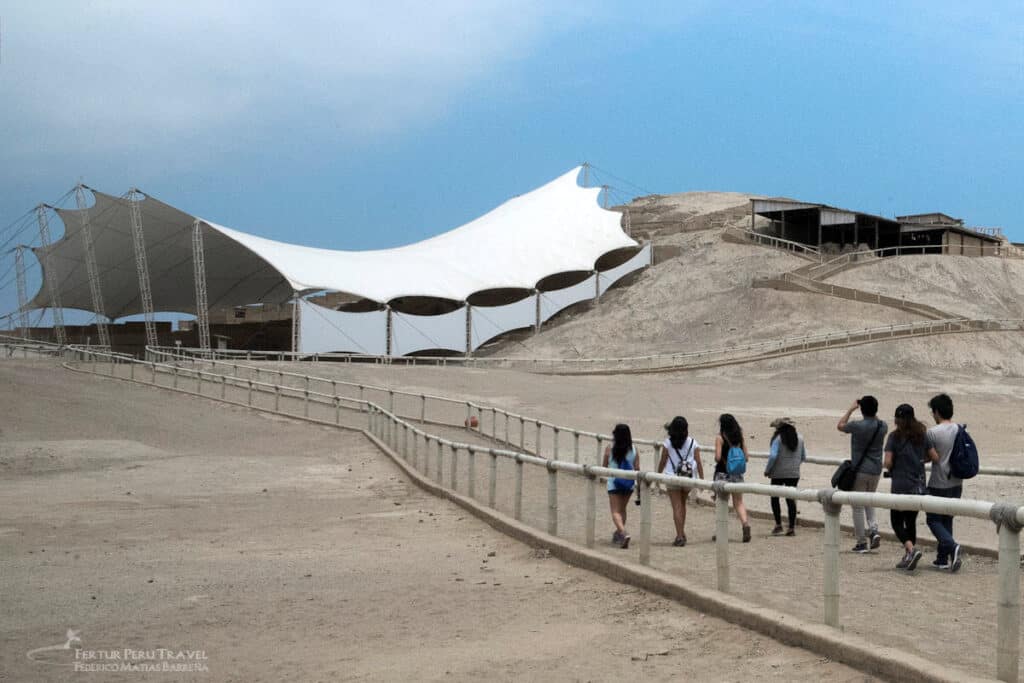
The Temple of the Sun, or Huaca del Sol, is a massive stepped pyramid rising to more than 130 feet (approximately 40 meters), making it one of the largest pre-Columbian adobe structures in Peru. Constructed using an estimated 140 million sun-dried mud bricks, it is believed to have served as the administrative and political seat of Mochica power — a place where rulers governed, conducted affairs of state, and projected their authority over the surrounding region. Though centuries of erosion and colonial-era looting have diminished much of its original form, the sheer scale of the structure remains breathtaking.
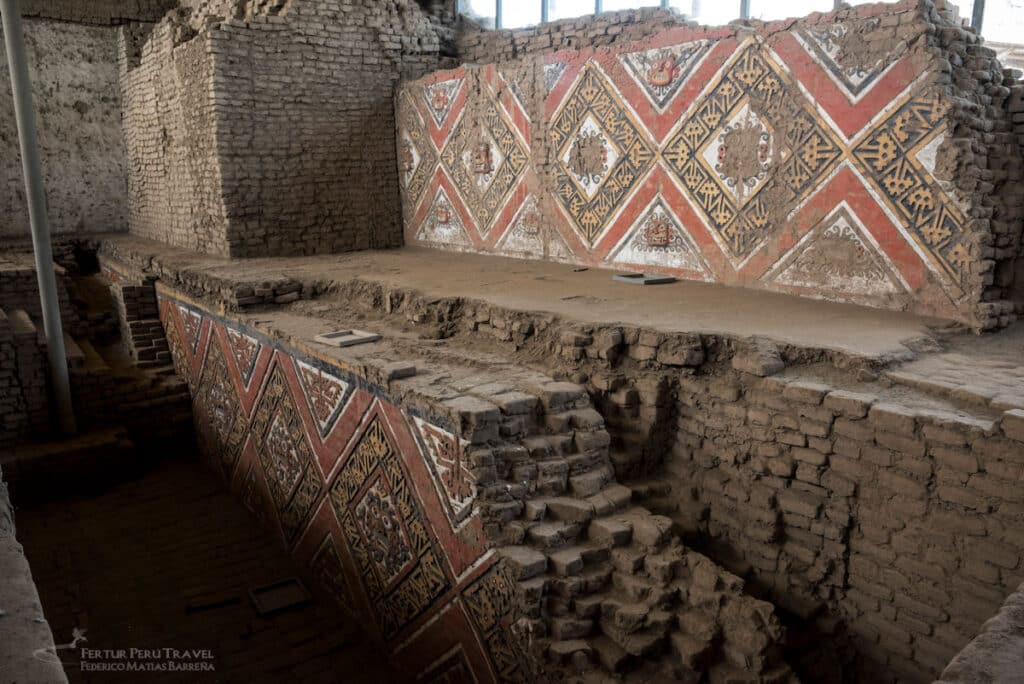
Across an open ceremonial plaza stands the Temple of the Moon, or Huaca de la Luna, which in many ways is the more visually stunning of the two. This pyramid was the primary religious and ceremonial center of the Mochica world, dedicated to Ai Apaec, the fearsome deity of creation and sacrifice often depicted as a fanged, spider-like figure. What makes Huaca de la Luna truly extraordinary are its brilliantly preserved multicolored murals, which cover vast interior walls in vivid geometric patterns and mythological scenes rendered in red, yellow, white, and black. Because the temple was expanded and rebuilt over successive generations — each new structure encasing the previous one — archaeologists have been able to uncover multiple layers of murals in exceptional condition, each telling a chapter of Mochica religious life.
Both temples are situated in the lower and middle valleys of the Moche River, framed by the barren coastal desert and the imposing backdrop of Cerro Blanco, the highest sand dune in the world. The site continues to be actively excavated, and each season brings new discoveries that deepen our understanding of this extraordinary culture.
El Brujo Archaeological Complex
El Brujo is a sprawling and deeply evocative archaeological complex located in the Chicama Valley north of Trujillo, renowned for containing some of the most impressive and well-preserved friezes on the entire northern coast of Peru. Its principal structure, Huaca Cao Viejo, is adorned with striking multicolored murals and high-relief carvings depicting life-sized priests, warriors, bound prisoners, and scenes of ritual human sacrifice — vivid imagery that offers a rare and visceral glimpse into the ceremonial world of the Moche, a civilization that dominated this coastal desert region nearly two millennia ago.
The complex rose to international prominence in 2005 when archaeologists made one of the most sensational discoveries in the history of South American archaeology: the intact tomb of a tattooed noblewoman who would come to be known as the Señora de Cao. Buried with an extraordinary wealth of grave goods — including war clubs, spear throwers, gilded crowns, and ceremonial objects typically associated with male rulers — she is believed to have been the first known female ruler of pre-Columbian Peru, a figure of immense political and religious authority who governed the Chicama Valley approximately 1,700 years ago.
The discovery shattered long-held assumptions about gender and power in ancient Andean societies, earning her comparisons to a South American Cleopatra. Today, an on-site museum at El Brujo houses her remarkably preserved mummy along with the remarkable collection of artifacts found in her tomb, allowing visitors to come face to face with this iconic figure from Peru’s ancient past.
Huaca del Dragón or Arco Iris (Temple of the Dragon or Rainbow)
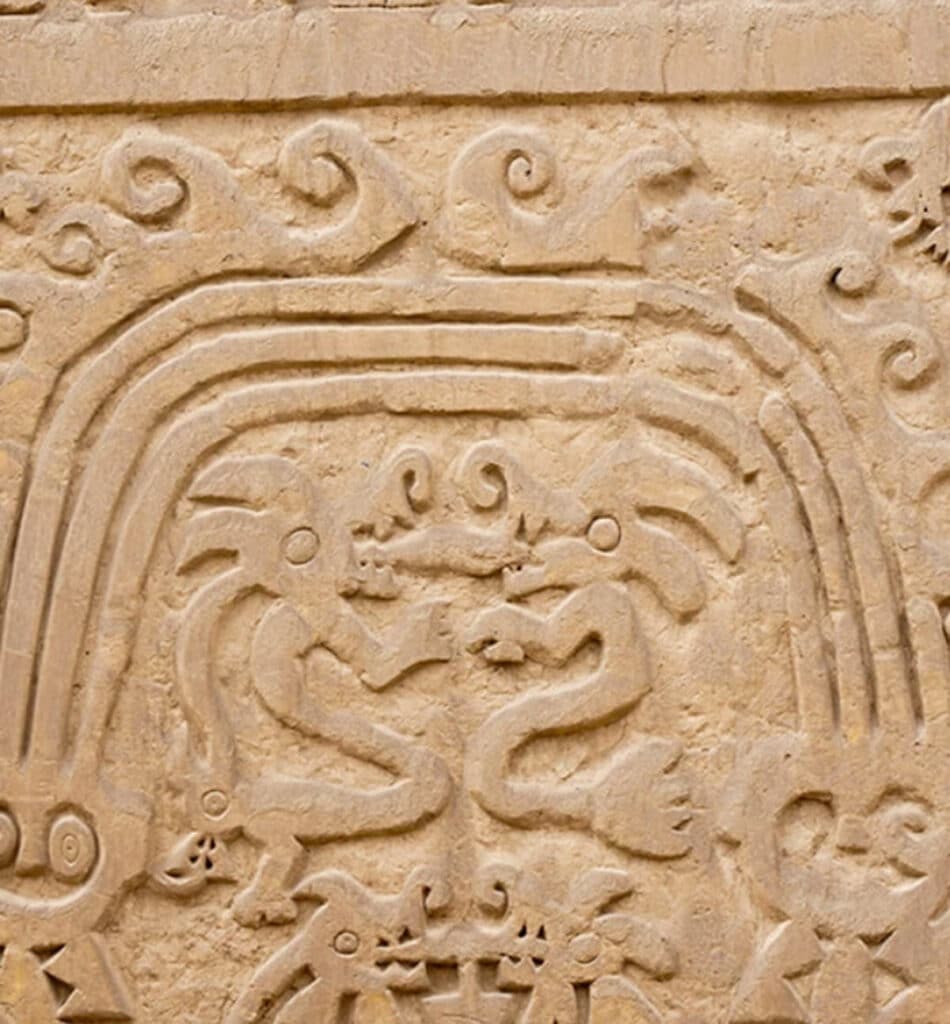
This roughly 1,100-year-old adobe pyramid, known as Huaca del Dragón or Huaca Arco Iris, stands as one of the best-preserved pre-Columbian monuments in the Trujillo region, its walls profusely decorated in elaborate high-relief carvings that have survived the centuries in remarkable condition.
Every surface seems to teem with life, covered in a rich tapestry of anthropomorphic and zoomorphic figures — human-like forms, mythological creatures, and stylized animals interwoven in intricate repeating patterns that speak to the deeply symbolic visual language of the Chimú culture that built and venerated this sacred site.
The most striking and iconic of these carvings is a extraordinary two-headed dragon-like serpent, its sinuous body arching across the walls in the form of a rainbow — a form so distinctive that it gave the site its alternative name, Huaca Arco Iris, or Rainbow Temple. Beneath its undulating body sprout an seemingly infinite number of legs, a fantastical anatomical detail that sets this creature apart from any other known figure in pre-Columbian art and underscores the richness and originality of the mythological tradition from which it emerged. Scholars believe this great serpentine deity was associated with water, fertility, and agricultural abundance — themes of vital importance to a civilization living on the edge of one of the world’s driest deserts. Walking through this ancient ceremonial space, visitors are immersed in a world where art, religion, and daily life were inseparable.
Colonial Mansions
Trujillo is home to several colonial mansions that reflect its rich historical tapestry:
- Calonge or Urquiaga House: A beautifully painted blue mansion with iron-barred windows, showcasing furniture from Peru’s Colonial and Republican eras.
- Bracamonte or Lizarzaburu House: Combines elements from Peru’s Colonial and Republican eras, representing 18th and 19th-century architectural styles.
- Emancipation House: The site where Trujillo’s Declaration of Independence was drafted in 1820 and the seat of the First Constituent Congress.
- Home of the Mayorazgo de Facala: Features a large inner patio, wooden columns, and an invaluable coin collection.
- Ganoza Chopitea House or House of the Lions: Known for its Baroque portal, multi-colored shades, and Rococo pediment with lion sculptures.
Churches and Monasteries
Trujillo’s churches and monasteries are architectural gems that offer spiritual and artistic experiences:
- The Cathedral: Built in 1666, destroyed by an earthquake in 1759 and reconstructed in 1781, is an important repository of Cusco colonial paintings and sculptures and altarpieces of Baroque and Rococo styles.
- Church and Monastery of Mount Carmel: Built in 1759, it is one of the finest examples of architecture in the city, with a vast collection of paintings from the Quito and Flemish Schools.
- Church of Saint Francis of Assisi: Dating back to the 18th century, this Baroque church features an upper altar, multi-colored shrines, and an attractive wooden carved pulpit.
Museums and Modern Attractions
National University of Trujillo’s Museum of Archaeology, Anthropology, and History
This museum showcases archaeological objects linked to the pre-Hispanic cultures that thrived in the department of La Libertad, particularly those discovered at the Temple of the Moon.
José Cassinelli Museum
The museum exhibits artifacts from the Moche, Chimú, and Recuay cultures, offering a comprehensive view of the region’s ancient civilizations.
Toy Museum
The Toy Museum displays the transformation of toys through history, from pre-Hispanic times to the 1950s, providing a nostalgic journey for visitors of all ages.
Trujillo Modern Art Museum
Recently opened, this museum is the first of its kind in Peru, featuring works of modern art from both Peruvian and international artists.
Beaches and Natural Attractions
Huanchaco Beach Resort
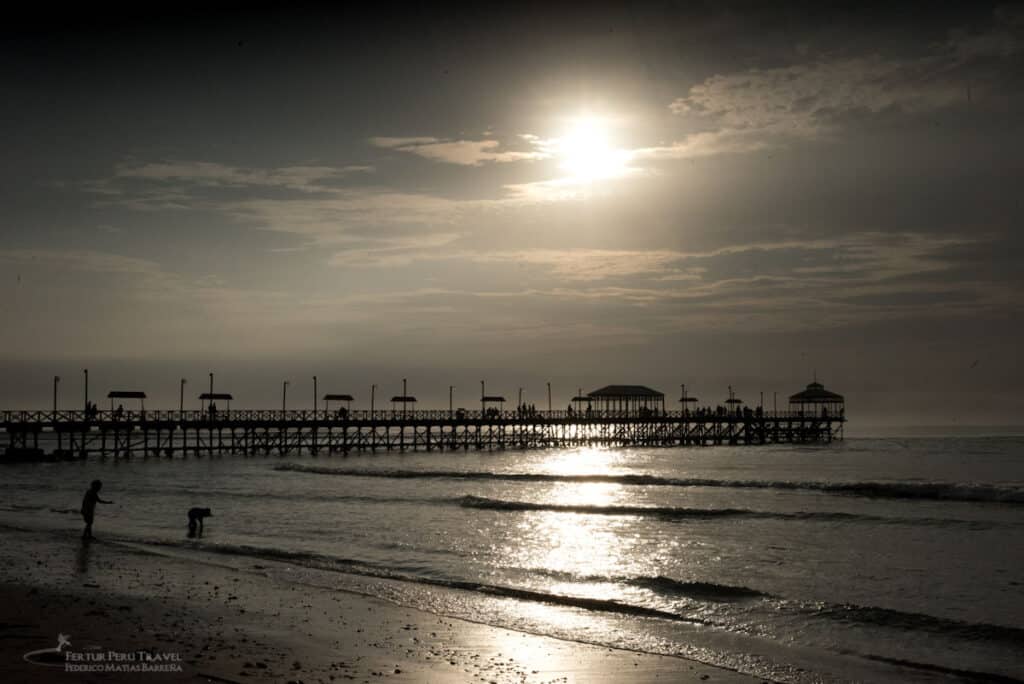
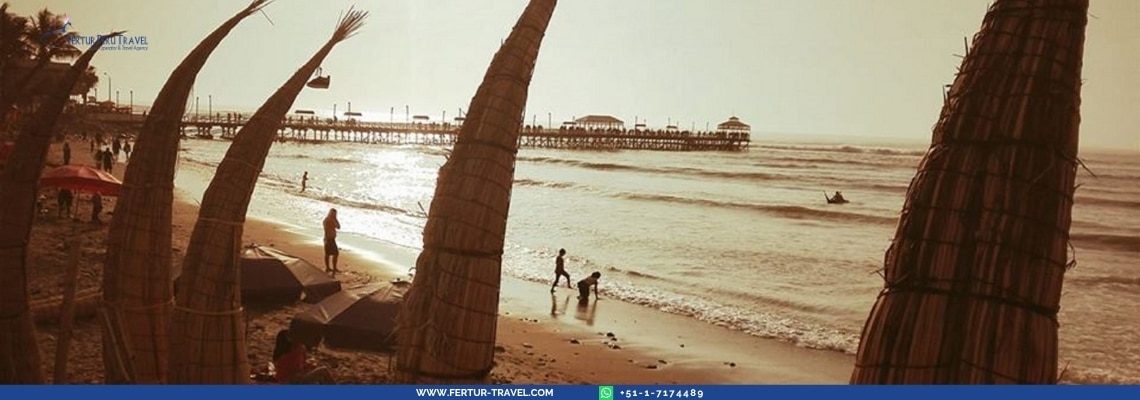
Huanchaco is a legendary and deeply storied beach resort town perched on the Pacific coast just a short drive from the city of Trujillo, carrying within it layers of history that stretch back nearly a millennium. According to local tradition, it was here that the great Chimú prince Tacaynamo is said to have made landfall some 800 years ago, arriving by sea to found what would eventually become the mighty Chimú Empire and its awe-inspiring capital, Chan Chan. That mythological arrival lends Huanchaco an almost sacred significance in the cultural memory of the region, and a palpable sense of ancient history lingers along its shores to this day.
Local fishermen still launch their caballitos de totora — small, elegant watercraft hand-crafted from bundles of dried totora reeds — into the Pacific surf each morning, just as their Moche and Chimú ancestors did long before the arrival of the Spanish. These slender vessels, whose design has remained virtually unchanged for over 3,000 years, are paddled out beyond the breaking waves and ridden back to shore in a display of seamanship and balance that never fails to captivate onlookers.
The caballito de totora is so emblematic of Huanchaco and the wider region that it has become an enduring symbol of the living cultural heritage of Peru’s northern coast.
Adding a vibrant modern energy to this ancient backdrop, surfers from across Peru and around the world are drawn to Huanchaco’s consistent and well-shaped waves, creating a charming and unlikely harmony between past and present. Ancient reed boats and modern surfboards share the same stretch of ocean.
Puerto Chicama or Malabrigo
Recognized by surfers worldwide for having the longest left-handed wave, Puerto Chicama is a haven for surfing enthusiasts.
Pacasmayo and San Pedro de Lloc
These beach resorts and ports feature traditional architecture, excellent surf, and nearby archaeological sites and carob tree forests.
Festivals and Events
National Marinera Dance Contest (January/February)
This annual event is a fantastic opportunity to watch the Marinera, a traditional Peruvian dance, and experience the associated pomp and festivities.
Huanchaco Carnival (February)
Inspired by the Venice Carnival, this event traces its beginnings to the early 20th century and features colorful parades and celebrations.
Surfing Tournament (March)
Held on the beaches of Puerto Chicama (Malabrigo), this tournament attracts surfers from all over the world.
International Spring Festival (October)
A vibrant celebration featuring handicrafts and art expositions, concerts, fashion shows, lively socials, and a grand parade with floats. The festival ends with a spectacular display of U.S. baton twirlers.
National Peruvian Paso Horse Show (October)
Organized by the Trujillo Peruvian Paso Horse Breeders and Owners Association, this show takes place during the Spring Fest and showcases the elegance and grace of the Peruvian Paso horse.
Trujillo is a city that seamlessly blends historical significance, cultural richness, and natural beauty. Whether exploring its ancient archaeological sites, colonial mansions, or vibrant festivals, visitors will find a wealth of experiences to enrich their journey. Join us in discovering the rich heritage and dynamic culture of Trujillo, a destination that promises to captivate and inspire.