Ayacucho: An Authentic Colonial Treasure
We invite you to get off the beaten tourist path to discover Ayacucho, one of Peru’s most historically significant and culturally rich destinations.
Nestled in the heart of Peru’s central Andes at an elevation of 9,010 feet above sea level (2,731 meters), this enchanting highland city lies just 204 miles (329 kilometers) southeast of Lima. We welcome travelers seeking an authentic glimpse into Peru’s colonial past, vibrant indigenous traditions, and pivotal role in South American independence.
Essential Travel Information
Getting to Ayacucho
We offer multiple convenient options for reaching Ayacucho from Lima:
By Air: Regular daily flights depart from Lima’s Jorge Chávez International Airport, with flight times of just over one hour, making Ayacucho easily accessible for weekend getaways and extended tours.
By Bus: Daily bus departures connect Lima with Ayacucho, with journey times ranging between 8 and 12 hours depending on the service and route. We recommend overnight buses for maximum comfort and time efficiency.
Climate and Weather
We advise travelers to prepare for Ayacucho’s highland climate:
- Weather Pattern: Dry conditions with sunny days and cool nights
- Temperature Range: 50-74°F (10-24°C) throughout most of the year
- Rainy Season: December through March
- Best Time to Visit: April through November for optimal weather conditions, though Holy Week (March/April) offers unparalleled cultural experiences
Recommended Stay Duration
We recommend allocating a minimum of three days to fully appreciate Ayacucho’s treasures, though visitors often find themselves wishing they had planned for longer stays to immerse themselves in the city’s rich cultural tapestry.
The City of Thirty-Three Churches
We proudly present Ayacucho as Peru’s spiritual heartland, home to thirty-three magnificent colonial churches that have earned it distinction as one of South America’s most religiously significant cities.
This remarkable concentration of sacred architecture reflects centuries of devotion, artistic mastery, and the unique fusion of Spanish Catholicism with indigenous Andean spirituality.
The architectural splendor of these churches, featuring ornate baroque altars, intricate stone carvings, gold-leafed retablos, and beautifully preserved frescoes, makes Ayacucho an unparalleled destination for travelers interested in colonial religious art and architecture.
Ayacucho's World-Renowned Holy Week Celebration
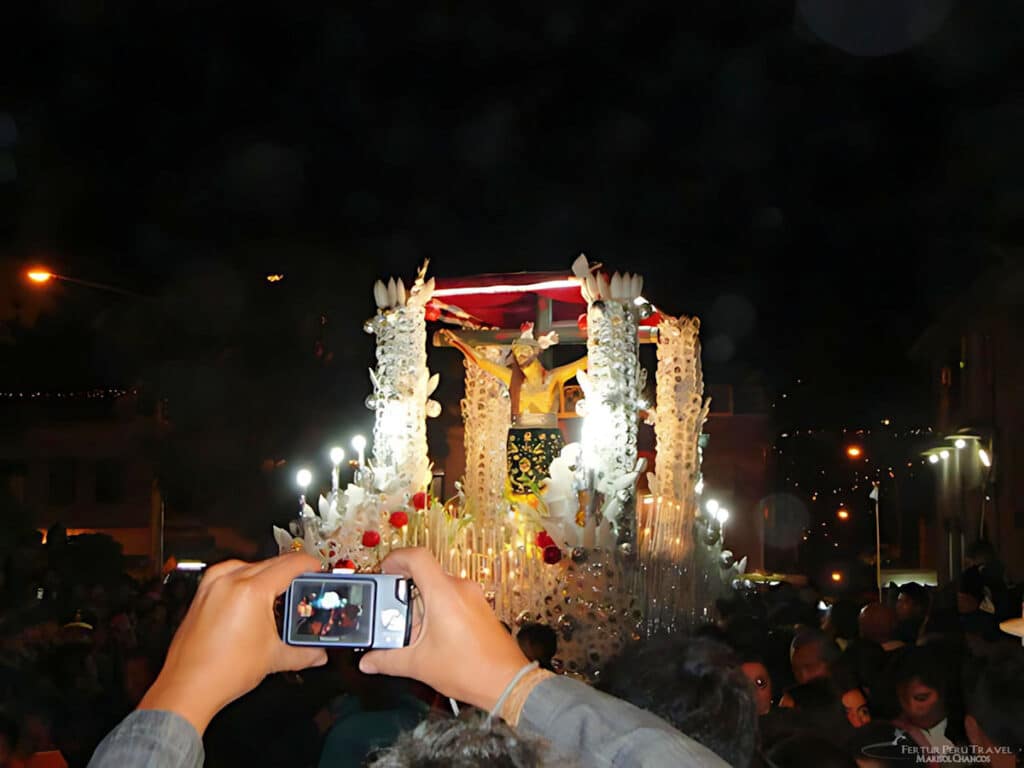
Ayacucho’s Easter Holy Week (Semana Santa) to be one of the most enchanting and authentic religious celebrations in all of Latin America. This spectacular ten-day festival transforms the normally tranquil Andean city of approximately 180,000 inhabitants into a vibrant celebration of faith and tradition, as tens of thousands of visitors arrive from around the world to witness this extraordinary event.
The celebration features:
- Stunning religious processions with centuries-old imagery
- Elaborate flower petal carpets adorning city streets
- Spectacular fireworks displays illuminating the Andean night
- Traditional bull chases and local festivities
- Deeply moving ceremonies that blend Catholic ritual with Andean spirituality
Colonial Architecture and Urban Heritage
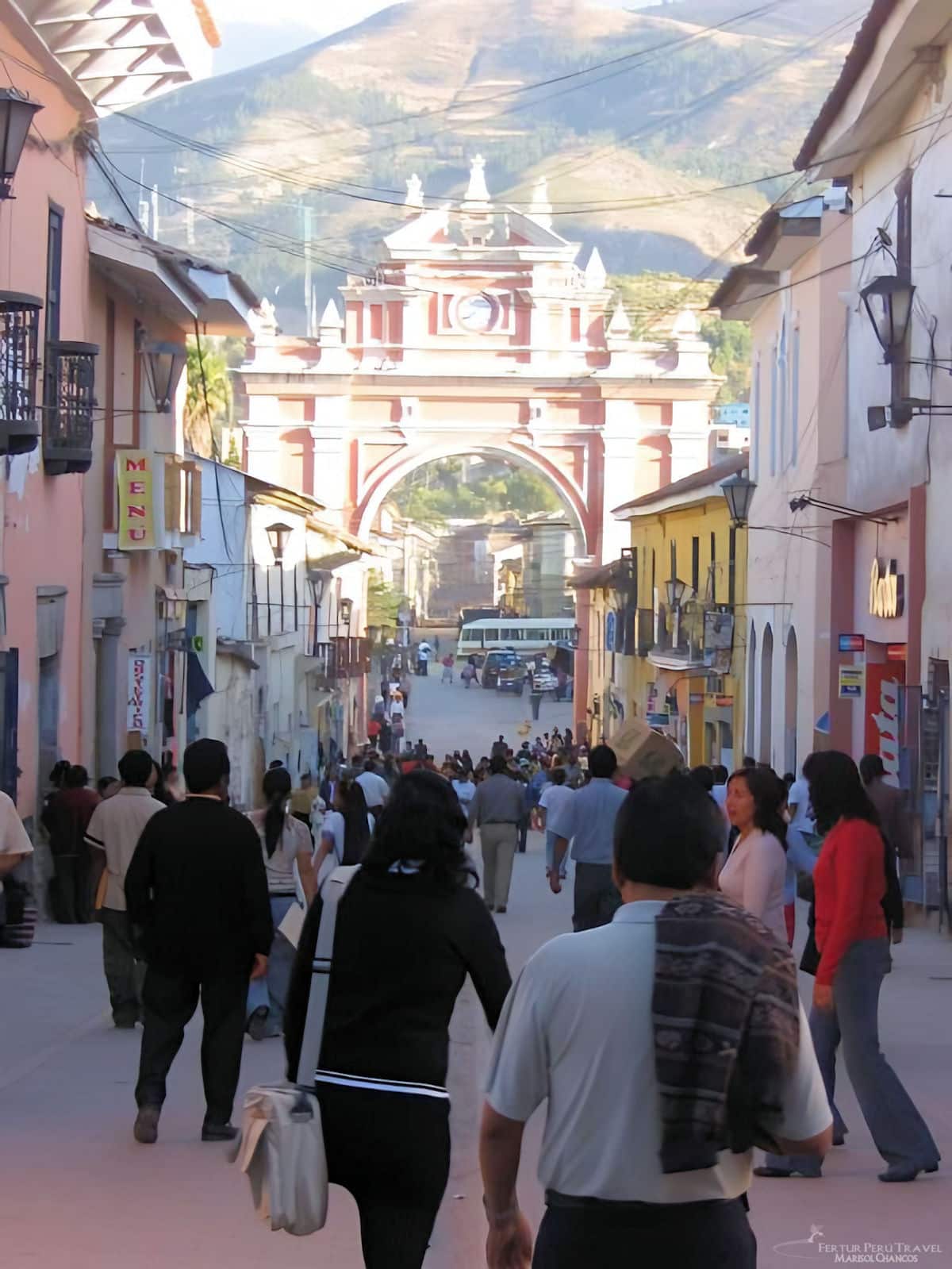
Ayacucho’s exceptionally preserved historic downtown showcases colonial and republican architecture that creates an atmosphere of timeless elegance. Walking through the city’s cobblestone streets feels like stepping back into Peru’s golden colonial era, with each building facade telling its own story of architectural mastery and historical significance. The city’s main square stands as the only plaza in Peru completely surrounded by stone arcades, offering visitors a unique architectural experience unmatched elsewhere in the country. These elegant arcades provide shaded walkways where locals and visitors alike can admire the harmonious blend of Spanish colonial design and Andean craftsmanship.
Surrounding the central plaza stand several landmark buildings and monuments:
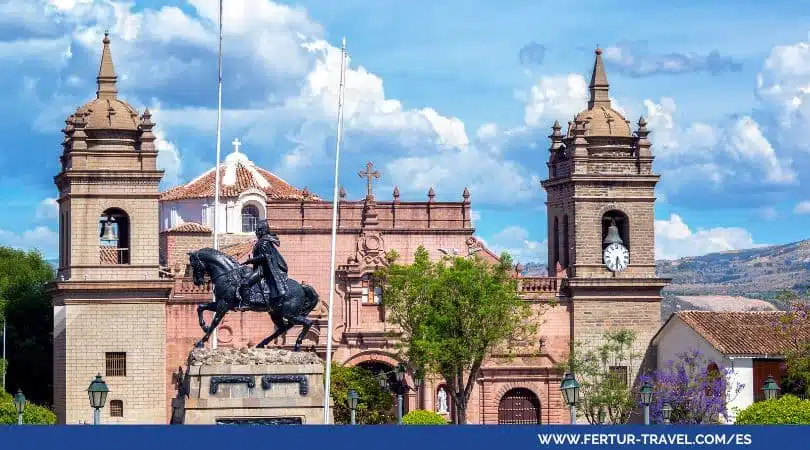
- The magnificent Cathedral of Ayacucho – a grand baroque edifice dating to 1612, dominating the plaza with its impressive towers and ornate facade
- The Arco del Triunfo de Huamanga – built in 1825 to commemorate Peru’s independence and honor the victory in the Battle of Ayacucho, which took place on December 9, 1824. This triumphant arch serves as a powerful symbol of liberation
- The National University of San Cristóbal de Huamanga – one of Peru’s oldest and most prestigious educational institutions, housed in stunning colonial buildings
- The fascinating Museum of Popular Art – showcasing Ayacucho’s rich artisan traditions and centuries of creative excellence
- Beautifully preserved colonial mansions (casonas) – featuring characteristic stone portals, interior courtyards, and elaborately carved wooden balconies
The main square centers around a prominent statue of General Mariscal Sucre, who in 1824 led combined forces from throughout the Americas in the epoch-defining Battle of Ayacucho. This monument honors the Venezuelan general whose military genius secured independence for an entire continent. These buildings and monuments collectively tell the story of a city that has been at the crossroads of Peruvian history for nearly five centuries, from colonial foundation to independence battlefield to modern cultural capital.
The Battle of Ayacucho: The Decisive Victory for South American Independence
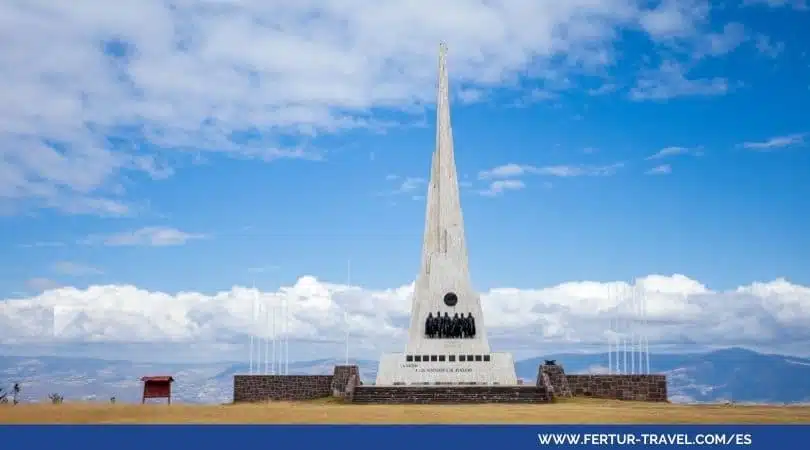
On December 9, 1824, one of the most significant military engagements in world history unfolded on the windswept Pampa de Quinua.
The Battle of Ayacucho marked the culminating moment of South America’s long struggle for independence from Spanish colonial rule. Under the brilliant leadership of General Antonio José de Sucre, a combined army representing forces from across the newly independent South American nations faced the last significant Spanish Royalist army remaining on the continent.
The stakes could not have been higher—the outcome would determine whether three centuries of Spanish colonial dominion would continue or whether a new era of independence would dawn across South America.
The battle was a turning point for Peru and South America. Sucre commanded about 5,780 patriots—Venezuelans, Colombians, Ecuadorians, Peruvians, Argentines, and Chileans—against nearly 9,310 Spanish troops. Though outnumbered, the patriots won through better tactics, unified command, and soldiers determined to free their homelands. Spanish losses were severe; Viceroy José de la Serna was captured. Days later, in nearby Quinua, Spanish commanders signed the Capitulation of Ayacucho, ending Spain’s military presence in South America and securing Peru’s independence, along with that of Spain’s remaining holdings on the continent.
Master Artisans and Living Traditions
We celebrate Ayacucho as one of Peru’s premier centers of traditional craftsmanship. The region’s artisans have preserved ancestral techniques for generations, creating world-renowned works of art that represent some of Peru’s most iconic handicrafts:
Retablos: These intricate portable altars, crafted inside beautifully worked wooden boxes, contain elaborate three-dimensional religious and cultural scenes. Each retablo is a masterpiece of patience and skill, depicting everything from nativity scenes to representations of daily Andean life.
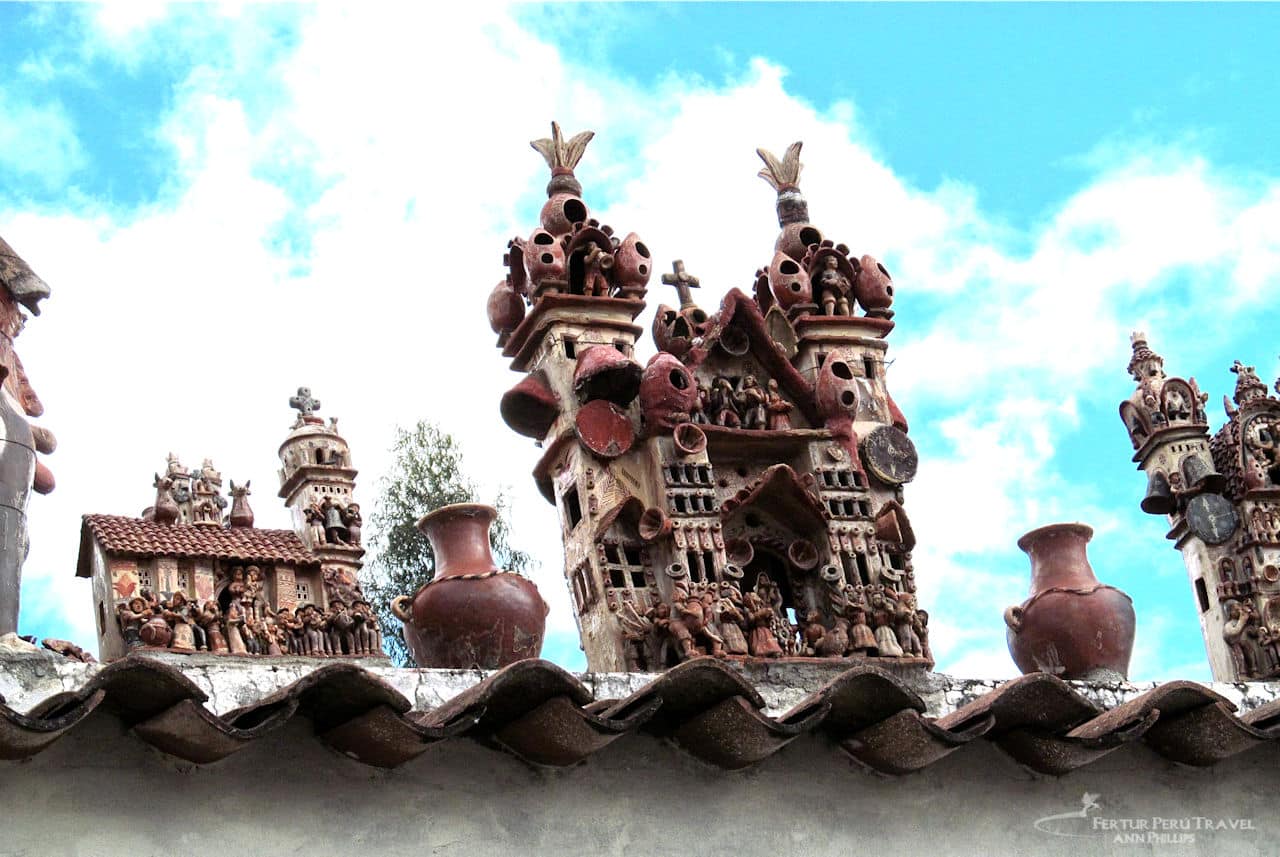
Huamanga Stone Carvings: Master sculptors work with luminescent local alabaster (piedra de Huamanga) to create delicate figurines, churches, and decorative pieces that seem to glow with an inner light.
Textiles and Weaving: We showcase Ayacucho’s textile tradition as a living art form, where weavers continue to create finely woven rugs and fabrics using pre-Columbian techniques, natural dyes, and intricate patterns that tell stories of their ancestors.
Ceramics: The region, particularly the town of Quinua, has earned worldwide renown for its distinctive ceramic work, perpetuating traditions that began centuries ago with the ancient Wari civilization.
Woodwork: Skilled carpenters produce furniture and decorative items using traditional methods passed down through countless generations.
Cultural Richness and Authentic Experiences
We emphasize that Ayacucho provides travelers with one of Peru’s most authentic highland experiences. The city maintains its provincial character and traditional atmosphere while offering all necessary modern amenities. Unlike Peru’s more heavily touristed destinations, Ayacucho remains refreshingly genuine, where visitors can:
- Witness traditional celebrations and festivals throughout the year
- Experience genuine Andean hospitality from welcoming communities
- Engage with artisans who proudly maintain their ancestral crafts
- Explore colonial architecture in an active, living city rather than a museum
- Discover pre-Columbian archaeological sites with fewer crowds
- Taste authentic regional cuisine in family-run restaurants
Planning Your Visit with Us
Whether you seek the spectacle of Holy Week, the tranquility of colonial streets, the inspiration of master craftspeople, or the profound history of independence, we invite you to discover why Ayacucho captivates all who visit.
Experience the enduring spirit of Ayacucho with us – where history, art, and tradition converge in the heart of the Peruvian Andes.
Upcoming Vacations in Peru