What to see in Ayacucho?
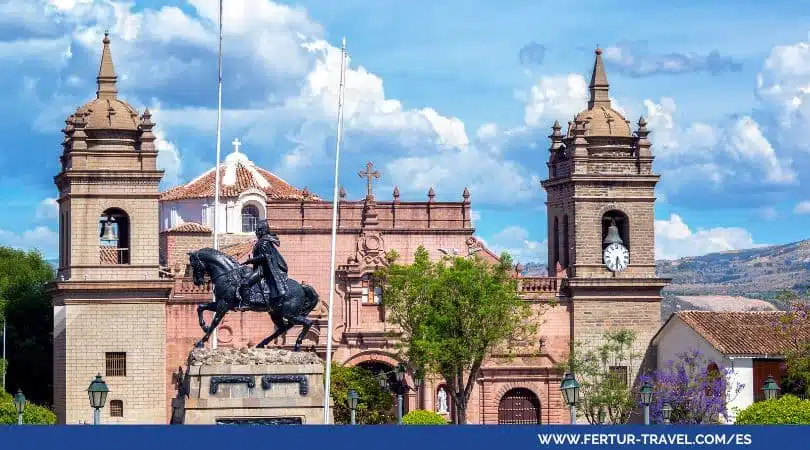
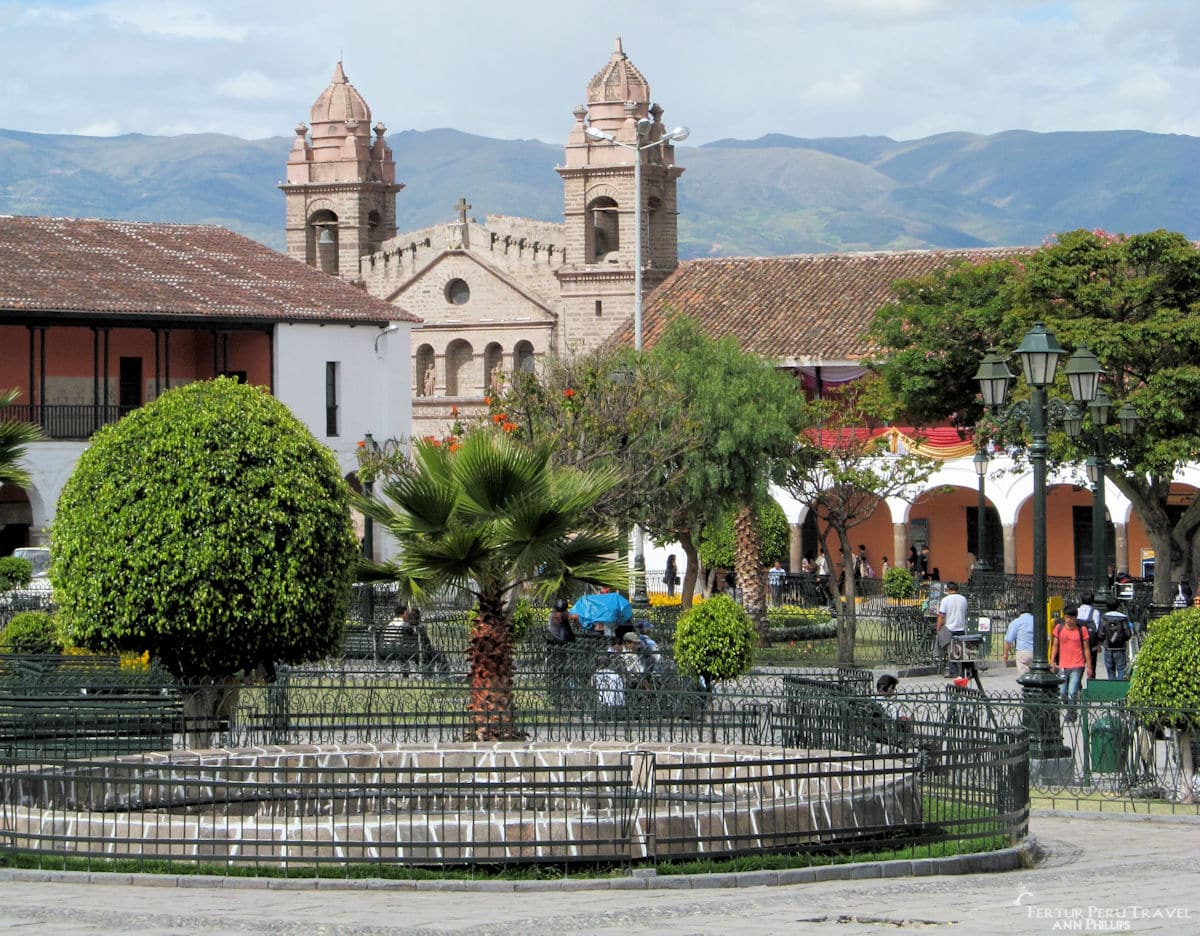
Surrounding the main plaza are a beautiful Cathedral, the national University of Huamanga, and a fascinating Museum of Popular Art that is well worth visiting, as well as several historic colonial mansions.
The Colonial Architecture
The main square is built around a statue of General Mariscal Sucre, who in 1824 led a combined force of soldiers from all over the America´s in the epoch Battle of Ayacucho on the nearby Pampa of Quinua. Sucre’s army defeated the last remnants of Spain’s military, marking one of the most important military events in Peruvian history.
Town of Quinua
The road from Ayacucho to the artisan town of Quinua is appoximately a 40-minute drive. Along the way is the pre-Inca ruins of Wari. Scientists believe this was the capital of the Wari Empire, and in its heyday, was home to 50,000 inhabitants, reaching its apogee in 900 C.E. (Common Era). The ruins include retaining walls, tombs and canals, as well as a small museum of artifacts.
Quinua is a charming town of red-tiled roof houses, each topped with a small ceramic church to ward off evil spirits. The town is world-renowned for its distinctive ceramics.
Craft Market
Along the main road into town is an open air artisan market and food stalls where deep fried pork ribs and guinea pig, known as “cuy,” are served with potatoes and giant kernel corn. Stone steps leads to the main cobblestone plaza, surrounded by whitewashed buildings and the town church. Here, too, is the small museum where the “Capitulation of Ayacucho” was signed, sealing South American Liberty from the Spanish.
Pampa de la Quinua
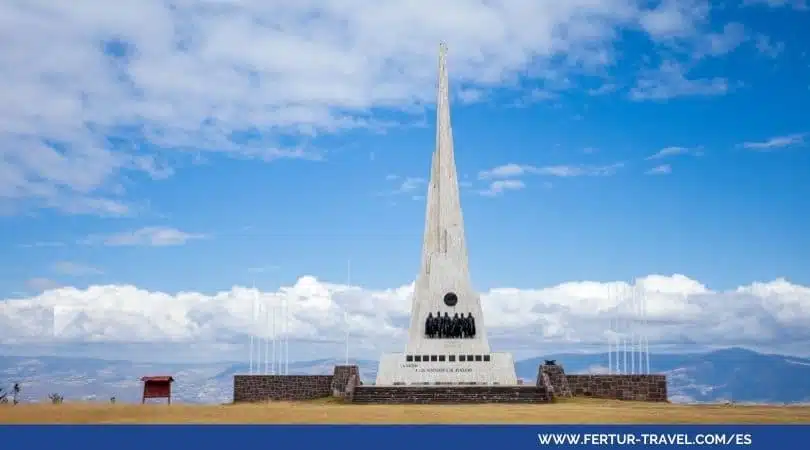
Just across the road from the town is the “Pampa de Quinua,” a grassy plain with a huge white obelisk rising from its center to commemorate the historically decisive 1824 battle that pitted the combined forces of South American nations against the Spanish Royalist army.
Huanta town
Further on from Quinua is the village of Huanta, with its cathedral, waterfalls and beautiful landscapes. Along the way is also Piquimachay, a prehistoric cave dwelling believed to have been home to some of the earliest human settlers on the continent.
Easter Holy Week
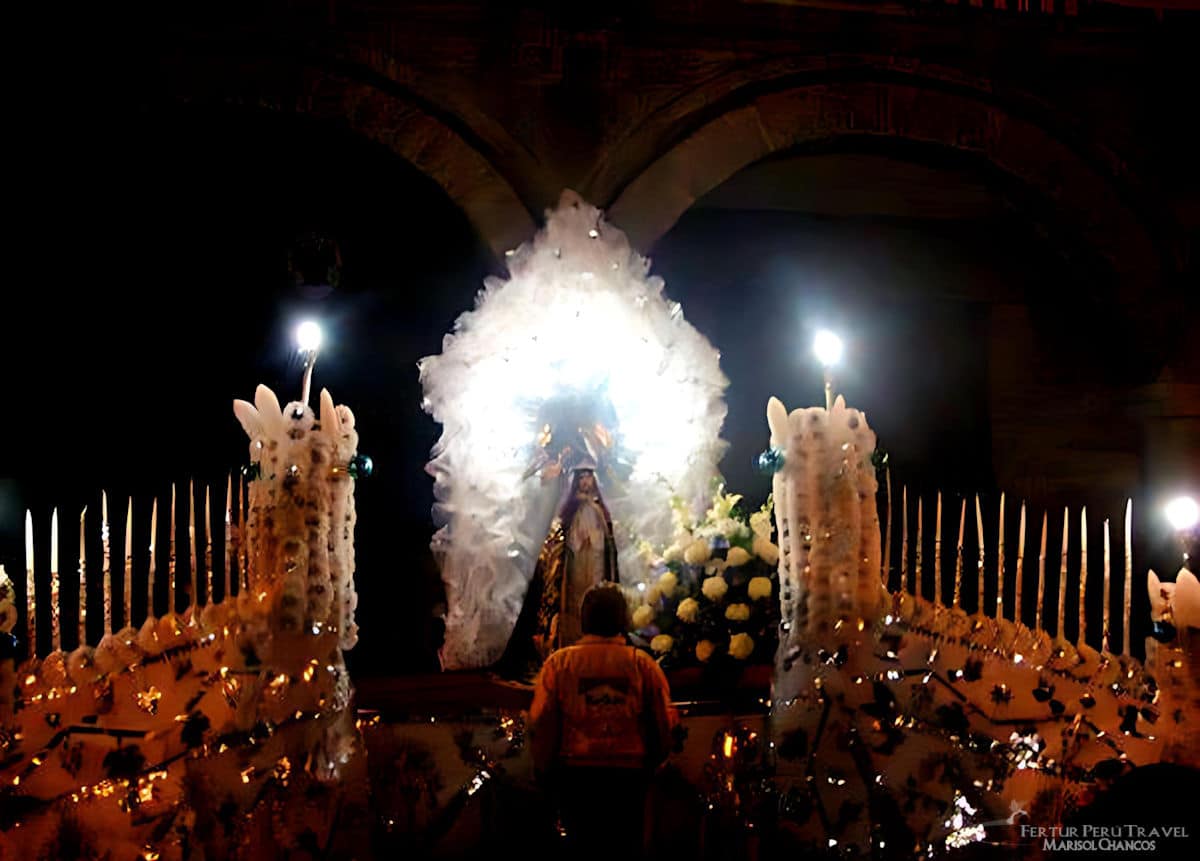
Ayacucho is home to one of Latin America’s best known Easter Holy Week “Semana Santa” festivals. The usually tranquil Andean city, with a population of around 180,000 people, is transformed as tens of thousands of visitors flock to witness and take part in the 10-day celebration of fireworks displays, bull chases, and beautiful religious processions.
Handicrafts
Ayacucho particularly famous for its rich artisan tradition, producing some of Peru’s most popular and iconic crafts. In workshops throughout the city, you will find high quality artwork, including textiles, particularly finely woven rugs, figurines and churches fashioned from clay and luminescent hand-carved ashlar stone, and finally worked wooden boxes containing intricate three-dimensional religious and cultural scenes, known as Retablos.
Ayacucho boasts an impressive array of colonial churches, each with its own unique charm and historical significance. The city is home to 33 churches, renowned for their ornate altars and intricate architecture. Notable among them are:
- Cathedral of Ayacucho (1612): A grand edifice dominating the Main Square, featuring baroque and neoclassical elements. The 17th century cathedral on the main plaza is one of at least a dozen colonial churches that boast beautiful, ornate stone work interiors and facades and carved wood alters and retablos covered in gold leaf.
- Compañía de Jesús, or the Church of the Company of Jesus (17th century): Known for its elaborate altarpieces and significant religious artworks.
- San Cristóbal or the Church of Saint Christopher (1540): The oldest church in the city, offering a glimpse into Ayacucho’s early colonial history.
- San Francisco de Asís or the Church of Saint Francis of Assisi (1552): A splendid example of colonial architecture with beautifully preserved frescoes.
- Santa Clara or the Church and Convent of Saint Claire (1568): A serene sanctuary featuring exquisite religious art and peaceful cloisters.
- Santa Teresa or the Church of Saint Teresa (1688): Renowned for its baroque altarpiece and serene atmosphere.
- Church and Convent of Saint Dominic (1548): A historical landmark showcasing intricate stonework and religious artifacts.
- Church of Our Lady of Mercy (1541): Celebrated for its ornate interior and significant cultural heritage.
The churches of Santo Domingo, San Cristóbal, Compañía de Jesús, San Francisco de Asís, Santa Clara and Santa Teresa are all within walking distance of the plaza. Colonial mansions for the most part now serve as municipal offices and administration centers for the state university, but they are generally open to tourists.
Colonial Mansions: Echoes of the Past
Ayacucho’s colonial mansions, or “casonas,” reflect the opulence and architectural grandeur of the colonial era. Key highlights include:
- Casona Vivanco (17th century): Notable for its wide hallways and detailed stone portals.
- Casona Ruiz de Ochoa (17th century): Features walls adorned with animal motifs such as pumas and serpents.
- Casona Boza y Solis (1740): An architectural marvel with elaborate stone carvings and colonial-era decor.
- Casona de Castilla y Zamora (1677): Now home to the San Cristobal de Huamanga National University, this mansion is a testament to Ayacucho’s rich educational heritage.