On June 26, 1541, Francisco Pizarro was killed in Lima — not on a battlefield,…
Peru in World History | A Traveler’s Timeline
For most travelers, Peru’s history fascinates from the very first moment, but for others, the ancient timeline can feel remote and disconnected.
The Andean world has its own deep antiquity — one that runs parallel to everything from ancient Greece to the age of European exploration, and rivals it in complexity, ambition, and scale.
Seeing the Andes Through a Familiar Historical Context
For travelers, setting these two timelines side by side can help put Peru into focus: not as a backdrop to colonial history, but as one of the world’s great civilizations on its own terms, in dialogue with the rest of human history.
That is when Peru stops feeling like a destination defined by one famous empire or one famous site. It starts to feel like what it truly is: one of the world’s great historical landscapes, with a story that begins deep in antiquity and continues through powerful regional cultures, imperial expansion, conquest, resistance, and living tradition.
See Peru’s History Side by Side
Sometimes the easiest way to understand Peru’s past is to place it next to the history you already know. Read across this timeline and you will see ancient Peru unfolding alongside Greece, Rome, the Crusades, and the age of exploration—making it easier to feel just how deep, rich, and far-reaching the Andean story really is.
Chronology
Europe and North America
Pre-Columbian & Inca
| c. 3500 BCE Norte Chico / Caral civilization, coastal Peru — the earliest known complex society in the Americas. | ||
| c. 2100 BCE Greeks arrive in Greece. | ||
| 870 BCE Age of Homer. | c. 800 BCE – 100 CE Paracas culture (Cavernas phase), south coastal Peru, noted for exceptionally fine textiles. | |
| 776 BCE First Olympiad held in Greece. | ||
| 753 BCE Legendary founding of Rome. | ||
| 431–404 BCE Peloponnesian Wars. | c. 200 BCE – 400 CE Virú (Gallinazo) culture, north coastal Peru. | |
| c. 100 BCE – 800 CE Nazca culture, south coastal Peru; creators of the Nazca Lines. | ||
| 146 BCE Romans capture and destroy Carthage. | c. 100 – 800 CE Moche (Mochica) culture, north coastal Peru. Renowned for their portrait ceramics and monumental adobe huacas. | |
| 44 BCE Assassination of Julius Caesar. | ||
| 79 CE Eruption of Vesuvius destroys Herculaneum and Pompeii. | ||
| 117 CE Roman Empire at its greatest extent. | ||
| 285 CE Disintegration of Roman Empire. | ||
| 313 CE Edict of Milan; Constantine I legalizes Christianity throughout the Empire. | c. 500–900 CE Tiwanaku (Tiahuanaco) civilization at its height, near Lake Titicaca, Bolivia. Construction of the Gateway of the Sun and major monumental architecture. Influence spreads widely across the Andean region. | |
| 430–455 CE The Mound Builders flourish in eastern North America. | c. 600–1000 CE Wari (Huari) empire, centered near Ayacucho, Peru; a major Andean power contemporaneous with Tiwanaku. | |
| 452 CE Attila invades Italy; turns back before reaching Rome. | ||
| 520 CE Pueblo Indian culture begins in Utah, Colorado, Arizona. | c. 900 CE Early Inca settlement in the Cusco valley region begins. | |
| 529 CE Publication of the Justinian Code. | c. 900–1470 CE Chimú (Kingdom of Chimor), north coastal Peru, capital at Chan Chan; the Inca’s greatest rival on the coast. | |
| 632 CE Death of Mohammed. | ||
| 800 CE Imperial Coronation of Charlemagne in Rome. | c. 1000–1100 CE Tiwanaku collapses, likely due to prolonged drought. Regional cultures rise across coastal and highland areas. | |
| 871–899 CE Alfred, king of Wessex and of England. | ||
| 900 CE Golden Age of Arabian civilization. | ||
| c. 985 CE Vikings settle Greenland under Erik the Red. | ||
| 1066–1087 CE William I (the Conqueror), king of England. | c. 1200 CE Cusco founded. Manco Capac, legendary first ruler, establishes the Kingdom of Cusco. | |
| 1189–92 CE Third Crusade. Frederick Barbarossa, Richard the Lion-Hearted, and Philip II. | 1200–1438 CE Kingdom of Cusco consolidates power in the Cusco Valley under a succession of rulers. | |
| 1227 CE Death of Genghis Khan. | ||
| 1304 CE Birth of Francesco Petrarch, father of Renaissance humanism. | ||
| 1347 CE Black Death spreads through Europe. | ||
| c. 1387–1400 CE Chaucer composes the Canterbury Tales. | ||
| 1431 CE Joan of Arc burned at stake. | c. 1438 CE Chanca tribes besiege Cusco. Viracocha, 8th Sapa Inca, flees; his son Cusi Yupanqui defends the city and takes power as Pachacuti. | |
| 1450–55 CE The Gutenberg Bible. | 1438–1471 CE Reign of Pachacuti, 9th Sapa Inca. He reorganizes the kingdom as Tawantinsuyu (the Inca Empire) and launches a vast program of conquest, road-building, and construction, including Machu Picchu. | |
| 1453 CE Fall of Constantinople. | 1463 CE Topa Inca Yupanqui, Pachacuti’s son, leads northern campaigns. | |
| 1469 CE Union of ruling houses of Castile and Aragon through marriage of Ferdinand and Isabella. | c. 1470 CE Chimú Empire conquered by Topa Inca. | |
| 1485 CE Richard III, last of the Plantagenet kings, killed at Bosworth Field. | 1471–1493 CE Topa Inca Yupanqui, 10th Sapa Inca. Doubles the size of the empire; pushes south into Chile and Bolivia. | |
| 1492 CE Columbus reaches the Caribbean. | 1493–c. 1527 CE Huayna Capac, 11th Sapa Inca. Further consolidates the empire into Ecuador and Colombia. | |
| 1497 CE North American discoveries by John Cabot. | ||
| 1500 CE Columbus reaches mainland of South America. | ||
| c. 1503–06 CE Leonardo da Vinci paints the Mona Lisa, the most celebrated portrait in the history of Western art. | ||
| 1513 CE Juan Ponce de León reaches Florida. | ||
| 1519 CE Magellan begins circumnavigation of the globe, completed by Elcano, 1522. | c. 1527 CE Huayna Capac dies of epidemic disease, probably smallpox. Civil war erupts between his sons Huáscar and Atahualpa. | |
| 1529 CE First Ottoman siege of Vienna. | 1527 CE Francisco Pizarro’s first reconnaissance reaches the Inca coast. | |
| 1534 CE Church of England established. | 1527–32 CE Civil war between Huáscar and Atahualpa; Atahualpa prevails. | |
| 1539–42 CE Hernando De Soto explores the Mississippi. | 1532 CE (Nov. 16) Atahualpa captured by Pizarro at the Battle of Cajamarca. | |
| 1547 CE Death of Henry VIII. | 1533 CE (July 26) Despite payment of an enormous ransom, Atahualpa is executed by the Spanish. | |
| 1534 CE Quito captured. Manco Inca installed as puppet ruler. | ||
| 1536 CE Manco Inca leads revolt, besieges Cusco. | ||
| Jan. 18, 1535 CE Francisco Pizarro founds the city of Lima, establishing it as the capital of the Viceroyalty of Peru. | ||
| 1537 CE Manco Inca retreats to Vilcabamba, establishing a Neo-Inca state. | ||
| 1538 CE Francisco Pizarro executes Diego de Almagro. | ||
| 1541 CE Francisco Pizarro murdered. De Soto discovers the Mississippi River. | ||
| 1579 CE Francis Drake explores the California coast, claiming it for England as Nova Albion. | 1571 CE Pedro de Cieza de León writes the first part of the Chronicles of Peru. | |
| 1588 CE Defeat of the Spanish Armada. | 1572 CE Fall of Vilcabamba; Túpac Amaru I captured and executed. End of independent Inca rule. | |
| c. 1600–01 CE Shakespeare writes Hamlet, widely considered the greatest work in the English language. | ||
| 1620 CE Plymouth Colony founded. | ||
| 1675–76 CE King Philip’s War (Metacom’s War) in New England; the most devastating conflict between colonists and Native Americans in the region. | ||
| 1680 CE Pueblo Revolt. | ||
| 1687 CE Isaac Newton publishes Principia Mathematica, establishing the laws of motion and universal gravitation. | ||
| 1748 CE Systematic excavations begin at Pompeii. | ||
| 1776 CE Declaration of Independence by the Thirteen Colonies. | 1780–81 CE Revolt of Túpac Amaru II (José Gabriel Condorcanqui). Defeated and executed May 1781. |
Peru’s first civilizations: deep antiquity on the Pacific coast
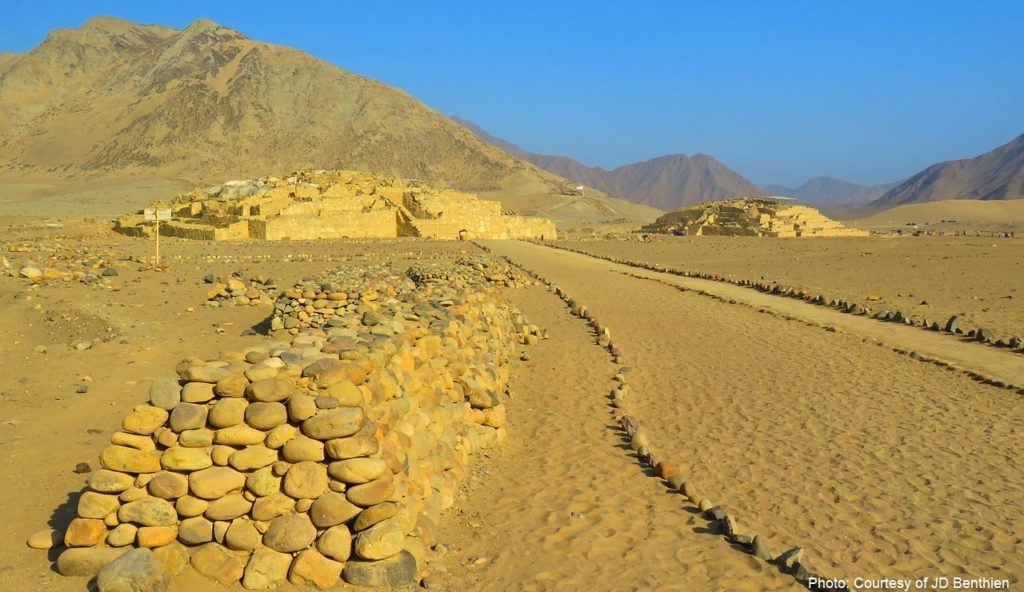
Long before the Inca, Peru was already home to one of the earliest complex civilizations in the Americas. On the central coast, Caral and the wider Norte Chico world were developing monumental architecture and organized urban life thousands of years before the Inca Empire existed.
That matters because it shifts the starting point. Peru’s story does not begin in Cusco in the 15th century, and it certainly does not begin with the Spanish. It begins in a much older world, one that belongs in the same broad human conversation as the earliest civilizations anywhere.
While Greece and Rome rose, Peru was building Paracas and Nazca worlds
By the time the ancient Mediterranean world becomes familiar to most readers, Peru is already well into its own long cultural development. While the Greeks were entering the age associated with Homer and the first Olympic Games, the south coast of Peru was home to the Paracas tradition, remembered for some of the most extraordinary textiles ever produced in the ancient world.
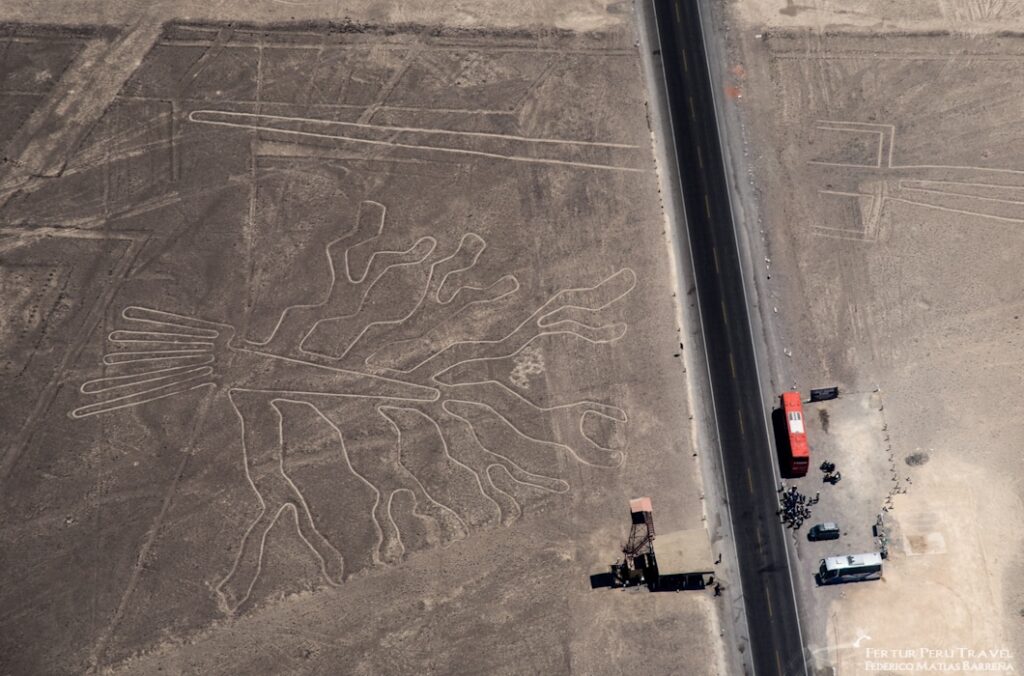
Later, while Rome was rising, consolidating power, and eventually dominating the Mediterranean, the peoples of southern Peru were creating the culture we now know as Nazca, whose immense desert geoglyphs still inspire awe today.
Put side by side, the comparison is striking. While Europe was building the classical world most travelers learned in school, Peru was building a sophisticated world of its own, shaped by very different landscapes, beliefs, and artistic achievements.
As Rome changed, the Andes produced powerful states like Moche, Tiwanaku, and Wari
The parallel becomes even more vivid in the centuries when Rome reached its height and then began to fracture. As the Roman Empire expanded and then entered its long crisis, the Andes were home to powerful societies that were developing monumental ceremonial centers, far-reaching religious influence, and strong regional political organization.
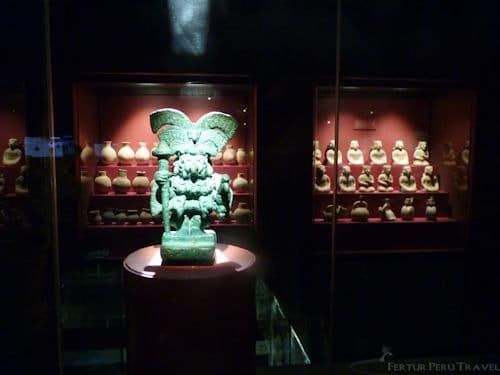
On Peru’s north coast, the Moche flourished, leaving behind some of the most vivid portrait ceramics in the ancient Americas as well as massive adobe ceremonial complexes. In the southern Andes, Tiwanaku emerged as one of the great civilizations of the highland world, while Wari became a major political force in what is now Peru.
So when travelers think of late antiquity and the early medieval transition in Europe, it helps to remember that the Andes were not quiet or marginal during those centuries. They were dynamic, inventive, and deeply organized.
From Crusades to Cusco: the long road before the Inca Empire
One useful points of comparison for first-time visitors comes at the end of the 12th century. A few years after Richard the Lion-Hearted left England for the Third Crusade, the Inca world was still in its early local stage in the Cusco region.
According to legend, about the same time Robin Hood was battling Prince John to clear the way for King Richard’s return, Manco Cápac and Mama Ocllo, the originators of the Inca dynasty, were founding the Kingdom of Cusco.
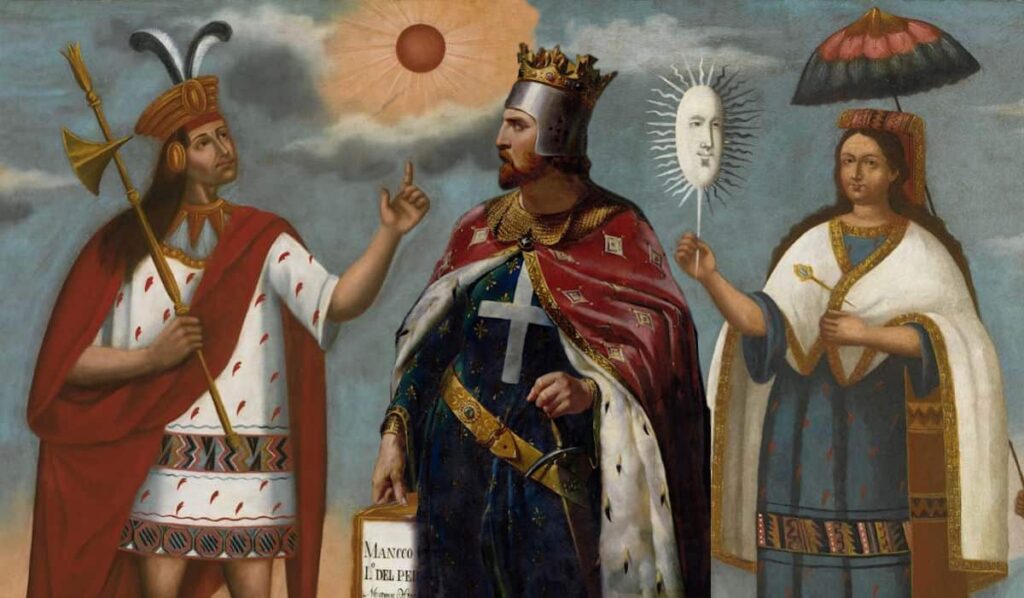
It is easy to imagine the Inca as if they suddenly materialized along with Machu Picchu. They did not. Like other great powers, they had an early phase: local, regional, vulnerable, and still in the process of becoming something larger.
The Inca surge: a 15th-century empire built at breathtaking speed
Then, in the 15th century, everything accelerates. Joan of Arc was executed in 1431. Just a few years later, the crisis that transformed the Inca state was unfolding in Cusco. In later Inca memory, the Chanca threat became the defining test, and out of that moment emerged Pachacuti, the ruler who transformed a regional kingdom into an empire.
This is one of the great turning points in world history. While Europe was still moving through the late Middle Ages, the Inca were reorganizing the Andes into one of the most impressive and efficient states in the pre-Columbian Americas. Roads expanded, administration tightened, rival powers were brought under control, and the imperial vision of Tawantinsuyu took shape.
1492 and after: Spain meets an Andean empire, not an empty land
That timing is worth pausing over. While Gutenberg’s press was helping transform Europe, while Constantinople had fallen, and while Atlantic exploration was beginning to reshape European ambitions, the Inca were carrying out their own extraordinary expansion from Cusco.
They defeated powerful rivals, extended their authority over vast mountain and coastal territories, and strengthened the road system that helped hold the empire together.
By the time Columbus reached the Caribbean in 1492, the Inca state was already one of the great powers of the Americas. Peru was not waiting at the edge of history for outsiders to arrive. It was already living through a major imperial age of its own.
This broader perspective changes the way travelers understand the Spanish invasion. When Pizarro captured Atahualpa at Cajamarca in 1532, the Inca Empire was vast, wealthy, and highly organized. But it had also just been weakened by a destructive civil war between Atahualpa and Huáscar. The Spanish did not conquer by shear might. The Conquistadors recognized a power vacuum — an empire at a moment of internal strain. The consequences were enormous.
Conquest was not a single moment: resistance, Vilcabamba, and enduring memory
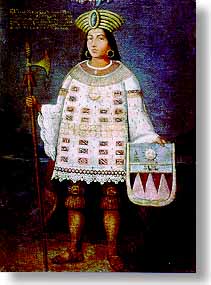
Even then, Peru’s story did not end in 1532 or 1533. Manco Inca resisted. Cusco was besieged. Vilcabamba endured as a Neo-Inca refuge for decades.
Power shifted, but memory, identity, and resistance continued. Later, even in the colonial period, that legacy remained strong enough to inspire major rebellion, most famously in the uprising of Túpac Amaru II in the late 18th century.
Peru’s history is not a straight line from “Inca glory” to “Spanish replacement.” It is a longer story of adaptation, survival, and continuity.
What this changes when you visit Peru
For travelers, this context makes Peru far more rewarding to explore. Machu Picchu becomes even more extraordinary when you understand that it belongs to a much older and broader historical arc. Cusco becomes more than a beautiful city of stone walls and colonial churches. It becomes the heart of a long story that includes early settlement, dynastic tradition, imperial expansion, invasion, resistance, and living Andean culture. Coastal Peru also takes on greater weight. Places connected to Caral, Paracas, Nazca, Moche, and Chimú are no longer side notes to an Inca itinerary. They become essential chapters in the same national story.
Plan a Peru journey that connects the story
At Fertur, we believe the best trips to Peru are not just about seeing famous places. They are about understanding how those places connect. Whether you are planning to visit Lima, the south coast, Cusco, Machu Picchu, or a longer route through several regions, we can help you build a journey that brings Peru’s history into focus from the very first day. When you travel with that context, every site becomes more meaningful, every landscape tells a deeper story, and the country stays with you long after you return home.
Ready to start planning? Explore our destination guides and tours, or contact Fertur to design a Peru itinerary built around the places—and the history—you most want to experience.

Related Posts
Comments (0)