If you were hoping to ring in the New Year of 2026 at Machu Picchu…
Machu Picchu’s “Temple of the Moon” May Have Been an Elite Inca Mausoleum
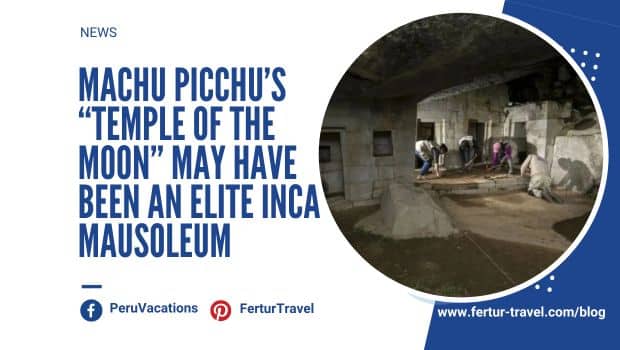
Machu Picchu still has the power to surprise us. A new archaeological investigation on Huayna Picchu is challenging one of the most familiar names in the sanctuary: the so-called “Temple of the Moon.”
According to Peruvian archaeologists now studying the site, this remarkable cave complex may not have been a temple at all, but rather a funerary space reserved for elite Inca figures.
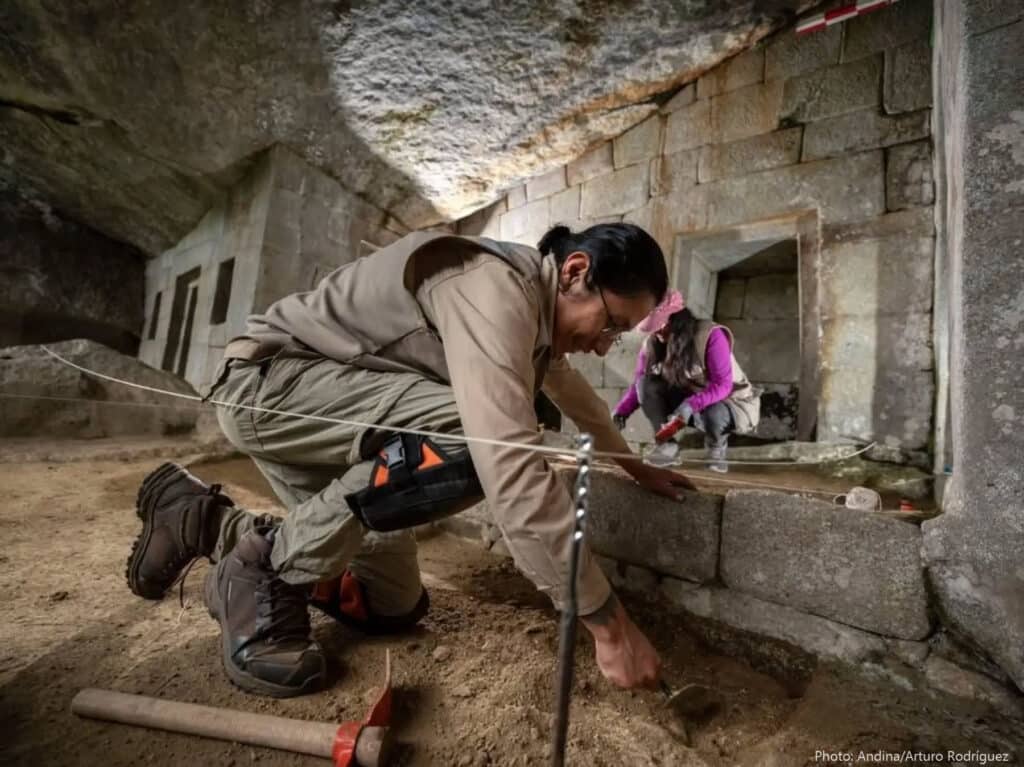
Cusco archaeologists Rolando Pizarro Silva and Jackeline Ortiz are leading the research under a project titled “Endoscopic Survey at the Temple of the Moon in the Machu Picchu Archaeological Park.” Their working hypothesis holds that the Gran Caverna, located within Huayna Picchu, functioned as a mortuary precinct rather than a ceremonial shrine dedicated to the moon.
Where Did “Temple of the Moon” Come From?
The investigation also puts the name “Temple of the Moon” itself under scrutiny. The archaeologists argue that popular interpretation — not firm archaeological evidence of lunar worship — gave the site its poetic label, likely inspired by the way moonlight illuminates the cave. In other words, the Inca may have built this space for a very different purpose than its modern name suggests.
Three Niches and a Radical New Hypothesis
Architecture is driving researchers in this direction. The team points to the quality of the stonework, foundations, and associated structural features as indicators of high-status construction. They also identified three trapezoidal niches in the principal structure — features that support the idea that builders designed the site to hold mallquis, the preserved remains of important ancestors or rulers.
The investigation advances in three phases: surface reconnaissance, controlled excavation, and endoscopic exploration. Excavators have already reached about 75 centimeters, uncovering foundations and evidence of prepared flooring inside the cave. In the next phase, the team will insert a small camera into narrow internal spaces to inspect the construction without causing damage — a critical consideration at a site as sensitive as Machu Picchu.
Peru’s Ministry of Culture has already authorized the project, but the team still awaits specific approval from the Machu Picchu Archaeological Park to carry out the endoscopic work. Even with approval, the cave’s finely built architecture limits where the team can insert the camera, so this phase will likely remain narrow in scope.
Machu Picchu Still Holds Its Secrets
For travelers, this research is a reminder that Machu Picchu is not a static monument with all its mysteries solved. Even in one of the most studied archaeological landscapes in the world, new interpretations keep emerging. If archaeologists confirm this hypothesis, scholars will understand Huayna Picchu’s famous cave not as a moon temple, but as part of a sacred funerary landscape tied to elite ancestors, memory, and the Inca relationship between the living and the dead.
That is part of what makes Machu Picchu so compelling. Beyond the iconic views and the dramatic mountain setting, it remains a living field of discovery — one where every new study deepens our understanding of how the Incas organized power, ritual, and sacred space in the Andes.

Related Posts
Comments (0)