When the June 2026 issue of National Geographic reached readers, it introduced a Peruvian archaeological…
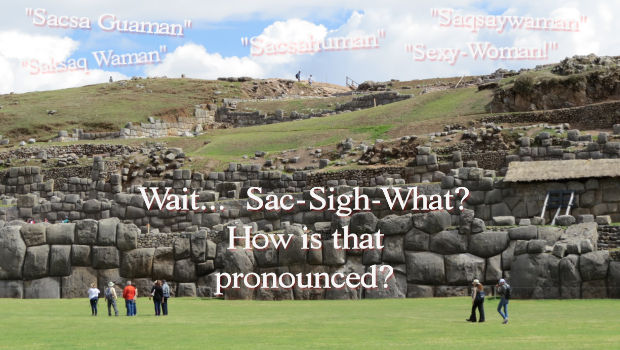
How to pronounce the name of that awesome ruins above Cusco
On the hillside above Cuzco there is a must-see destination: the temple fortress of Sacsayhuamán — or is it Saqsaywaman? The spelling, pronunciation, and meaning of the name of this awe-inspiring feat of Inca megalithic architecture have evolved over the centuries. This post untangles the history and gives you a practical guide to saying it confidently before you arrive.
Different spellings over time
The name as it appears at the gates of the site today is spelled Saqsaywaman, but the most widely accepted form in academic writing and on the internet has become Sacsayhuaman (sometimes written Sacsayhuamán).
Neither spelling is an accident. They reflect centuries of transcription from spoken Quechua into Spanish, English, and modern standardised Quechua orthography — and a fair amount of disagreement along the way.
Early Spanish chroniclers
Juan de Betanzos (writing 1551–1557) called it Xacxaguaman. As the official Quechua interpreter for the Conquistadors, and married to an Inca princess, he is considered one of the most reliable early sources. He made clear that Sacsahuaman was the name of the hill on which the fortress was built, not the fortress itself.
Inca Garcilaso de la Vega used Sacsahuaman in his Royal Commentaries of the Incas (1609): “They built the fortress on a high hill that is to the north of the city, called Sacsahuaman.”
Felipe Guaman Poma de Ayala wrote it as sacsa guaman three times in his 1615 account of the Inca Empire.
The “sacsay” spelling and a false etymology
The version with a y — Sacsayhuaman — entered common use by at least 1866. Anthropologist John Howland Rowe, one of the twentieth century’s foremost Inca historians, traced this in his 1987 paper “How did the Incas say ‘Sacsahuaman’ in the 16th Century?” He concluded the y was the product of a false etymology embedded in Cusco criollo folklore — the one that produces the popular translation “Eat your fill, hawk!” Almost certainly not the original meaning.
What guides often say on tours
Many guides coach English-speakers by starting with Sexy Woman, then building up syllable by syllable: Sexy Woman → Sax-See-Woman → Sac-Sigh-Wha-Man…
What you'll hear on tours
This mnemonic has been in circulation for decades and it is memorable — but it is both linguistically inaccurate and a bit cringey for many travelers. The phonetic guide below will get you much closer with only a little more effort.
How to say it: a practical pronunciation guide
Based on the classical Quechua reconstruction, here is a plain-Latin phonetic guide. The stressed syllable is marked in capitals:
| Version | Phonetic guide |
|---|---|
| Slow — syllable by syllable | SAHK · sah · wah · MAHN |
| At natural speed | SAHK-sah-wah-MAHN |
The k is a clean stop (as in “sock”), the w is soft, and the final n is light. There is no “sexy” — and no “why.”
🔊 Audio clip: Forvo pronunciation “Vamos todos a Sacsayhuamán” (Translation: Let’s all go to Sacsayhuamán)
How the Incas actually pronounced it
Rowe’s analysis of the early chronicle spellings — particularly Betanzos’s Xacxaguaman and Guaman Poma’s sacsa guaman — led him to conclude that the first word was saqsa in Classical Inca Quechua, stressed on the penultimate syllable.
“The first word in our name was, therefore, saqsa in Classic Inca, and it was accented on the next to last syllable. That gives us saqsa waman as the sixteenth century pronunciation of the name of the hill with the fortress of Cuzco on it.”
John Howland Rowe, Ñawpa Pacha: Journal of Andean Archaeology, No. 25/27 (1987–1989)
The second word, waman (hawk), is consistent across virtually all early sources. Whatever the site was originally called, the hawk was always there.
Which spelling should you use?
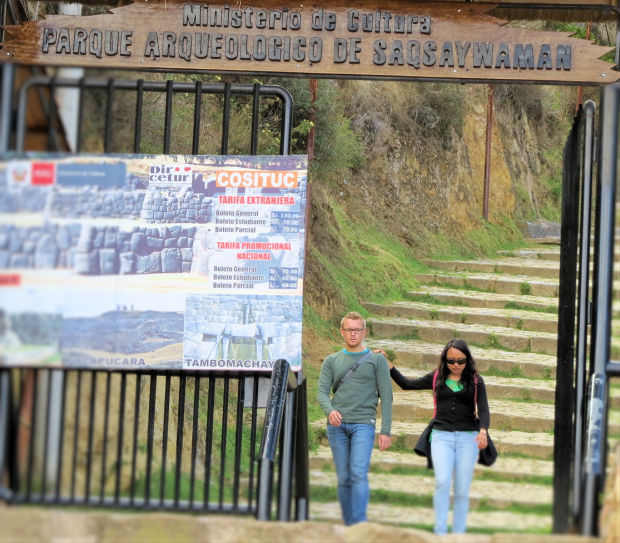
For general travel writing, Sacsayhuaman remains the most recognised form internationally. Saqsaywaman is the official modern Quechua spelling used at the site itself and is preferred in academic and Peruvian government contexts. Either is defensible — just be consistent within a single piece.
No matter how you spell or say it, Sacsayhuamán is a must-see for anyone visiting Cusco — a titanic feat of Inca stonework that deserves a name worthy of it.
Source: John Howland Rowe, “How did the Incas say ‘Sacsahuaman’ in the 16th Century?”, Ñawpa Pacha: Journal of Andean Archaeology, No. 25/27 (1987–1989), pp. 151–153.

Related Posts


Comments (0)