When the June 2026 issue of National Geographic reached readers, it introduced a Peruvian archaeological…
Peru Approves New Machu Picchu Master Plan
Peru just approved a new Machu Picchu Master Plan, setting the framework to guide management of the site through 2031.
The document is a roadmap to shape how officials manage visitor flow, conservation, access, and long-term protection at Peru’s most important heritage destination.
The approval does not mean travelers should expect any immediate same-day change to tickets or entry rules. This is the policy framework from which future decisions on Machu Picchu are likely to emerge. And capacity, tour circuits, timing, access, and conservation are at the center of that discussion.
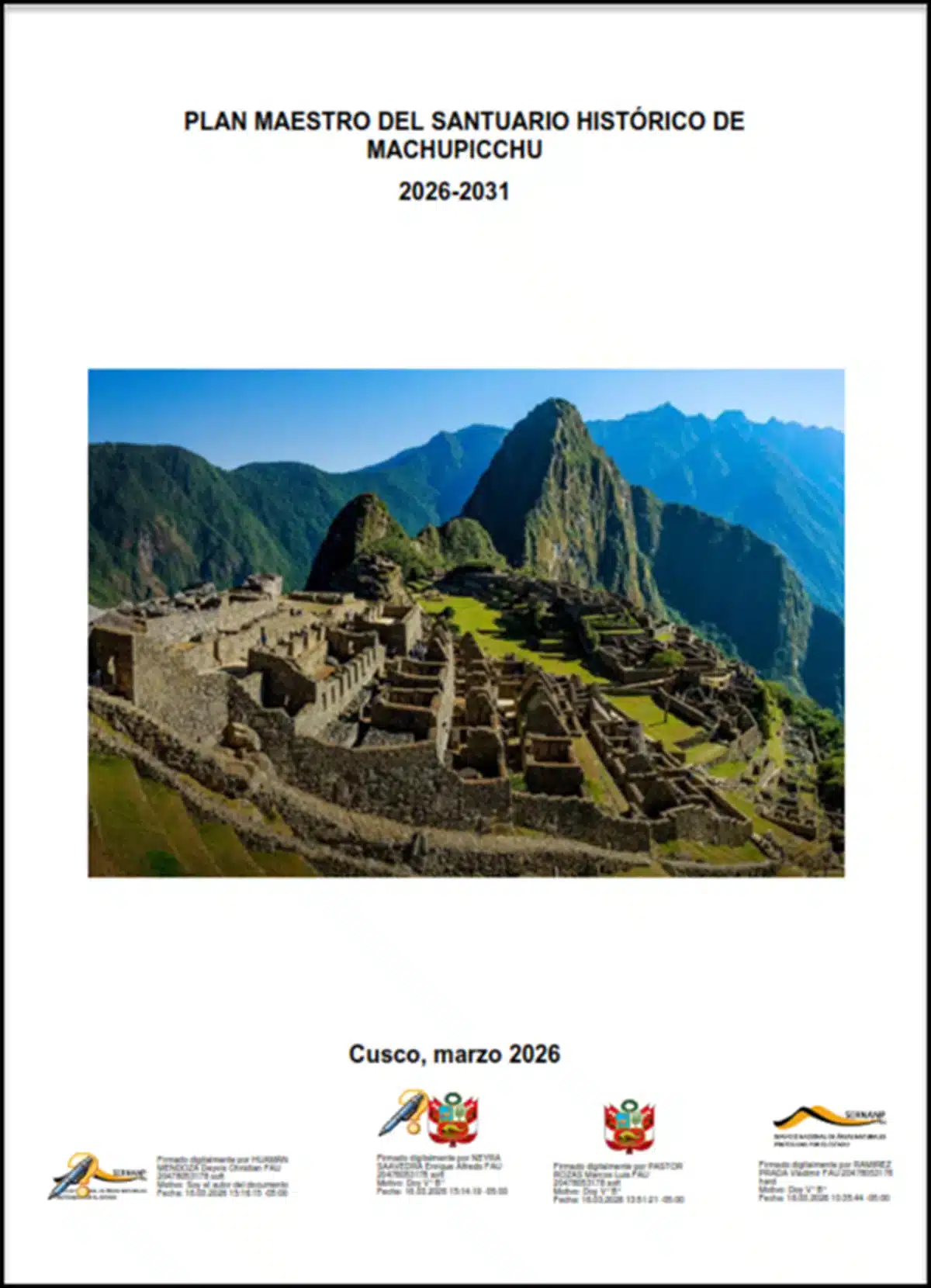
Overview of Machu Picchu Master Plan 2026-31
Open
Top 10 Issues Identified in the New Machu Picchu Master Plan 2026–2031
The new Master Plan for the Historic Sanctuary of Machu Picchu is not only a roadmap for future management. The 138-page report also offers a revealing diagnosis of the pressures affecting one of Peru’s most important cultural and natural landscapes.
Some problems in the plan are familiar, especially those tied to visitor management and infrastructure. Others are more troubling. They show that environmental damage, weak enforcement, unfinished restoration, and long-delayed public investment still threaten the sanctuary.
Together, these problems show that Machu Picchu’s challenges go far beyond ticketing and tourist circuits. The sanctuary faces pressure on its archaeology, ecosystems, waterways, wildlife, trails, and surrounding settlements. The plan makes that plain. In several areas, the Master Plan for Machu Picchu describes 10 problems that remain serious and unresolved.
1. The Salkantay Glacier Is in Critical Condition
The plan states that the Incachiriasca glacier is in critical condition and shows clear signs of accelerated ice loss. Its current surface area is listed at just 168,049 square meters. Climate change is identified as the cause, and the document treats the glacier’s retreat as irreversible. For now, the response is limited to continued monitoring rather than recovery.
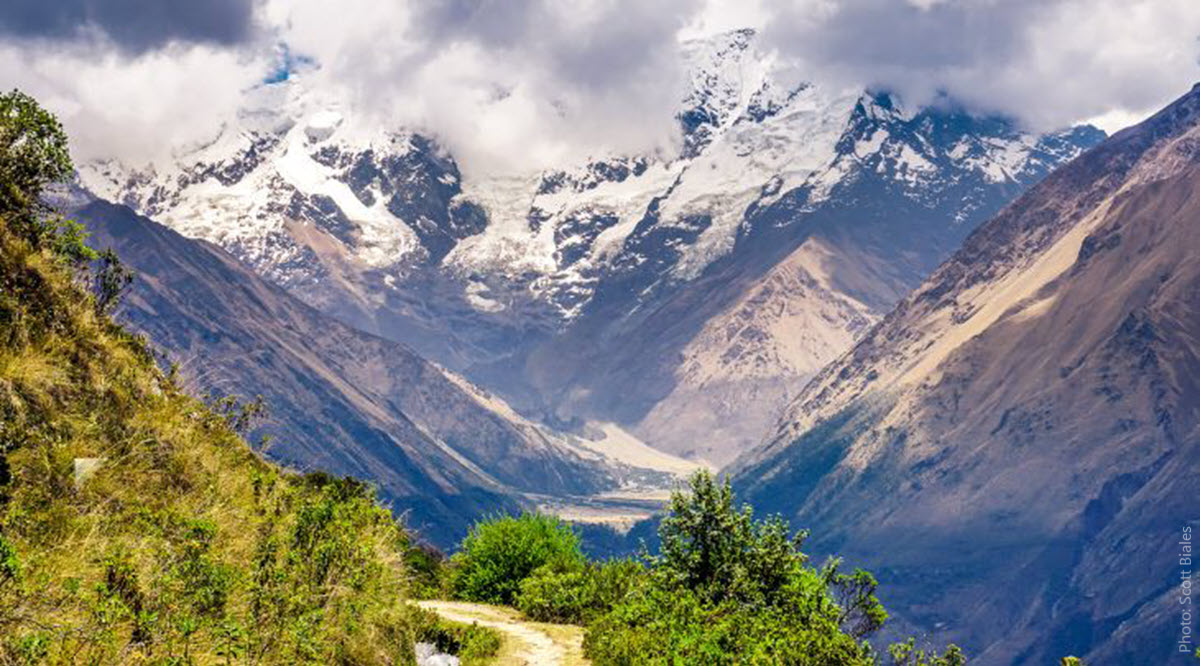
Glacier loss in the Machu Picchu region impacts water systems, landscapes, and the long-term ecological balance of the broader sanctuary.
2. Machupicchu Pueblo Continues to Discharge Sewage into the Vilcanota River
The plan states directly that Machupicchu Pueblo discharges into the Vilcanota River and says the problem requires immediate attention through coordinated action. This is one of the clearest examples in the document of an environmental issue that remains active in the present, not one confined to the past.
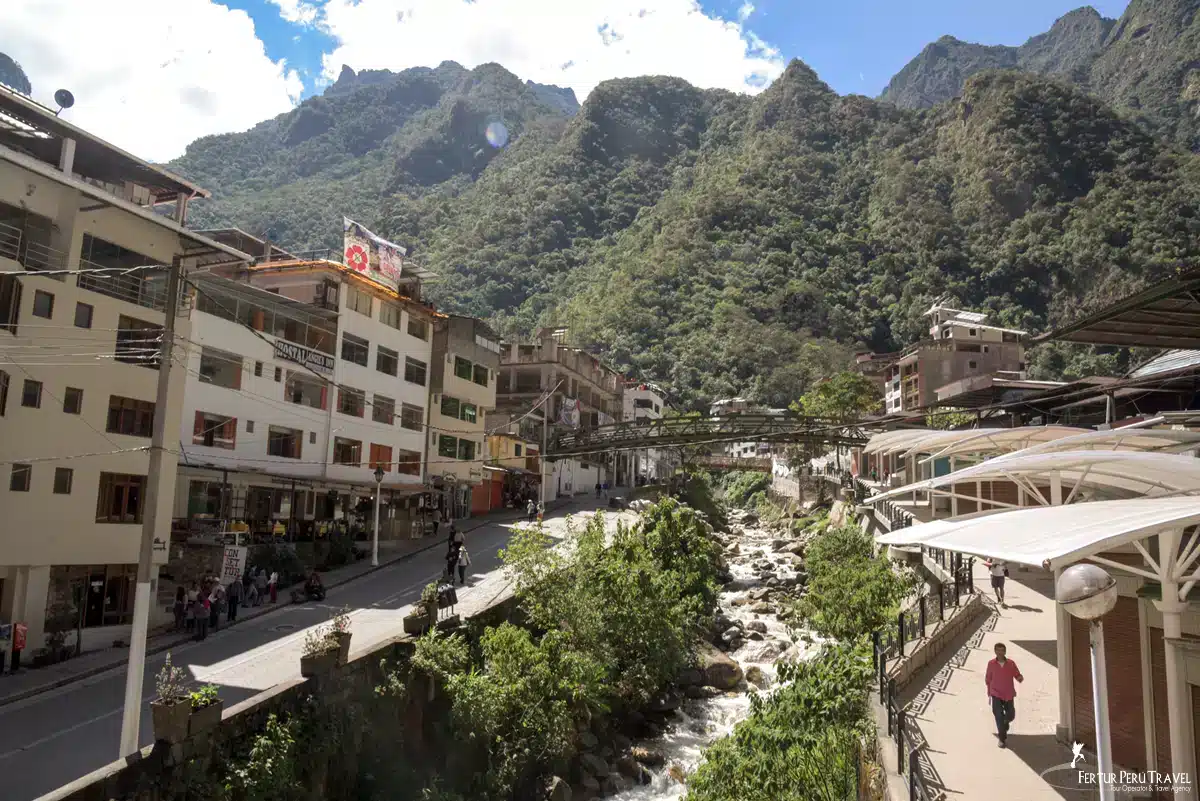
The river is central to the sanctuary’s landscape and ecological health. It also supports species identified as conservation priorities, including the otter and the torrent duck. The fact that this discharge remains unresolved is one of the most serious red flags in the plan.
3. The Hydroelectric Dam Is Affecting the Torrent Duck Population

The plan cites a 2020 study showing that the Machupicchu hydroelectric dam has caused a significant decline in the torrent duck population.
According to the document, reduced dry-season flow is damaging aquatic conditions inside the sanctuary.
The plan proposes an ecological flow study, but that work has not yet been completed. For now, the impact is acknowledged, while the key technical response remains pending.
4. Forest Fires Have Damaged Nearly 2,000 Hectares in Ten Years
Forest fires remain one of the sanctuary’s most persistent threats. The plan says 1,855.57 hectares have been affected over the last decade. It also identifies the invasive grass Melinis minutiflora, or pasto gordura, as a major factor that worsens the problem.
This grass spreads aggressively in burned areas and helps create a cycle in which fires become more likely and more damaging over time. The plan notes that about 300 hectares are currently affected, yet its five-year target is to reduce that area by only 30 hectares. That is a modest response to a problem the document itself describes as serious.
5. Informal Construction Continues to Encroach on Protected Areas
The plan identifies around 400 hectares within the sanctuary that are already affected by unauthorized construction in rural zones. It also makes clear that current control and surveillance capacity is limited.
This matters because once informal occupation advances inside a protected area, reversing it becomes harder and more politically difficult. The document acknowledges the scale of the pressure. It does not suggest that the problem is under control.
6. Visitor Management Still Has Major Gaps
The plan confirms that visitor management remains a central weakness. Although the llaqta has an authorized capacity of 2,244 visitors per day, the document also shows that authorities still lack full data on unplanned or irregular visits.
That gap is not minor. The plan identifies unregulated access, people climbing on walls, and erosion of pre-Hispanic pathways as high-level threats. It also admits that the sanctuary still lacks a technological monitoring system capable of detecting irregular entries. In other words, one of the country’s most visited heritage sites still does not have full control over one of its most basic management functions.
7. The Andean Bear’s Habitat Is Becoming More Fragmented
The spectacled bear remains one of the sanctuary’s most emblematic species, but the plan shows that its habitat is under growing pressure. Expanding infrastructure in rural populated areas is reducing usable territory, while cattle grazing and illegal hunting remain ongoing threats.
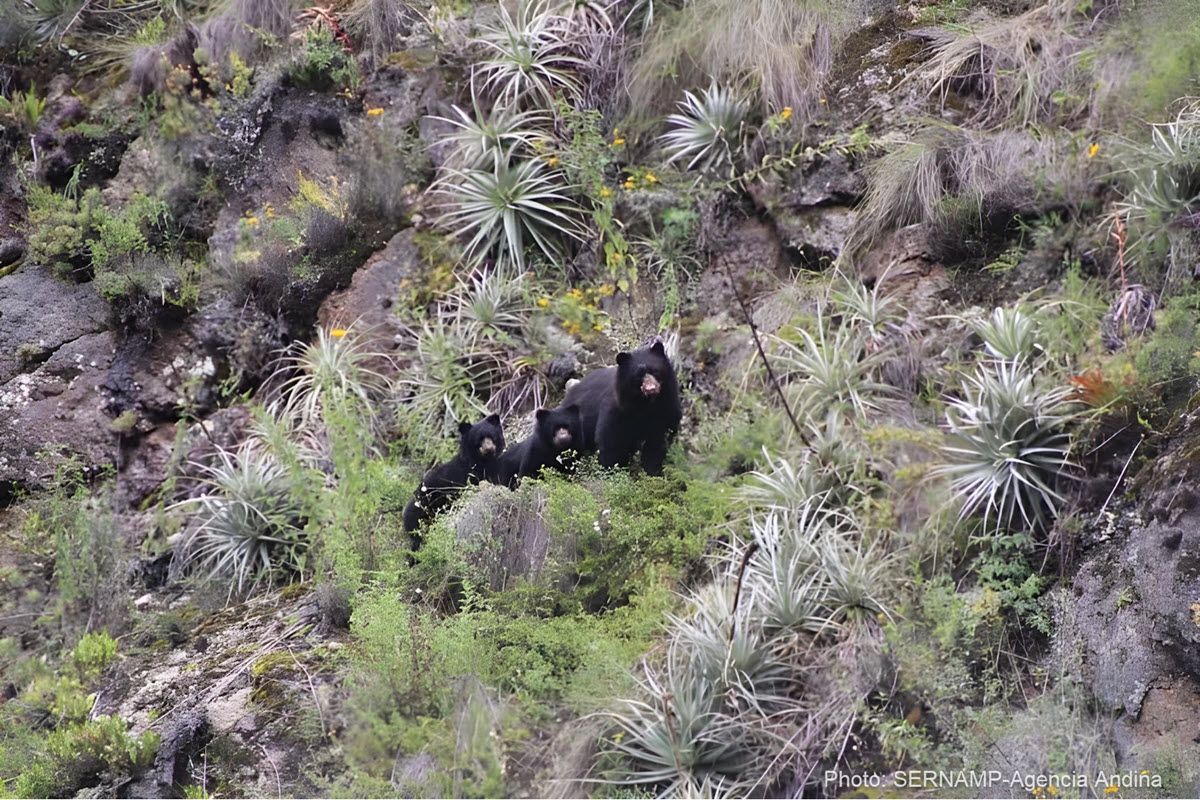
The document notes an increase in the estimated adult population, from 18 in 2018 to 56 in 2025. Even so, it also warns that improved counting methods may explain part of that change. The overall picture is not simple population recovery. It is a species under continued pressure in a landscape that is becoming more fragmented.
8. Several Important Archaeological Sites Still Lack Formal Demarcation
The plan notes that several priority archaeological monuments within the wider Machu Picchu sanctuary still have not been formally demarcated. Among them are Salapunku, Choquelluska, Qoriwayrachina, Retamal, Torontoy, Intiwatana, Machuq’ente, Cusichaka, Tarayoq, Hatunchaka, and Patawasi.
That may sound like a bureaucratic technicality, but it has real consequences.
Most of these sites lie along the Urubamba Valley rail corridor and the Inca Trail approaches from Km 82 (Piscacucho) to Aguas Calientes. They served as checkpoints, control points, or support sites rather than as monuments directly adjacent to the main citadel.
Without formal legal boundaries, they are more vulnerable to encroachment, construction, and land-use conflicts. The plan lists their demarcation as a priority for the first three years, which means the issue remains unresolved.
9. Several Inca Trail Sections Remain Out of Service
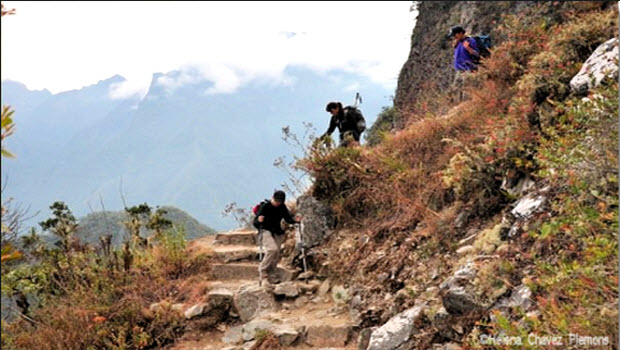
The document states that several important sections of the Inca Trail network remain non-functional and have not yet been rehabilitated. Among them are the Phuyupatamarka–Qantupata–Intipata section, the valley-floor route linking Qoriwayrachina, Chachabamba, and Choquesuysuy, and the Chaquicocha–Qantupata section.
This is both a conservation issue and a visitor-management issue. When heritage routes remain disabled, access narrows, pressure concentrates elsewhere, and opportunities for better distribution across the sanctuary become harder to realize.
10. The Machupicchu–Choquequirao Biosphere Reserve Proposal Remains Unfinished
The plan revisits the long-discussed proposal for a Machupicchu–Choquequirao Biosphere Reserve, but the project remains incomplete. The document says the proposal advanced during the previous planning period but never reached a finished stage. The dossier remains preliminary, and UNESCO recognition is still pending.
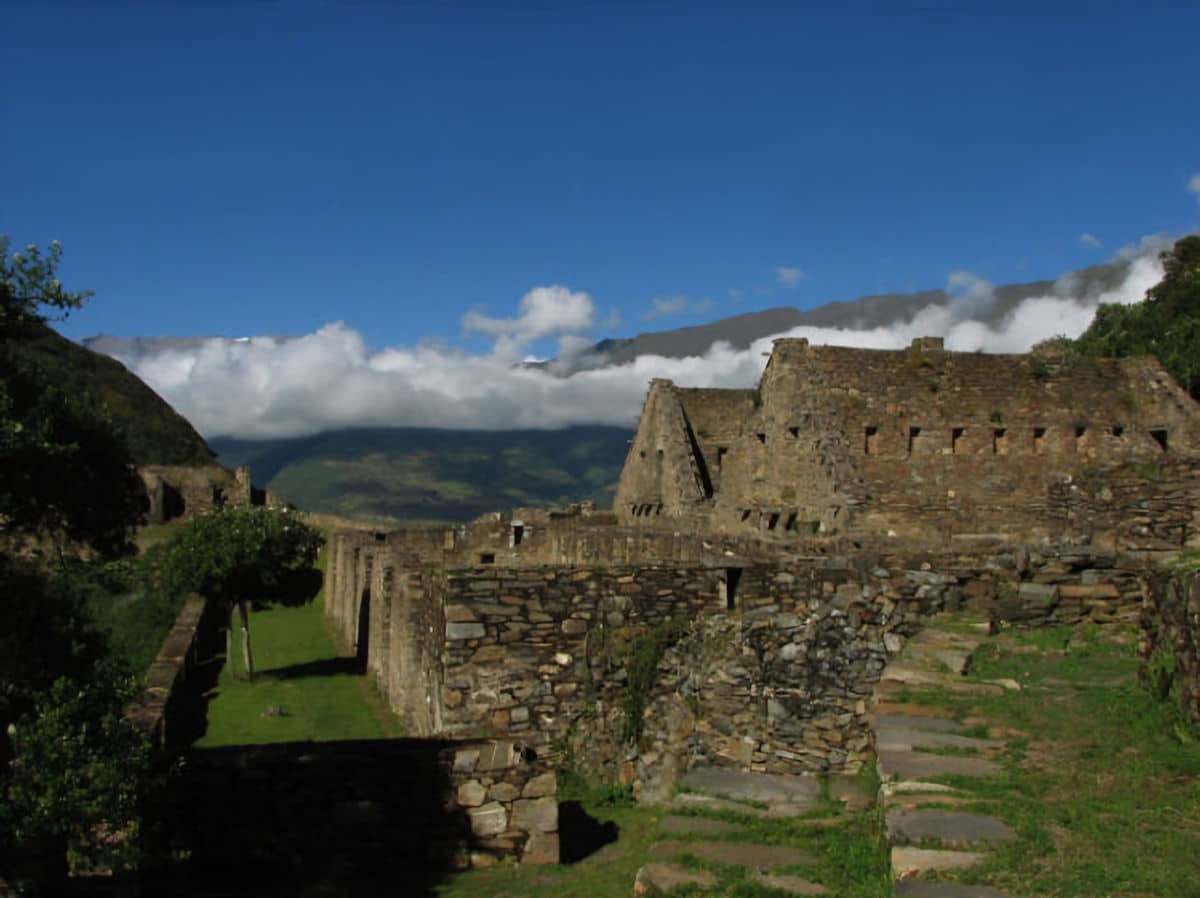
That does not mean the idea lacks value. It means one of the sanctuary’s most ambitious long-term conservation goals is still unfinished after years of discussion.
What These Problems Reveal
The most important takeaway is that this new Master Plan does not describe a sanctuary facing one isolated problem. It describes a landscape under pressure from many directions at once.
Climate stress, wastewater discharge, fire risk, habitat fragmentation, unfinished restoration, weak territorial control, and incomplete visitor monitoring all appear in the same document. Some of these issues require better science. Others require political will, stronger enforcement, or long-delayed infrastructure. Several require all of those things at the same time.
For anyone who follows Machu Picchu closely, that may be the most important message in the plan. The future of the sanctuary will depend not only on how many visitors enter the citadel, but on whether Peru can address the broader environmental, archaeological, and governance problems the document now lays out in plain terms.
Tourism Minister Says the Plan Should Improve Integrated Management
Teresa Mera, minister of Peru’s Ministry of Foreign Trade and Tourism (MINCETUR), said the plan took about six years to develop and was built through years of collaboration across multiple actors.
Most notably, Mera highlighted that the plan now expressly incorporates tourism alongside archaeology and environmental conservation like never before.
“For the first time, tourism-related aspects have been expressly incorporated,” Mera told Radioprogramas Radio. “So we are going to ensure that sustainable tourism is developed within the historic sanctuary.”
Looking ahead, she acknowledged that stronger data is still needed to support future decisions.
According to Mera, MINCETUR signed an agreement with the Ministry of Culture last year to conduct a technical carrying-capacity study and transferred S/1.8 million for that purpose. She said the study should be completed this year following an international call for proposals. In the meantime, the visitor capacity currently set by the Ministry of Culture remains in place.
What About Visitors to Machu Picchu?
Machu Picchu has entered a new stage. The collapse in visitor totals caused by the pandemic is over, but the citadel still has not fully returned to its pre-pandemic high.
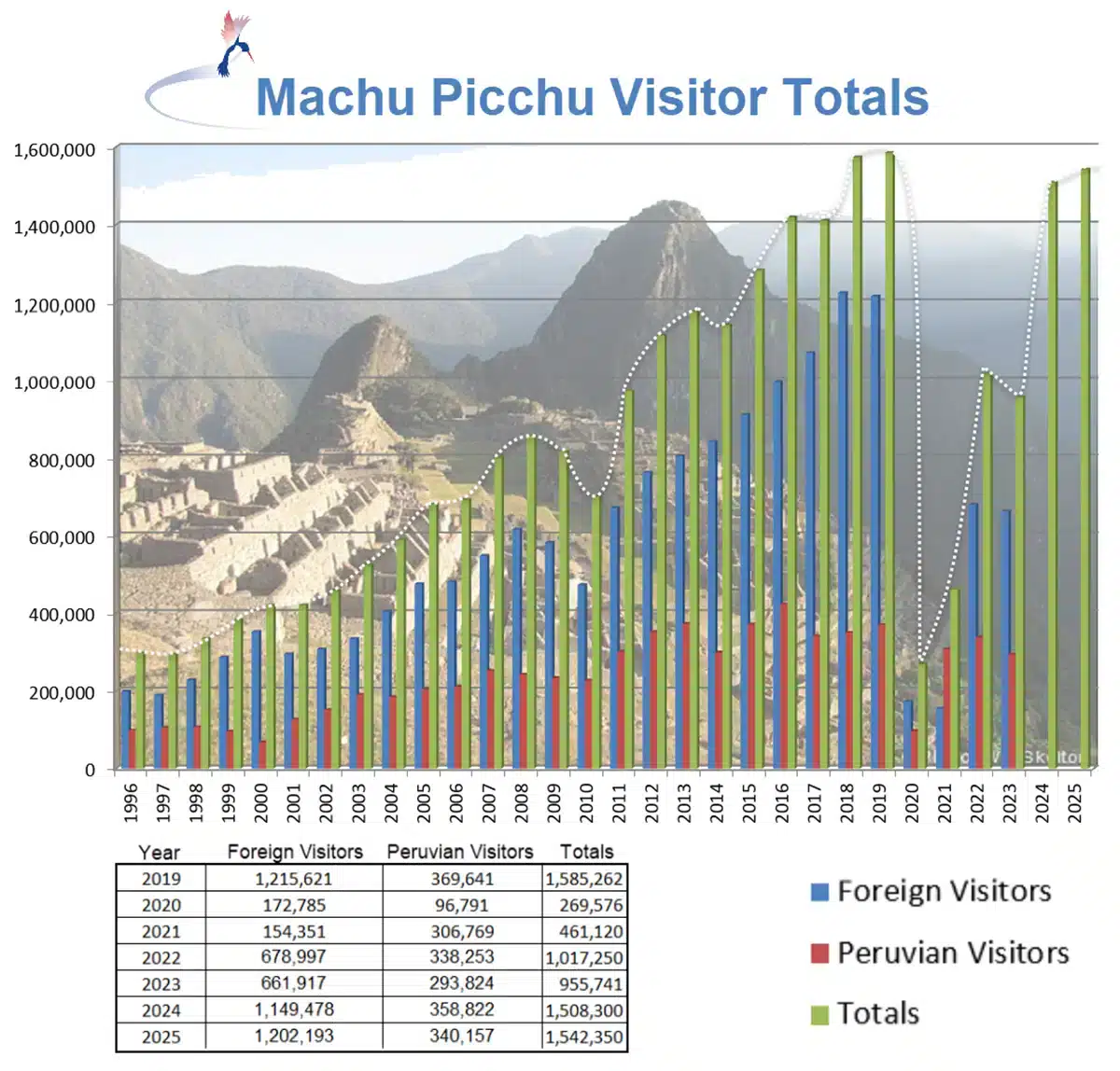
In 2019, Machu Picchu received more than 1.5 million visitors. That total plunged to 269,576 in 2020 during Covid-19, then rose to 461,120 in 2021. Recovery strengthened in 2022, when the site recorded just over 1 million visitors, before slipping slightly to 955,741 in 2023. The rebound continued in 2024, when total visits climbed back above 1.5 million, and in 2025, when the site drew 1,542,350 visitors.
These figures show a strong recovery, but they also show that Machu Picchu remained 42,912 visitors below its 2019 total last year. That gap matters. The site is no longer dealing with a tourism emergency caused by shutdowns and travel collapse. It now faces a more complex challenge: how to manage one of the world’s most famous archaeological destinations as demand moves back toward peak levels.
Capacity, Circuits, and Visitor Flow Move to the Center
The new Machu Picchu Master Plan points to a more disciplined approach to visitation. It emphasizes updated rules, clearer schedules and visit times, better-designed circuits, alternate routes, and renewed attention to carrying capacity.
That is the real story for travelers and the tourism sector. The Master Plan sets the course, but it does not by itself bring an abrupt change in access. For now, the current cap remains in place.
The Sanctuary Is Bigger Than the Citadel
Machu Picchu is not only the famous Inca citadel.
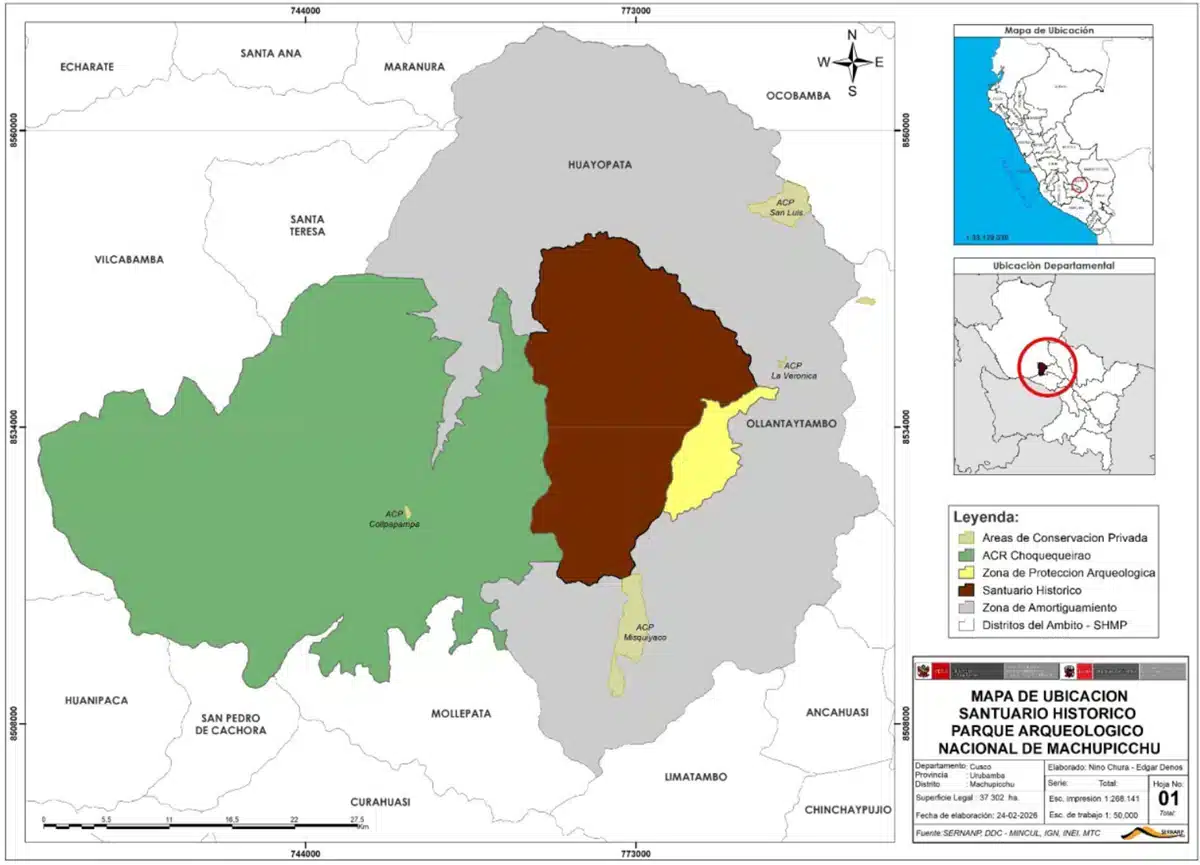
The new plan treats Machu Picchu as a much broader cultural and natural landscape. It includes the citadel, dozens of associated archaeological sites, extensive sections of Inca roads, sacred mountains, and a wide protected area with a large buffer zone. That broader view changes the frame. Machu Picchu is not just a viewpoint or a ticketed monument. It is a protected heritage system.
Instead of concentrating attention on the same iconic image, authorities are working toward better distribution across routes, sectors, and linked heritage spaces within the wider sanctuary. “For the first time, tourism-related aspects have been expressly incorporated. So we are going to ensure that sustainable tourism is developed within the historic sanctuary,” Mera told Radioprogramas Radio.
The Recovery Pattern Also Matters
The recovery has not been even across all visitor segments. Foreign demand has rebounded more strongly, while domestic visitation has recovered less evenly. That difference is worth watching because future decisions on capacity, schedules, pricing, or route design could affect foreign and Peruvian visitors in different ways.
Governance and Conflict Prevention Also Matter
Mera also linked the Master Plan to conflict prevention. She said communities and other directly involved actors took part in its preparation. She argued that this broad participation should help Peru avoid repeats of the tensions and disruptions seen last year, when protests shut down train service to and from Machupicchu Pueblo and left tourists stranded.

Related Posts

Comments (0)