In 1987, archaeologist Walter Alva and his team helped save one of ancient Peru’s greatest…
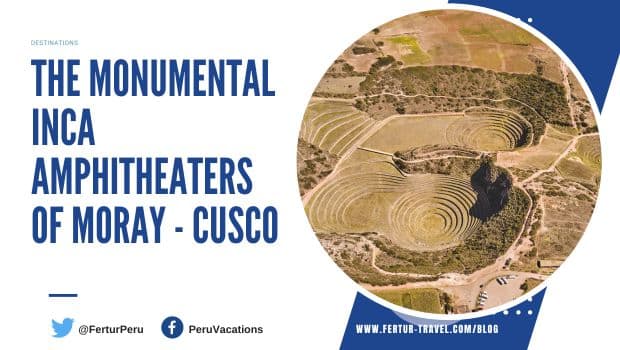
Moray Peru: Inca Circular Terraces Near Cusco & Maras Salt Mines
Stand at the rim of Quechuyuc Muyu, peer down at the central terraced monument of Moray, and you will be awestruck. Images of the unique circular terraces are abundant online, but they can’t begin to do the site justice. The shorthand most Cusco guides offer: an open-air Inca greenhouse, 120 feet (37 m) deep, where the lower terraces produce their own microclimates warm enough to cultivate jungle fruits at 11,500 ft (3,500 m) above sea level. That premise is accepted by most guides — and debated by researchers. Here is what you need to know about the history, purpose, and best ways to visit Moray, Peru.
Moray at a Glance
- Location: Maras Pampa, Sacred Valley — 50 km (31 miles) northwest of Cusco; roughly halfway between Cusco and Machu Picchu
- Altitude: 3,500 m (11,500 ft)
- Best season: May–October (dry season, clear skies); November–March offers lush green terraces and smaller crowds
- Getting there: ~80 minutes by road from Cusco via Maras; most visitors combine Moray + Maras salt mines in a single day trip
- Entry ticket: Boleto Turístico Circuito 3 (Sacred Valley circuit) — covers Moray, Chinchero, Pisac, and Ollantaytambo
- Recommended stay: Half day at the site; full day if combining with Maras
- Not to miss: The view from the rim of Quechuyuc Muyu at midday; the visible paqcha irrigation channels; lunch at MIL Restaurant (book in advance)
In this guide
- 1. Rediscovery of Moray in 1931
- 2. Origins of the Inca Ruins of Moray
- 3. Crops Cultivated by the Inca at Moray
- 4. Scientific Debate: Greenhouse or Ceremonial Center?
- 5. An Alternative Theory
- 6. How to Visit Moray Peru from Cusco
- 7. Best Time to Visit Moray
- 8. Altitude and Acclimatisation
- 9. Activities at and Around Moray
- 10. Frequently Asked Questions
1. Rediscovery of Moray in 1931
For roughly 400 years after the Spanish Conquest, Moray was unknown to the wider scientific world — a colossal piece of Inca engineering sitting in plain sight on the Maras Pampa yet absent from every colonial and early-republican survey of the region.
That changed in 1931, when American geologist Robert Shippee and U.S. Navy pilot Lt. George Johnson flew over the site during an aerial photographic expedition of the Andes. The images of three large and one smaller set of perfect concentric terraced circles carved into the terrain amounted to a major archaeological discovery.
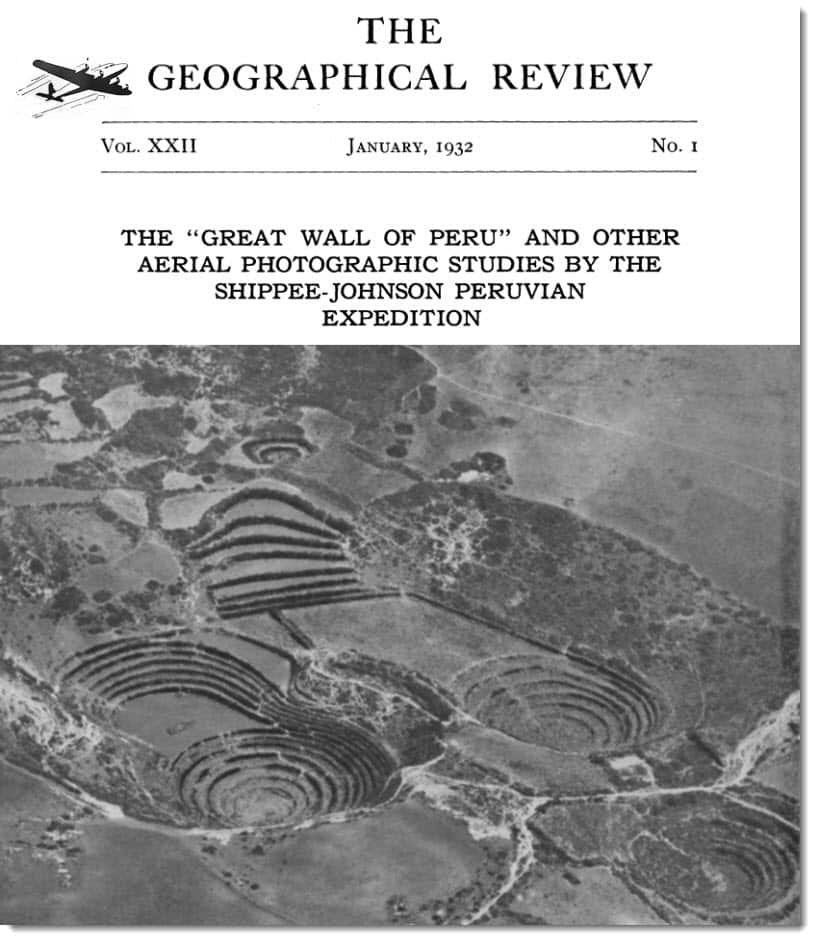
Shippee and Johnson published the photographs the following year in the Geographical Review, describing the site as “a group of amphitheaters on the Maras Pampa about fifteen miles northwest of Cuzco that seem to have escaped the notice of archeological explorers of the region.” Shippee noted that priests in a Cusco church knew of the ruins and said they had been used by the Inca for religious presentations during festivals — but that no written record of them existed in the regional literature.
2. Origins of the Inca Ruins of Moray
In brief: Moray was built primarily by the Inca in the 15th–16th centuries, but archaeological evidence suggests the bottom six terraces predate them by several centuries.
The site sits at the northeastern base of Wayñunmarka Mountain, roughly equidistant between Cusco and Machu Picchu. Inca civil engineers constructed the geometric landscape we see today during the 15th and early 16th centuries. However, extensive research indicates that the deepest six terraces were the work of the Huari (Wari) culture, a pre-Inca civilisation active between roughly the 6th and 10th centuries CE.
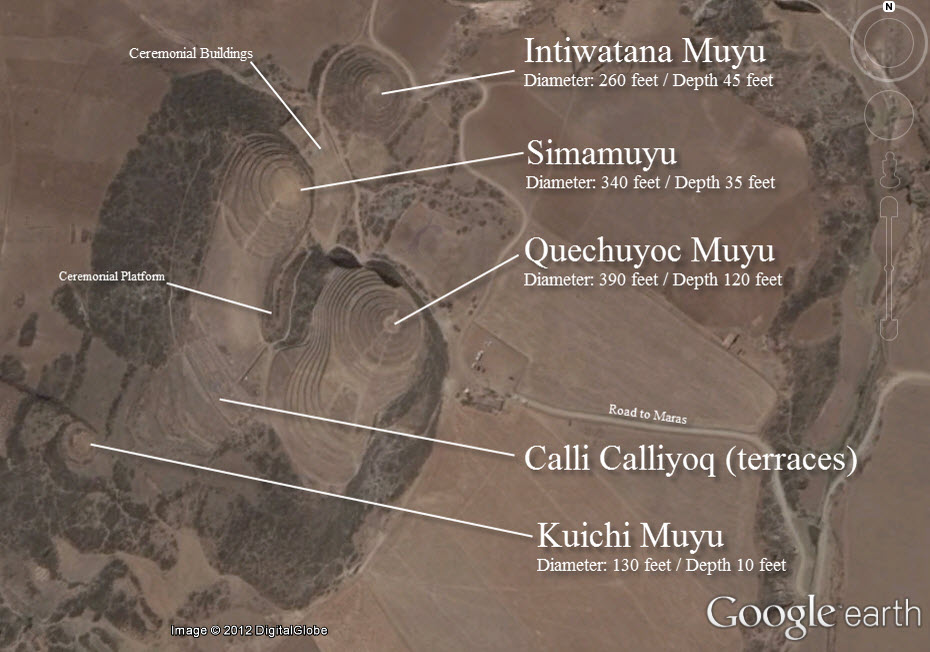
The site covers 92 acres (37 hectares) and contains four terraced sinkholes — called muyus in Quechua — ranging from 40 m to nearly 120 m (130 to 400 ft) in diameter.
3. Crops Cultivated by the Inca at Moray
In brief: The Inca fed the terraces via a precision drip-irrigation system and are believed to have tested crop varieties across deliberately engineered microclimates with a temperature range of 5°C (9°F) between rim and floor.
The agricultural terraces were supplied by a complex irrigation system whose remains are clearly visible today: small holding reservoirs, hydraulic channels, and carved stone paqcha conduits that controlled the flow of natural spring water to a mathematically precise trickle. Without this system, the muyus would revert to their natural state — unstable sinkholes that would erode the terraces within years.
The prevailing interpretation is that Inca agronomists used these engineered microclimates to test which varieties of maize, potatoes, quinoa, beans, and other staples were best suited to different combinations of temperature, humidity, and altitude. Strains resistant to frost, excessive rainfall, or drought were of particular value in an empire spanning climates from the Pacific coast to the high Andes to the Amazonian foothills.
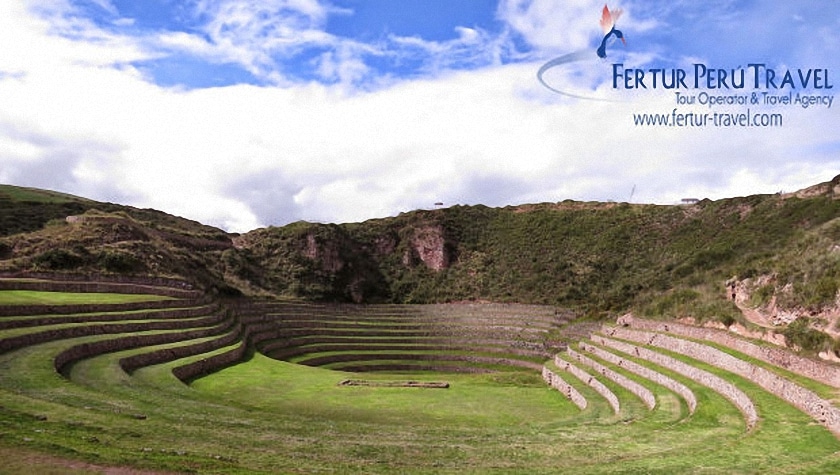
The temperature differential between the highest and lowest terrace at Moray is 5°C (9°F) — enough to represent meaningfully distinct growing environments within a single structure. The sun’s angle at the midday zenith is such that no terrace at any level falls into shadow, a design feature that may have been intentional.
Agricultural mastery across punishing Andean terrain was foundational to Inca statecraft. The empire fed an estimated 12 million subjects across territory that ranged from sea level to above 4,000 m (13,000 ft). Moray may have been one of the tools that made that possible.
4. Scientific Debate: Inca Greenhouse or Ceremonial Center?
In brief: Most specialists today lean toward Moray having served a strong agricultural-experimental function, likely intertwined with ritual and astronomical observation — rather than a purely ceremonial role. The honest answer is that the site was almost certainly both.
Prof. John Earls, of the Pontificia Universidad Católica del Perú, led the landmark soil-temperature study of Moray in the 1980s. His measurements showed that the giant inverted-cone platforms generate a range of microclimates: temperatures at the rim of the Pampa de Maras plateau (average 60°F / 15°C monthly, occasionally below freezing on winter nights in May–July) can run 27°F (15°C) warmer at the muyu floor 40 m below. More striking, Earls found that in specific sectors, the middle four terraces were measurably warmer than the bottom four — a pattern not easily explained by simple geometry. He theorised that Inca agronomists tracked these temperature gradients by placing water containers on terraces overnight and observing thaw rates at sunrise.
Astronomical alignment is a well-documented feature of Inca monumental architecture, and Moray is no exception. Beams of sunlight and shadow at Moray take on purposeful significance at the winter solstice and at the March 21 and September 22 equinoxes — dates that anchored the Inca agricultural and ceremonial calendar. Visitors who treat Moray as purely a botanical experiment miss this dimension entirely. Think of it as both an open-air agricultural laboratory and a sacred landscape, and the site makes more sense.
5. An Alternative Theory: Moray as Religious Center
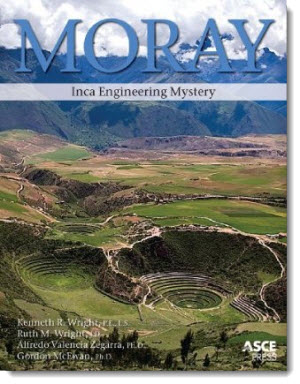
In 2011, water engineer Kenneth R. Wright and his wife, travel writer and photographer Ruth Wright, together with archaeologists Alfredo Valencia Zegarra and Gordon McEwan, published Moray: Inca Engineering Mystery — the most detailed engineering study of the site to date.
The Wrights and their co-authors respectfully dispute Earls’ agricultural-greenhouse conclusion. Their argument: Moray was not a crop-research station but a primarily religious and ceremonial centre. They also contend that the site was unfinished when the Spanish Conquest interrupted construction in 1532. The book provides excellent coverage of Moray’s hydrology, planning, and construction, and includes a detailed walking-tour description.
The debate remains genuinely open. What is not in dispute is the engineering sophistication: the drainage system alone, which converts naturally unstable sinkholes into stable terraced platforms, represents a feat of hydraulic planning that stands regardless of the site’s ultimate purpose.
6. How to Visit Moray Peru from Cusco
Moray is 50 km (31 miles) northwest of Cusco — about 80 minutes by road. The great majority of visitors combine it with the Maras salt mines (Las Salineras de Maras), which are 7 km (4.5 miles) away and accessible on the same Boleto Turístico circuit. A half-day covers Moray comfortably; a full day gives you Moray, Maras, and a relaxed lunch.
Typical Moray + Maras day-trip outline:
- Morning departure from Cusco (~7:30–8:00 a.m.) by private vehicle or organized tour
- First stop: Maras salt mines — allow 1–1.5 hours to walk the terraced ponds
- Continue 7 km to Moray — allow 1.5–2 hours at the site
- Optional lunch at MIL Restaurant on the site perimeter (reservations essential — book weeks in advance during peak season)
- Return to Cusco in time for late afternoon — approximately 4:00–5:00 p.m.
Entry ticket: Moray is covered by the Boleto Turístico Circuito 3 (the Sacred Valley circuit), which also covers Chinchero, Pisac archaeological park, and Ollantaytambo. The Maras salt mines charge a separate small entry fee collected at the site. Tickets for the Boleto Turístico are available at the Cusco ticket office (COSITUC) or at participating sites — confirm current prices at the time of travel, as they are reviewed periodically.
Common combinations: Moray + Maras is the most popular pairing. Some itineraries add Chinchero (weaving market, colonial church on Inca foundations, 28 km / 17 miles from Cusco) as a third stop. Ollantaytambo makes a natural endpoint if you are continuing down the Sacred Valley toward Aguas Calientes and Machu Picchu.
Plan Your Visit with Fertur
Fertur Peru Travel designs custom Sacred Valley day trips and multi-day itineraries that include Moray, Maras, and the broader Cusco circuit. Contact us for a tailor-made itinerary — a MINCETUR-accredited agency with more than 30 years operating in Peru.
7. Best Time to Visit Moray
Moray has two distinct seasons. The dry season (May–October) brings clear skies, reliable sunshine, and the best conditions for photography — but it coincides with Peru’s peak tourist season, and the site can be busy by mid-morning. The wet season (November–March) means frequent afternoon showers and a muddier approach path, but also smaller crowds and a striking change in the terraces: the concentric rings turn intensely green as the rain brings the vegetation to life. Either season works; your preference for sun versus quiet will determine which is better for you.
June and July are the driest and most popular months. If you visit in peak season, an early start (arriving before 9:00 a.m.) makes a meaningful difference in crowd levels.
8. Altitude and Acclimatisation at Moray
Moray sits at 3,500 m (11,500 ft) — the same altitude band as Cusco. If you have already spent two or more days in Cusco before visiting, altitude is unlikely to cause problems at the site. The walk around the rim is gentle; descending into the muyu involves a moderate climb back out, so take it slowly if you are still acclimatising.
Practical acclimatisation tips:
- Spend at least two nights in Cusco (3,400 m / 11,150 ft) before visiting higher sites
- Stay well hydrated — aim for 2–3 litres of water per day
- Avoid heavy meals, alcohol, and strenuous exercise on your first 24 hours in Cusco
- Coca tea (mate de coca) is widely available and many travellers find it helpful for mild altitude symptoms
- If you are prone to acute mountain sickness (AMS), consult your doctor about acetazolamide (Diamox) before travel — it must be started before ascent to be effective
For a more detailed guide, see our post on preventing altitude sickness in Cusco.
9. Activities at and Around Moray
Walking the site on foot is the standard visit. Beyond that, several operators offer alternative ways to reach or experience Moray:
Mountain Biking
Guided mountain-biking tours from Cusco or from the Maras pampa descend to the Sacred Valley floor through dramatic Andean scenery. Various routes exist — group and private — with the most popular combining a downhill ride with stops at Moray and Maras. Suitable for moderately fit riders; the altitude adds effort.
ATV Tours
ATV tours departing from Chinchero (28 km / 17 miles from Cusco, about one hour) cover both Moray and the Maras salt mines in a half-day circuit. These are popular with travellers who want more ground covered with less walking. An experienced guide leads the route.
Horseback Riding
The community of Piscuyo provides the starting point for horseback rides to Moray. The route climbs for about an hour to the highest point of the trail, then follows the mountain plateau to the ruins. A slower and more atmospheric option than road transport.
MIL Restaurant
Located on the perimeter of the Moray ruins, MIL was founded by Lima chef Virgilio Martínez in 2018 as a direct continuation of the site’s agricultural-research heritage — the kitchen sources almost entirely from the surrounding communities and Sacred Valley ecosystems. The tasting menu (currently 8 courses) is priced accordingly and reservations fill well in advance, particularly from May through October. If MIL is on your list, book before you book your flight.
10. Frequently Asked Questions About Moray
Is Moray worth visiting from Cusco?
Moray offers something genuinely different from the better-known Inca sites in the Sacred Valley: a landscape of engineered geometry — perfect concentric rings cut into a high plateau — that has no parallel in pre-Columbian architecture anywhere in the Americas. Where Pisac and Ollantaytambo are fortified towns with obvious strategic logic, Moray reads like a purpose-built scientific instrument. The site is quieter than Machu Picchu or the Cusco city circuit, and the combination with the Maras salt mines — active since Inca times and still worked by local families today — makes for one of the most satisfying half-days in the entire Sacred Valley.
Can you visit Moray and Maras in one day?
Yes, and this is the recommended approach. The two sites are 7 km (4.5 miles) apart and together require about 3–4 hours including driving time between them. Most visitors leave Cusco by 8:00 a.m., visit Maras first (the salt ponds are best in morning light), then continue to Moray, and return to Cusco by early afternoon. Adding MIL Restaurant extends the day to a comfortable full-day itinerary.
How do I get to Moray from Cusco?
Moray is 50 km (31 miles) from Cusco — approximately 80 minutes by road via the town of Maras. The most straightforward options are: a private vehicle or taxi hired for the day from Cusco (allows flexibility on timing); an organised guided day tour (includes transport, guide, and often the Boleto Turístico); or colectivo minibuses from Cusco’s Pavitos terminal to Maras, then a mototaxi or walk to the site (the cheapest but least flexible option). There is no direct public bus to Moray.
What does it cost to enter Moray?
Moray is included in the Boleto Turístico Circuito 3 (the Sacred Valley circuit ticket issued by COSITUC). This multi-site ticket also covers Chinchero, Pisac archaeological park, and Ollantaytambo, making it good value if you plan to visit more than one of those sites. The Maras salt mines charge a separate entry fee collected at the site. Ticket prices are reviewed periodically — confirm current pricing at the Cusco regional government website or with your tour operator before travel.
What is the best month to visit Moray Peru?
May and September offer the best balance of dry weather and manageable crowd levels — the rainy season has ended or not yet started, and the school-holiday peak (June–August) either hasn’t arrived or has just passed. June through August are the driest months and the most visited; if you travel then, an early arrival (before 9:00 a.m.) is the most effective way to beat the crowds. November through March brings heavy afternoon rains but also the richest green terraces and noticeably fewer fellow visitors.
Why are the Moray terraces circular — and not rectangular like other Inca sites?
This is the question Moray visitors most often ask once they have seen the site, and no definitive answer exists. The circular form creates a bowl that concentrates heat and modifies wind exposure in ways a rectangular terrace cannot replicate — which supports the agricultural-laboratory theory. But the geometry also has strong astronomical and ritual associations in Andean cosmology: the circular muyu echoes the form of the horizon, and the absence of shadows at the midday zenith may have carried ceremonial meaning. The most likely answer is that the circular design served multiple purposes simultaneously, as most Inca monumental works did.
Book a Sacred Valley Day Trip
Fertur Peru Travel is a MINCETUR-accredited agency with over 30 years operating in Peru and consistent Tripadvisor recognition from travellers. We design private and small-group Sacred Valley itineraries that include Moray, Maras, and the wider Cusco circuit — tailored to your schedule and interests. Request a custom quote →

Related Posts

Comments (0)