Stand at the rim of Quechuyuc Muyu, peer down at the central terraced monument of…
Your Ollantaytambo Travel Guide: What First-Time Visitors Should Know
Ollantaytambo is a 15th-century Inca fortress, temple complex, and agricultural center in the Sacred Valley — and the only town in the Americas where the original Inca urban grid, with its stone streets and running water channels, remains inhabited and in daily use.
From quaint Inca stopover to Sacred Valley treasure, this Ollantaytambo travel guide makes the case for why this world-class destination deserves far more than a fleeting stop on the way to Machu Picchu.
Long treated by many travelers as the last train-station before Machu Picchu, Ollantaytambo continues to emerge as one of the Sacred Valley’s most rewarding destinations in its own right. Its appeal goes well beyond logistics.
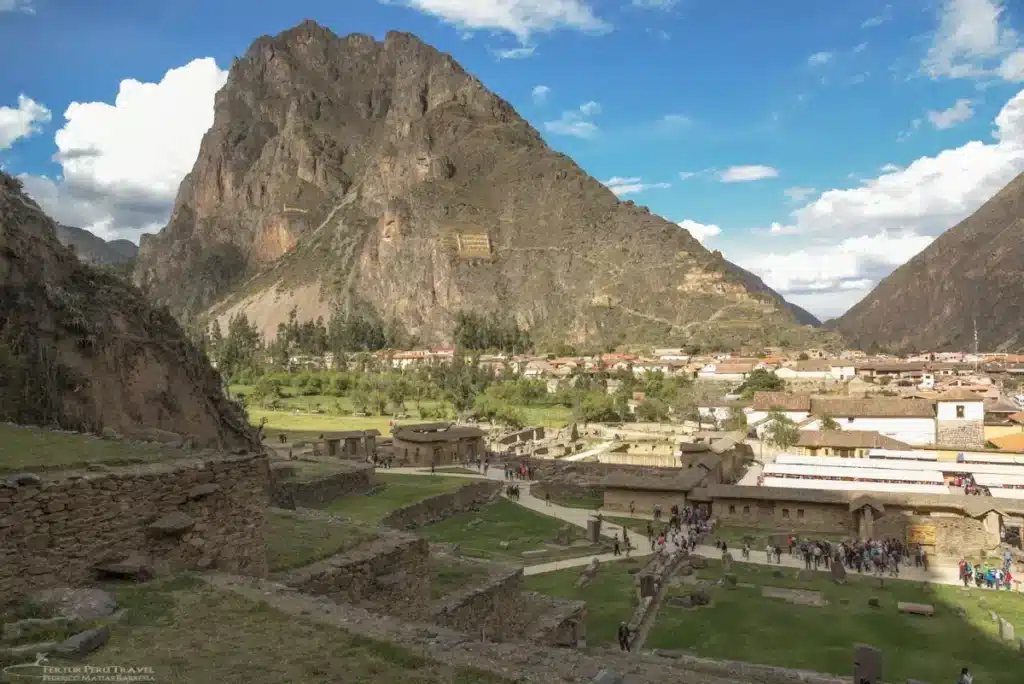
Here, one of the most historic monumental Inca complexes rises above a living Inca town, where stone streets, ancient water channels, and terraced hillsides keep history alive in everyday life.
Recognized by the UN World Tourism Organization as one of the world’s Best Tourism Villages (2021), named Peru’s first Pueblo con Encanto (2022), listed in Condé Nast Traveler’s Best Places to Travel and TIME’s World’s Greatest Places (2023), featured in The New York Times’ 52 Places to Go in 2025, and awarded Peru’s highest tourism distinction — Jerarquía 4 — that same year, Ollantaytambo has earned its reputation many times over.
This practical guide covers what we believe every first-time visitor to Peru needs to know to plan a proper stay.
Ollantaytambo Overview
- Why Ollantaytambo Deserves More Than a Stopover
- Getting There
- Best Time to Visit
- How Many Days to Spend
- What to See & Do
- Where to Eat & Drink
- Where to Stay
- Cultural Events & Festivals
- Safety & Practical Tips
- Frequently Asked Questions
1. Why Ollantaytambo Deserves More Than a Stopover
Most visitors arrive on the fly — bags in hand, tickets to Aguas Calientes already booked, minds fixed on Machu Picchu. That’s understandable. But Ollantaytambo is one of the rare places in Peru where slowing down pays outsized dividends.
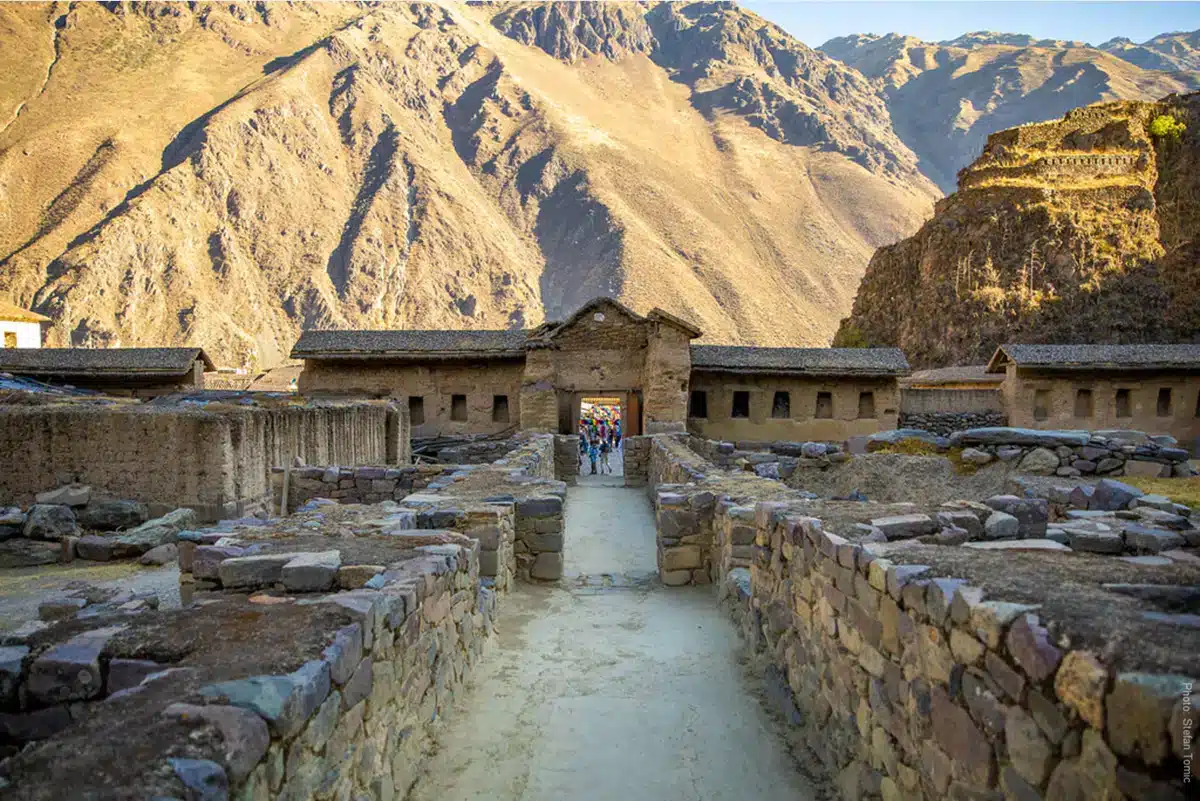
At the center of it all is its extraordinary Inca archaeological complex: massive agricultural terraces stacked against the mountainside, finely fitted stonework that has survived centuries of earthquakes, and the remains of the Temple of the Sun. Below the ruins, the town itself is a marvel — one of the only places in the Americas where an original Inca urban grid is still inhabited and still functional, with water channels running through the streets just as they did 600 years ago.
Layer onto that a growing food scene rooted in native ingredients, a handful of memorable places to stay, and a community that celebrates its identity vigorously — and you have a destination that can easily justify two or three nights, not just one frantic morning.
2. Getting There
Ollantaytambo sits approximately 75 km northwest of Cusco in the Sacred Valley of the Incas, at an altitude of about 2,792 meters (9,160 ft) above sea level — lower than Cusco’s 3,400 meters, which makes it a gentler acclimatization point.
From Cusco by Road
The most common route is by car, taxi, or organized transfer along the paved road through Pisac and the Sacred Valley, or via the shorter highway through Chinchero. Both routes take roughly 1.5 to 2 hours depending on traffic and stops.
- Private transfer: The most comfortable option for first-timers. Many Cusco hotels and travel agencies (including Fertur Peru) arrange door-to-door service.
- Shared colectivo: Collectivos depart from Pavitos Street in Cusco toward Urubamba, where you transfer to another colectivo for Ollantaytambo. Budget-friendly but slower and requires luggage management.
- Organized Sacred Valley day tour: A popular option that hits Pisac market, Chinchero, and Ollantaytambo in a single day — though this format doesn’t allow for an overnight stay.
From Cusco by Train
Peru Rail and Inca Rail both operate scenic train routes from Cusco’s Poroy station to Ollantaytambo, continuing on to Aguas Calientes. The journey takes about 1.5 hours from Poroy and passes through dramatic Sacred Valley scenery. This is the same rail line used to reach Machu Picchu, so Ollantaytambo functions as both a destination and a transit hub.
Tip for first-timers: Poroy station is about 20 minutes from central Cusco by taxi — factor that into your timing, especially for early trains.
Onward to Machu Picchu
Ollantaytambo’s train station is the most convenient departure point for Aguas Calientes (the gateway town for Machu Picchu), with frequent daily departures on both Peru Rail and Inca Rail. The journey takes approximately 1.5 to 2 hours through cloud forest.
3. Best Time to Visit
Dry Season: May to October ✓ Recommended for First-Timers
This is peak season in the Sacred Valley, and for good reason. Days are sunny, skies are clear, and the agricultural terraces glow in the light. Nights can be cold — temperatures at Ollantaytambo’s altitude drop to single digits Celsius (mid-30s°F) after dark, even in August — so bring layers regardless of the season.
- June and July are the busiest and driest months. Expect more visitors at the ruins, particularly on weekends.
- May and September–October offer a sweet spot: reliable dry weather with fewer crowds.
Wet Season: November to April
The wet season brings afternoon and evening rain, lush green terraces, and a dramatically different landscape. The ruins can be muddy and slippery, but mornings are often clear. This period also sees fewer international tourists, which means shorter queues and a more local atmosphere.
- February is the wettest month and sees the Inca Trail temporarily closed for maintenance — factor this in if you’re planning a trek.
- January–March can involve heavy downpours and some road impacts, though Ollantaytambo town itself is rarely disrupted.
Festival Timing
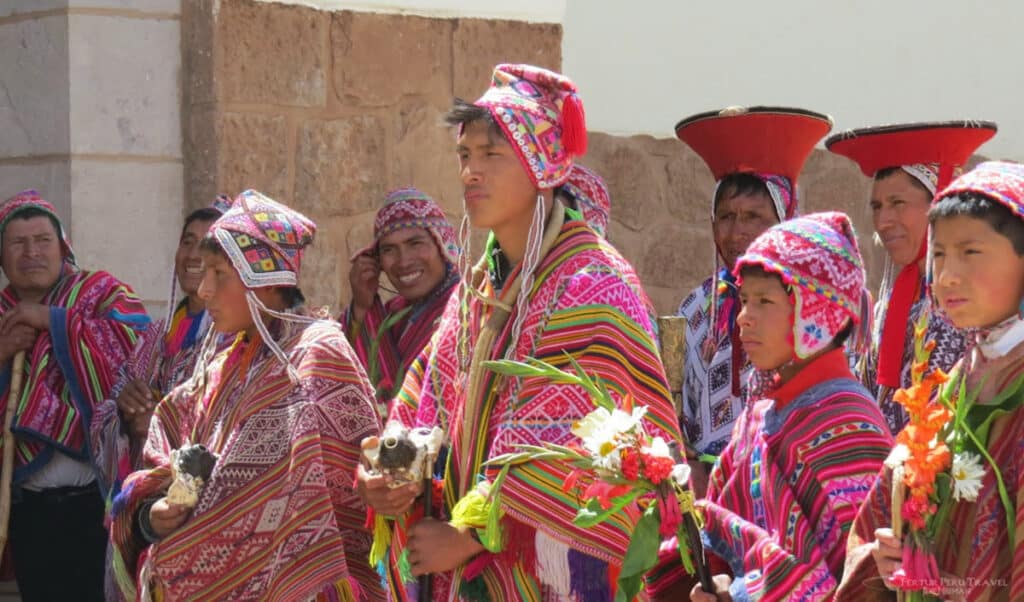
If you can align your visit with the Festividad del Señor de Choquekillka (held around Pentecost, typically May or June), you’ll experience Ollantaytambo at its most culturally vibrant — though book accommodation well in advance.
4. How Many Days to Spend
Minimum: 1 Night / 1 Full Day
Enough to see the archaeological complex properly, walk the Inca streets, and have one good meal. Not enough to settle in, but far better than a rushed half-day stop.
Recommended: 2 Nights / 2 Full Days
The ideal balance for most first-time visitors. Day one for the ruins and town exploration; day two for a culinary experience (El Albergue’s farm lunch, Destilería Andina, the craft brewery in Pachar), a hike to Pinkuylluna granaries, or a guided cultural outing. Two nights also removes the stress of early train logistics.
If You Have Time: 3+ Nights
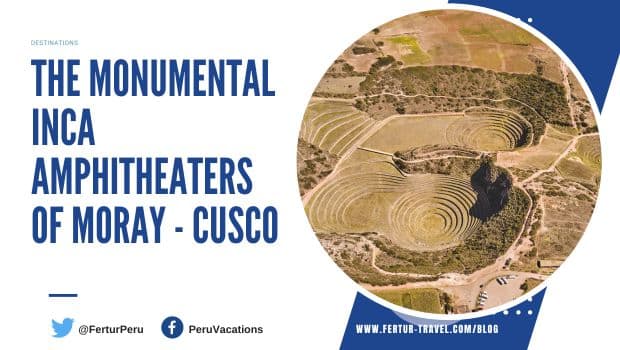
For travelers who want to use Ollantaytambo as a base for deeper Sacred Valley exploration — Moray, Maras salt mines, Chinchero weaving cooperatives — three nights allows a relaxed pace without rushing. This is also the format best suited to stays at Las Qolqas Eco Lodge or Natura Vive’s adventure suites, where the experience itself deserves time.
Practical note: Ollantaytambo is also an excellent place to acclimatize before Cusco or before a trek. Its lower altitude makes it easier on the body during the first day or two in the region.
Planning your Sacred Valley timing?
Whether you want to build Ollantaytambo into a Machu Picchu trip or use it as your acclimatization base, the Fertur Peru team can help you fit the pieces together. Tell us about your trip and we’ll put together a custom itinerary.
5. What to See & Do
The Archaeological Complex
The centerpiece of any visit. The complex rises steeply above the town plaza and includes:
- Terraces of Pumatallis: The iconic stepped terraces visible from the town. These are among the best-preserved Inca terraces in the Sacred Valley.
- Temple of the Sun: An unfinished Inca monument featuring six enormous monolithic stones joined with extraordinary precision — a testament to Inca masonry at its finest.
- Fountains and water channels: Functional examples of Inca hydraulic engineering, still flowing today.
- Pinkuylluna Granaries: Visible from the valley floor, these storehouses cling to the cliffside across the river. A steep but rewarding hike leads up to them, offering panoramic views over the ruins and town.
Entrance is covered by the Cusco Boleto Turístico (Tourist Ticket) or the partial circuit ticket. The site is open daily and best visited early morning to avoid midday heat and peak visitor hours.
The Living Inca Town
Don’t neglect the streets themselves. Ollantaytambo’s lower town — known as llaqta — follows an original Inca grid of rectangular blocks called canchas, each organized around a central courtyard. Walking these lanes, spotting the original stone doorways and channels, is an experience that no other town in the region replicates.
A Fortress That Stopped the Conquistadors
Guaman Poma c 1615
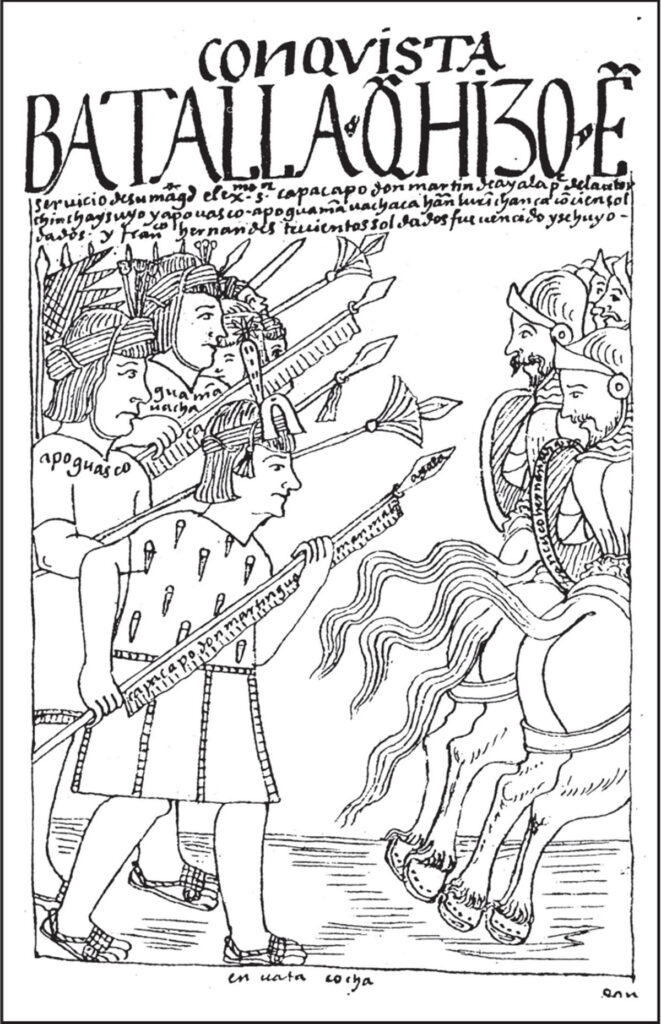
Ollantaytambo was not only a ceremonial and agricultural center, it was also one of the great strongholds of Inca resistance. In John Hemming’s classic The Conquest of the Incas, the town appears at a dramatic moment in 1536, during Manco Inca’s great rebellion against the Spanish occupation of Cusco. Hernando Pizarro, trapped in the besieged Inca capital, learned that Manco had shifted his headquarters to Ollantaytambo, roughly thirty miles downstream along the Vilcanota–Yucay–Urubamba river system.
Pizarro set out with seventy horsemen, thirty foot soldiers, and a large force of native auxiliaries, only to find the approach punishing: the river had to be crossed repeatedly, and every ford was defended. When the Spaniards finally reached Ollantaytambo, Hemming records their shock at the pale stone walls and terraces.
Pedro Pizarro — a cousin of Francisco and one of the soldiers present — later wrote that the place was so well fortified it was a “horrifying sight.”
The battle that followed showed why.
Manco’s defenders used the town, terraces, river, and hillside as a single integrated defensive system. Archers fired from the town and citadel; slingers attacked from across the stream; warriors hurled rocks and slingstones down from the terraces; and Manco himself appeared among his men on horseback with a lance, directing the fight. Most strikingly, Inca engineers diverted the Patacancha stream through prepared channels, flooding the plain where the Spanish cavalry had formed. As the water rose around the horses, the conquistadors’ greatest tactical advantage disappeared. Hernando Pizarro recognized that Ollantaytambo could not be taken and ordered a retreat under cover of darkness.
Ollantaytambo was the scene of one of the only outright defeats that the Conquistadors suffered at the hands of the Inca forces.
On a personal note: nearly 30 years ago, the first time I laid eyes on Ollantaytambo, I had with me a dog-eared copy of John Hemming’s classic Conquest of the Incas. Do yourself a favor and take along a copy — or download the audiobook.
Horseback Riding & Valley Hikes
There are several options for horseback rides through the surrounding valley and to Inca sites above the town. For hikers, trails to the granaries, the Inca Quarry Trail, and the Pumamarca ruins provide excellent half-day options.
6. Where to Eat & Drink
Ollantaytambo’s food scene has grown meaningfully in recent years and now offers some of the most distinctive eating in the Sacred Valley. If you only have one meal in town, the choice comes down to what kind of experience you’re after: Chuncho if you want to eat as locally and seasonally as possible; El Albergue if you want a full half-day culinary event that doubles as a cultural experience.
Chuncho
The restaurant most grounded in local identity. Chuncho builds its menu around ingredients from its own garden and local suppliers, leaning into ancestral Andean flavors rather than international fare. A strong choice for travelers wanting to eat as close to the valley as possible — no farm tour required, just excellent food.
El Albergue — Farm Lunch & Pachamanca
El Albergue’s farm lunch is one of the most complete culinary experiences in the region. The visit includes a guided tour of the hotel’s organic farm, cañazo distillery, and coffee roastery, followed by a pachamanca feast — meats, native potatoes, and vegetables cooked in the traditional earth-oven style. Plan for two to three hours and book in advance; it fills up quickly. Best suited to travelers with a full day in Ollantaytambo rather than those catching an afternoon train.
Café Mayu
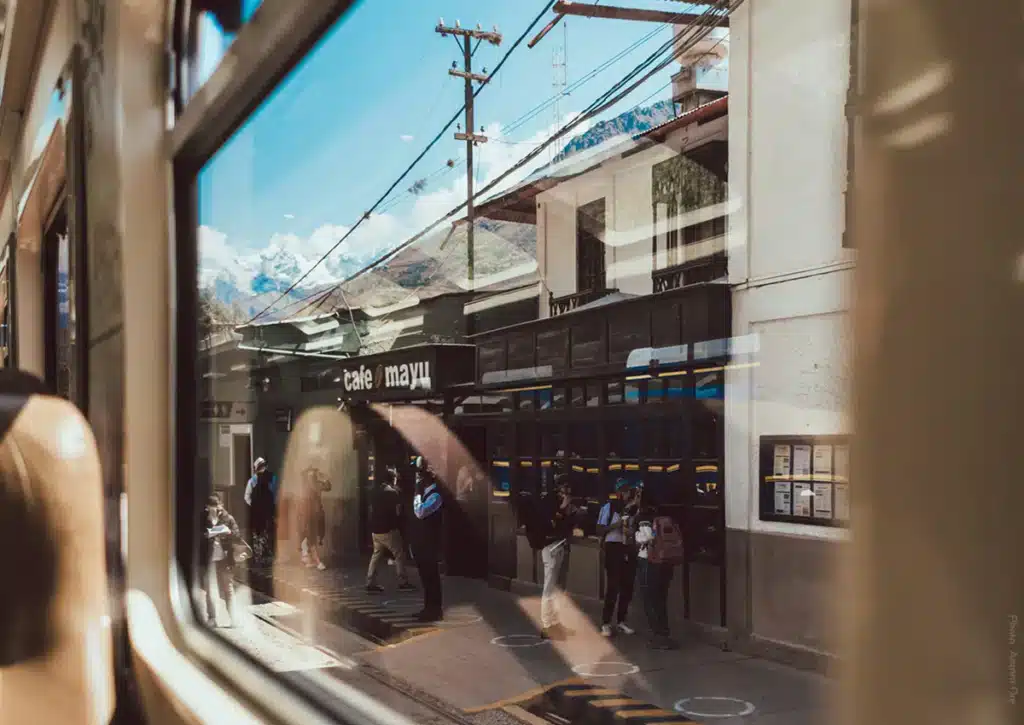
Located directly on the train station platform, Café Mayu (also part of El Albergue) is far better than its location suggests. Meals, drinks, and coffee produced on the property’s farm are all on offer. The coffee roasting experience — where guests can learn the process and leave with fresh beans — is a worthwhile add-on. Also the most practical option if you’re killing time before an early train.
Destilería Andina
An artisanal spirits project working with traditional methods and locally sourced ingredients. In March 2026, Destilería Andina expanded with a new culinary concept in nearby Pachar, positioned as an accessible stop for travelers moving through the valley.
Cervecería del Valle Sagrado
In Pachar, just outside Ollantaytambo, this craft brewery rounds out the valley’s food-and-drink map. Classic and seasonal beers brewed with local ingredients, served in a taproom that the brewery lists as its Ollantaytambo location. Worth combining with a Destilería Andina visit on the same afternoon — the two are a short mototaxi ride apart.
7. Where to Stay
Ollantaytambo punches well above its size when it comes to accommodation. The three options below represent genuinely different experiences — choose based on what you want the stay itself to feel like, not just where you want to sleep.
El Albergue Ollantaytambo — Historic Character at the Station
Originally opened in 1925 as Hotel Santa Rosa, El Albergue is Ollantaytambo’s most atmospheric option. Its position at the train station is part of its charm, not a compromise, and its combination of gardens, history, organic farming, distillery, and in-house experiences gives it an identity unique in the valley. Best for: travelers who want history, character, and culinary depth woven into the stay itself.
Las Qolqas Eco Lodge — Contemporary Valley Escape
A luxury eco-lodge offering tented accommodations with private outdoor patios and a serious sustainability commitment. The spa draws on Andean healing traditions, and the sense of seclusion makes this a place to slow down and settle into the landscape rather than simply pass through it. Best for: couples or travelers on a longer Sacred Valley stay who want seclusion and wellness alongside the ruins.
Skylodge & Starlodge Adventure Suites (Natura Vive) — The Dramatic Option
For travelers drawn to novelty: Skylodge features transparent hanging capsules suspended above the Sacred Valley; Starlodge offers a newer hanging-pod variation at roughly 2,900 meters. Natura Vive pairs both with via ferrata and zipline options. These are genuine adventure experiences, not hotel rooms with a view — and they require a base-level of physical fitness and comfort with heights. Best for: adventure travelers who want the stay to be part of the itinerary highlight, not just a place to rest.
Tip: Book accommodation well in advance if visiting during May–September or around the Señor de Choquekillka festival. The better hotels fill up weeks ahead.
8. Cultural Events & Festivals
Festividad del Señor de Choquekillka
Ollantaytambo’s defining annual celebration, held over four days around Pentecost (typically May or June). The town honors its patron saint with processions, traditional music, folk dances, and communal feasting. Being here during these days makes immediately clear that this is a living Andean community, not simply an archaeological backdrop. One of the most authentic festival experiences in the Sacred Valley.
Inti Raymi (June 24)
While the main Inti Raymi celebration occurs in Cusco, communities throughout the Sacred Valley mark the Inca festival of the sun with local ceremonies and gatherings. Ollantaytambo typically sees some festive activity around this date.
9. Safety & Practical Tips
Altitude & Acclimatization
At 2,792 meters (9,160 ft), Ollantaytambo is lower than Cusco and well-suited to acclimatization. Still, first-time visitors should:
- Avoid heavy meals and alcohol on arrival day.
- Stay well hydrated — altitude increases fluid loss.
- Rest before tackling the steep ruins steps.
- Consider arriving in the Sacred Valley before going up to Cusco if you’re sensitive to altitude.
If you feel symptoms of altitude sickness (headache, nausea, dizziness), rest, hydrate, and descend if symptoms worsen. Soroche (altitude sickness) is common and manageable; severe symptoms warrant medical attention.
General Safety
Ollantaytambo is considered one of the safer towns in the Sacred Valley. That said, standard travel precautions apply:
- Keep valuables in a money belt or hotel safe.
- Use registered taxis or pre-arranged transport — especially at night.
- Be aware of your surroundings in busy market areas.
- Don’t leave bags unattended at the train station.
Money & Payments
The town has ATMs, but they can run low on cash during peak season. Bring sufficient soles from Cusco as a backup. Most restaurants and larger hotels accept credit cards; small market vendors and local eateries are cash-only.
Getting Around Town
Ollantaytambo’s center is compact and best explored on foot. The ruins, main plaza, market, and most restaurants are all within easy walking distance. For Pachar (brewery, Destilería Andina), you’ll need a taxi or mototaxi — a quick and cheap ride.
What to Pack
- Layers: mornings and evenings are cold year-round
- Rain jacket: essential even in dry season for afternoon cloud build-up
- Sun protection: UV intensity is high at altitude
- Comfortable walking shoes with grip for cobbled streets and the ruins
- Small daypack for the ruins and any hikes
10. Frequently Asked Questions
Is Ollantaytambo worth visiting on its own, or only as a stop for Machu Picchu?
The archaeological complex at Ollantaytambo is one of the best-preserved Inca sites in Peru, and the town below it is the only place in the Americas where an original Inca urban grid remains inhabited and functional — reasons enough to visit independently of Machu Picchu. That said, the two fit together naturally: Ollantaytambo is also the most convenient departure point for the train to Aguas Calientes, so staying here before Machu Picchu costs nothing and adds a great deal.
How long should I spend at the Ollantaytambo ruins?
Budget two to three hours minimum to explore the terraces, temple complex, and fountains without rushing. Add another hour if you plan to hike up to the Pinkuylluna granaries on the opposite hillside.
Do I need a separate ticket for the Ollantaytambo ruins?
The ruins are included in the Cusco Boleto Turístico (full or partial circuit). If you don’t have one, partial circuit tickets covering the Sacred Valley sites — including Ollantaytambo — can be purchased at the entrance.
Is Ollantaytambo safe for solo travelers?
Ollantaytambo is one of the more traveler-friendly towns in the Sacred Valley, with a well-established tourism infrastructure. Solo travelers — including solo women — regularly visit and stay without issues. Standard common-sense precautions apply as they would anywhere.
Can I visit Ollantaytambo as a day trip from Cusco?
Yes, and many do — but an overnight stay is strongly recommended. A day trip allows time for the ruins and a walk through town, but you’ll miss the food experiences, the early-morning light on the terraces, and the very different atmosphere once the day-trippers leave.
What is the best way to buy train tickets to Machu Picchu from Ollantaytambo?
Trains from Ollantaytambo to Aguas Calientes are operated by Peru Rail and Inca Rail. Book well in advance, especially for travel between May and October — trains to Machu Picchu sell out weeks ahead during peak season. Your hotel or a local travel agency can assist, or book directly on the operators’ websites.
Is it easy to find vegetarian or vegan food in Ollantaytambo?
Increasingly, yes. Restaurants like Chuncho and El Albergue’s kitchen work heavily with vegetables, native tubers, and grains. Most menus offer vegetarian options; vegan-specific options are available but more limited — it’s worth asking when you arrive.
What is the Festividad del Señor de Choquekillka?
It is Ollantaytambo’s principal annual festival, held over four days around Pentecost (May or June). The town honors its patron saint with processions, traditional Andean music and dance, and communal feasting. It is one of the most authentic and visually striking festivals in the Sacred Valley and well worth timing your visit around — but book accommodation months in advance if you plan to attend.
Planning a trip to Ollantaytambo or the Sacred Valley? The Fertur Peru Travel Team specializes in custom Peru itineraries for first-time and returning visitors. Contact us to start building your trip.
You Might Also Be Interested In…

Related Posts
Comments (0)