In 1987, archaeologist Walter Alva and his team helped save one of ancient Peru’s greatest…
How to Visit Gocta Falls: Your Practical Guide to Peru’s Once Hidden Waterfall
Gocta Falls is a two-tier cascade in Peru’s northern Amazonas region, standing 771 meters (2,530 feet) — one of the tallest waterfalls in the country. It remained almost entirely unknown to outside visitors until 2006, when a German-led measurement team published its height and drew international attention.
Gocta Falls at a Glance
- Location: Bongará province, Amazonas department; 44 km (27 miles) north of Chachapoyas
- Height: 771 m (2,530 ft) total, two drops; lower drop 540 m (1,772 ft) free-fall
- Best season: April–June — rainy season has ended but flow remains strong; skies clearer than the wet months
- Recommended stay: 1–2 days; overnight in Cocachimba recommended to allow an early start
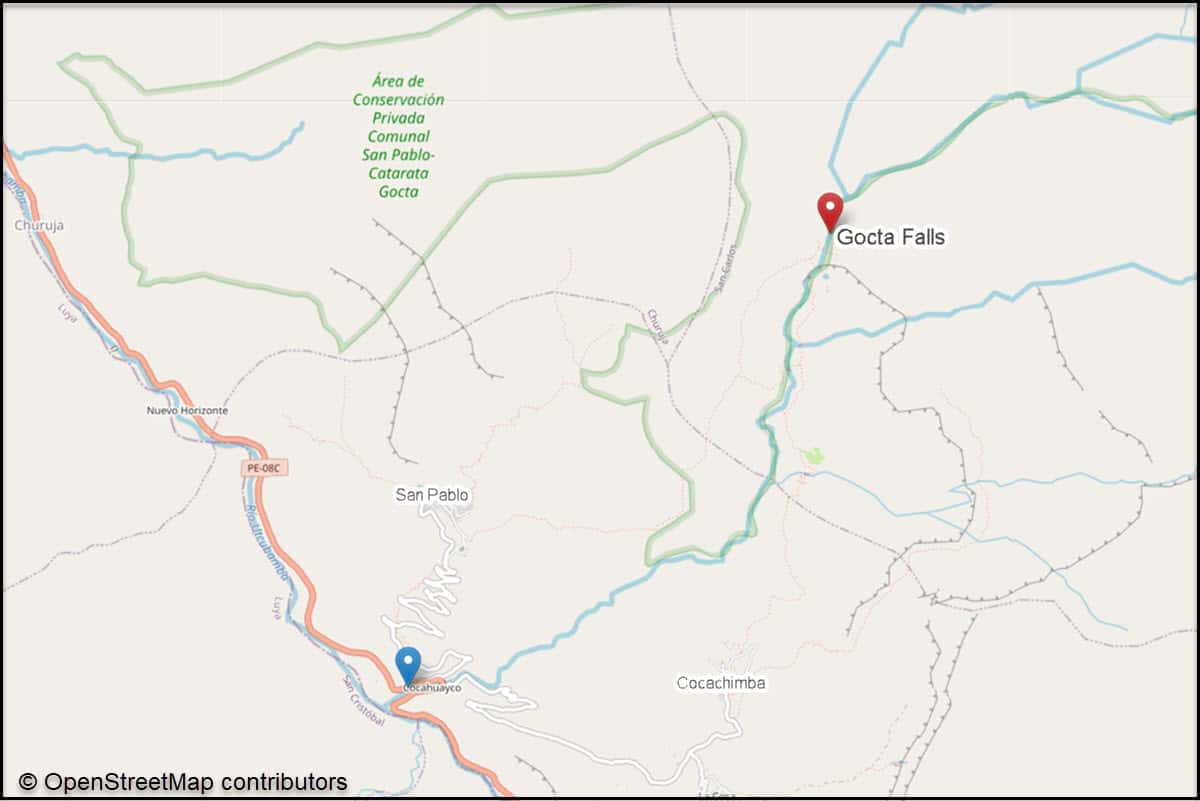
- Getting there: Colectivo from Chachapoyas to Cocahuayco bridge (5–10 soles), then mototaxi to Cocachimba (10–15 soles); approximately 1 hour total
- Entry fee: Approx. 10–15 soles per adult, cash only, at the Cocachimba tourist office
- Not to miss: The base of the lower drop — the spray is intense and the scale only registers up close; Andean cock-of-the-rock along the cloud forest section of the trail
The trail from Cocachimba village covers approximately 10–11 kilometers round trip and takes most hikers five to six hours. This guide covers transport options, trail conditions, costs, and the local history behind a waterfall that local residents knew about for generations but — for reasons rooted in oral tradition — kept largely to themselves.
1. Location, Size, and How Gocta Came to Global Attention
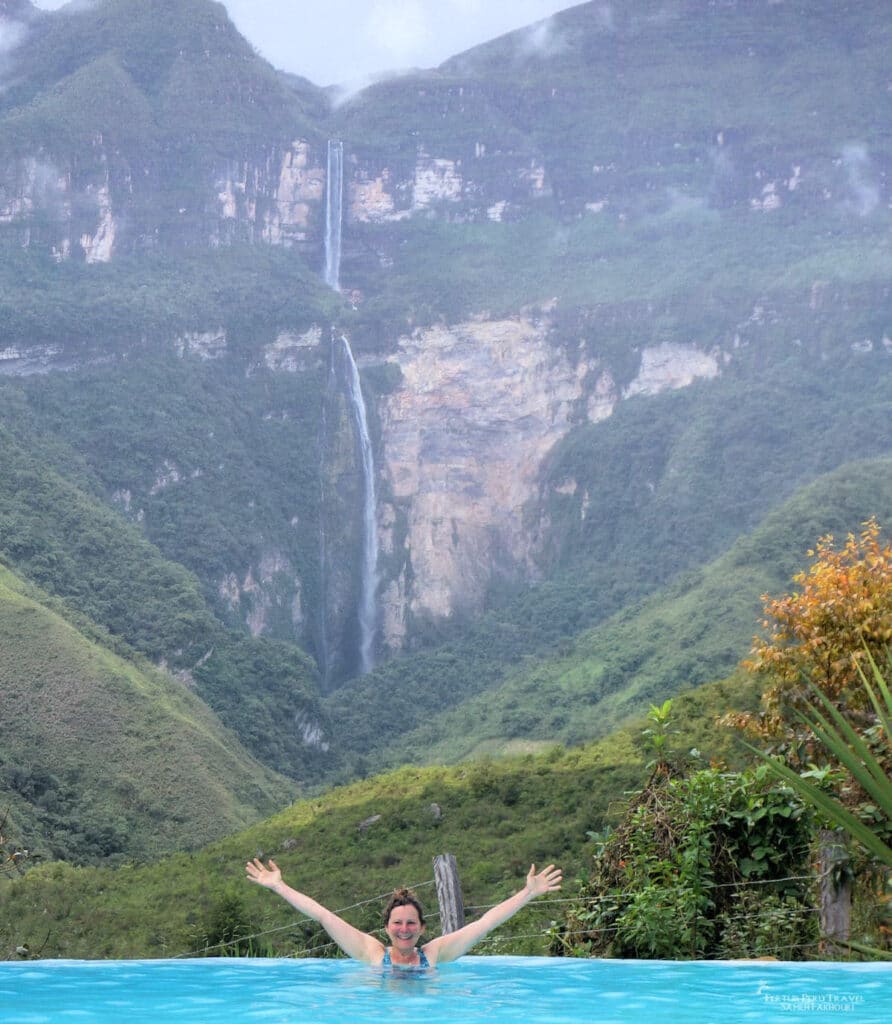
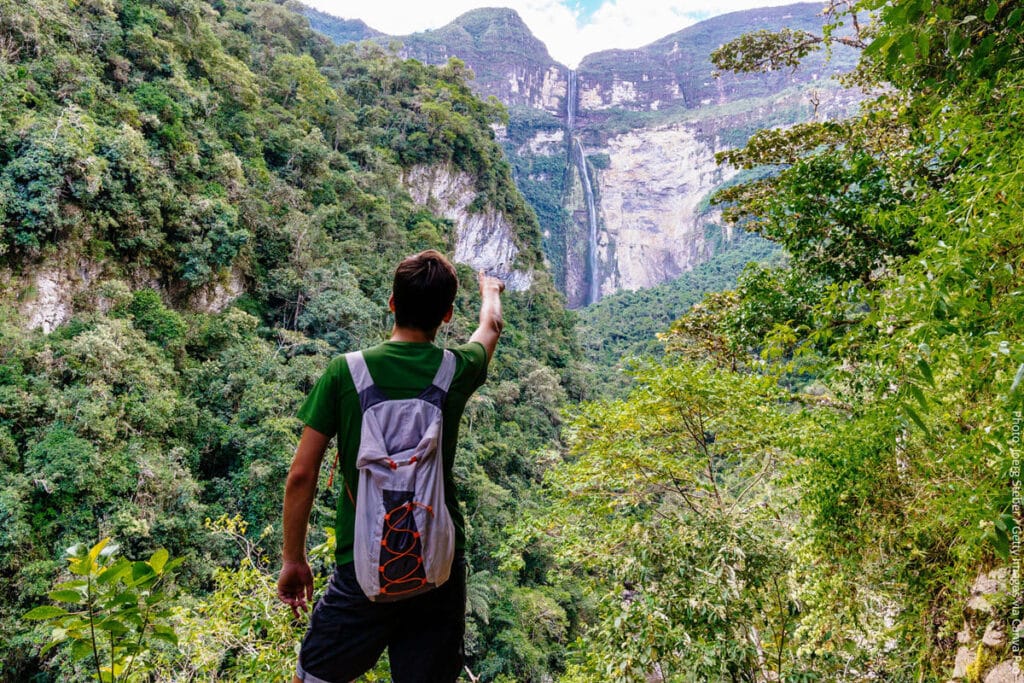
Gocta sits in Peru’s Amazonas department within Bongará province, near the historic town of Chachapoyas. The waterfall flows into the Cocahuayco River and is visible from several kilometers away. Its total height of 771 meters (2,530 feet) comes in two distinct drops. The lower drop alone falls 540 meters (1,772 feet) in a free-fall.
The waterfall’s precise global ranking remains contested. Classification depends on whether the two sections are counted as a single fall or two, and different databases apply different criteria. The World Waterfall Database — the most rigorous specialist source on the subject — places Gocta somewhere in the top twenty tallest waterfalls in the world under its current methodology. The ranking matters less than what you see: a volume of falling water that takes several seconds to complete its descent and creates a permanent mist across a wide radius at the base.
How Gocta Came to Global Attention
German researcher Stefan Ziemendorff measured Gocta in 2005–2006. His announcement placed it among the world’s tallest waterfalls and introduced it to international tourism.
In the early 2000s, Ziemendorff noticed the towering two-tier waterfall while working on a project in northern Peru. He returned with a measurement team, and in 2006 announced a total height of 771 meters, drawing attention from international media and tourism operators almost immediately.
The “discovery” deserved quotation marks, however. Local residents of Cocachimba village had lived with a clear view of the waterfall for generations. They called it Gocta — reportedly after the cawing sound made by local monkeys. The mystery was not the waterfall’s existence, but why locals had never promoted it to outsiders.
Local folklore provides a direct answer.
Residents believed a mermaid lived in the waters and would curse anyone who revealed its location. One widely told version of the oral tradition describes a man who kept a secret relationship with the mermaid. When the relationship was discovered, the frightened mermaid pulled him into the rushing water, where he vanished forever.
Before international visitors began arriving, residents watched the waterfall from afar but refused to approach it. As one local guide recalled, villagers were taught from childhood that visiting the falls meant danger or enchantment. Only after tourists began visiting safely, in the years following Ziemendorff’s announcement, did the fear fade — and with it, a barrier that had kept one of South America’s most spectacular natural features entirely out of the tourism economy for local residents.
2. Getting to Gocta Falls
From Lima to Chachapoyas
Chachapoyas is your base for reaching Gocta. The overland bus journey from Lima takes approximately 22–24 hours and costs around 80–150 soles depending on company and seat class, traveling north via the Pan-Americana Norte through Trujillo and Chiclayo before turning inland.
Flying saves significant time, though Chachapoyas has limited direct air service. The most practical options:
- Jaén: Served by Latam from Lima. From Jaén, approximately one hour by road to Bagua Grande, then another 2–3 hours to Chachapoyas.
- Tarapoto: Onward road travel to Chachapoyas is approximately 7–9 hours via Highway 5N.
- Cajamarca: Road journey of approximately 8–9 hours to Chachapoyas.
- Chachapoyas airport: A small airport with limited scheduled service. Fog during the rainy season (November–March) causes frequent disruptions and cancellations — build flexibility into your schedule if you fly here.
From Chachapoyas to Cocachimba
Cocachimba sits approximately 44 kilometers (27 miles) north of Chachapoyas. Colectivos (shared minivans) are the most economical option: take one heading toward Pedro Ruiz and ask the driver to drop you at the Cocahuayco bridge (5–10 soles). From there, a mototaxi completes the final leg to Cocachimba for around 10–15 soles. Total travel time is roughly one hour.
Private taxis offer more flexibility: expect to pay 50–70 soles from Chachapoyas. The alternate starting village of San Pablo de Valera is accessible via the same route and suits travelers who prefer a quieter atmosphere and a different approach angle on the falls.
Spending the night in Cocachimba before the hike eliminates the pressure of catching return transport after a five-to-six-hour trek.
Gocta Falls — Trail Map Diagram
3. The Hike: Trail, Difficulty, and Conditions
Trail Length and Time
From Cocachimba, the trail to the base of the falls stretches approximately 5 to 5.5 kilometers one way, making the round trip 10–11 kilometers. Most hikers complete the round trip in five to six hours, with the trek to the base taking 1.5 to 2.5 hours each way depending on pace.
Two routes exist. The Cocachimba trail leads to the lower section — the main destination for most visitors. The San Pablo route is longer but flatter overall and reaches the middle portion of the falls, with different perspectives throughout.
Difficulty
The Cocachimba trail is moderate to high difficulty. Elevation gain runs to several hundred meters, and the trail is almost constantly ascending or descending — flat stretches are brief. The challenge comes from terrain rather than distance. Good hiking boots and reasonable fitness are sufficient for most people. Knee problems or improper footwear make the trail significantly harder.
Hiring a Horse
Horses can be hired for roughly the first 3–4 kilometers of the route — about two-thirds of the trail — for around 40–50 soles each way. A local villager leads the horse along the path. At the designated dismount point, called Caballariza, the horse handler waits for your return. You can also hire a horse for just the return journey at around 30 soles, which is useful if the uphill sections on the way back seem daunting after several hours on the trail.
Trail Conditions
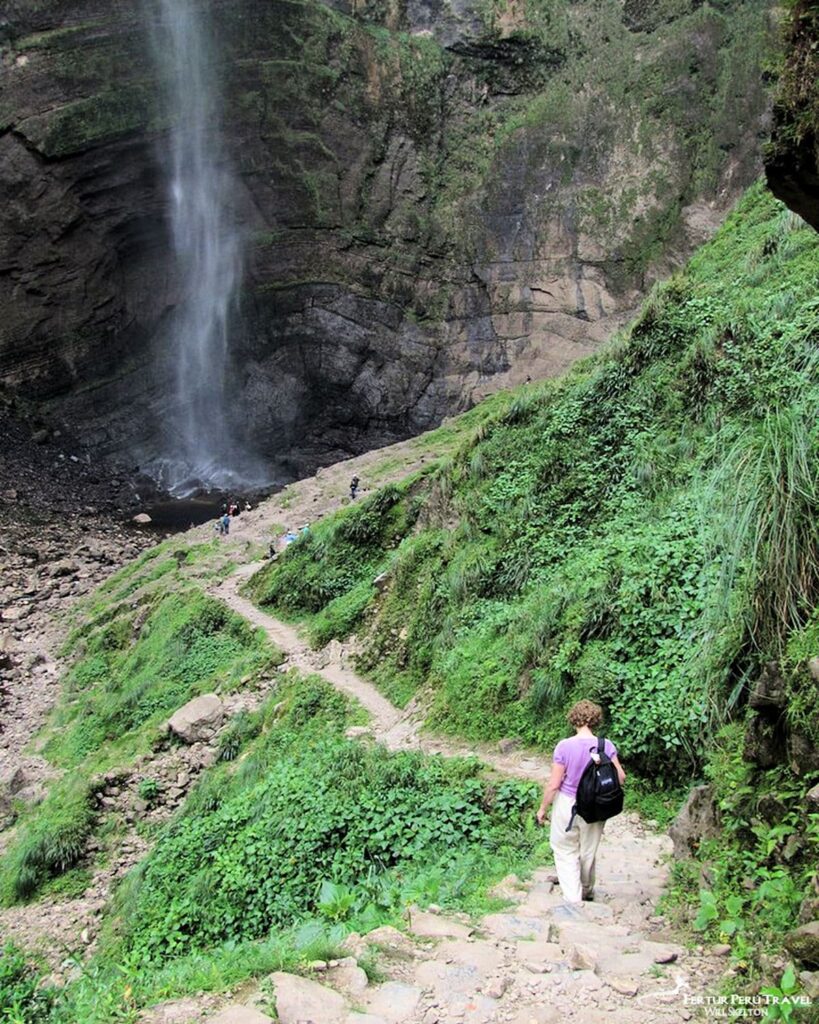
The path combines gravel, dirt, stone stairs, and cemented sections. Steeper areas use uneven stone steps. Persistently muddy stretches are paved with cement. The trail crosses small streams and gorges via short bridges and is well-signposted throughout.
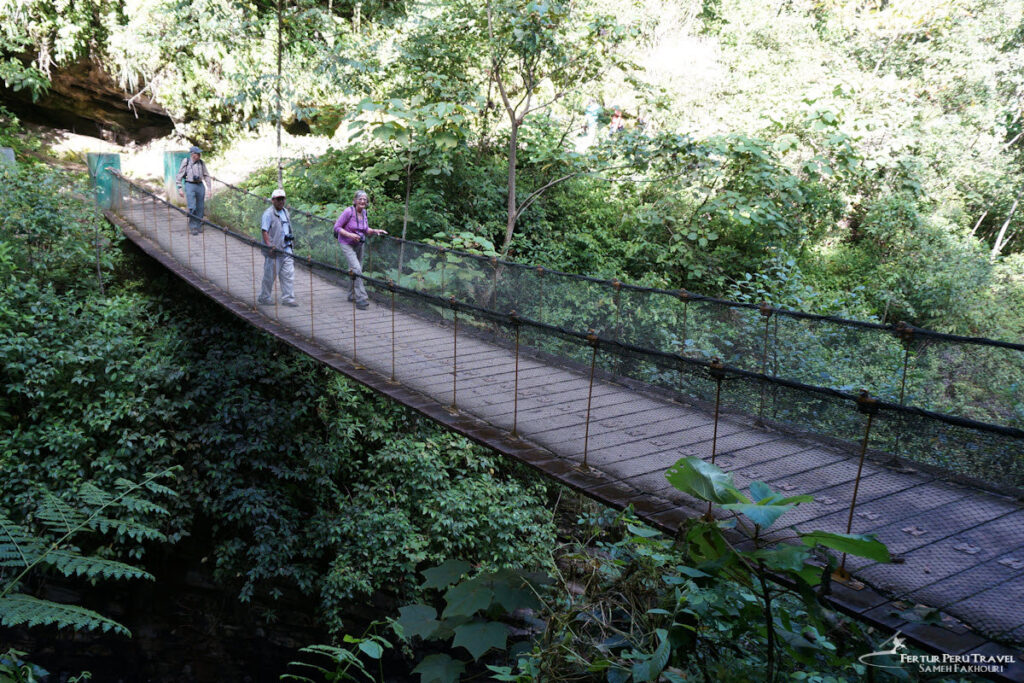
Vegetation opens up about two-thirds of the way, revealing the falls in the distance. You pass through sugarcane crops, traditional mills, cloud forest with orchids, lichens, and mosses, and a final section of dense forest where the mist becomes noticeable before the base comes into view.
Local Guides
Solo hiking is straightforward if you simply want to reach the falls and return. Hiring a local orientador from the tourist office adds meaningful context: these guides know the flora, fauna, and local history well and can identify birds and plants that most visitors would otherwise walk past.
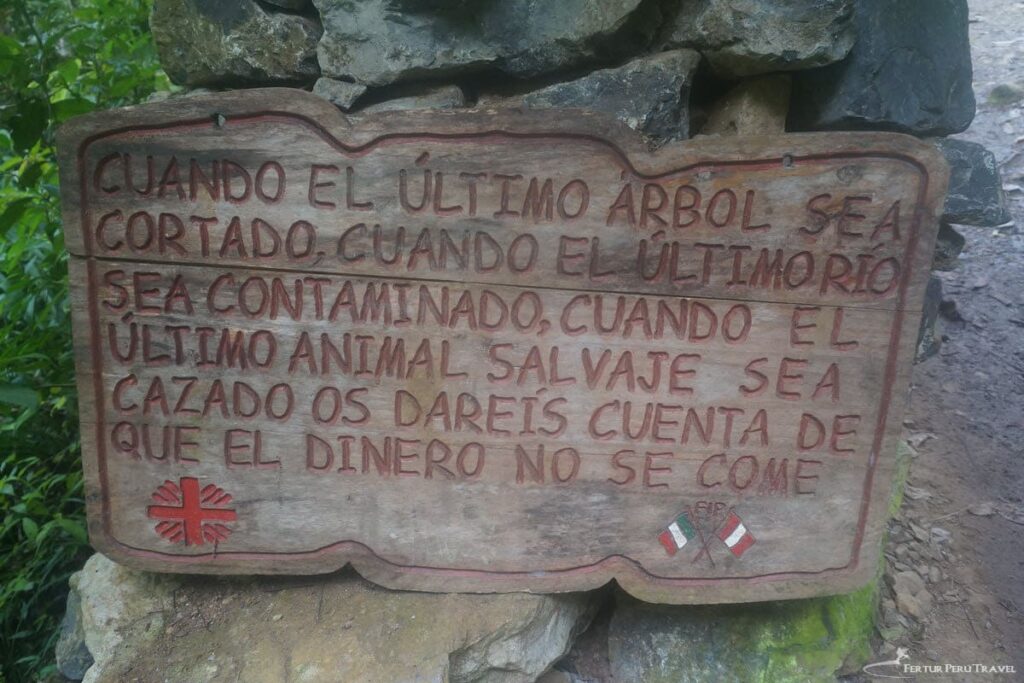
Facilities on the Trail
Bathrooms are available at Caballariza. Local residents operate small stands selling drinks and snacks at several points along the trail. Stock up on water and snacks in Cocachimba before departing. Bring your own toilet paper and/or wet wipes.
4. Costs, Hours, and Best Time to Visit
Entry Fees and Opening Hours
Entrance fees are paid in cash at the tourist office in Cocachimba before you start the trail. Recent visitors report fees of approximately 10–15 soles per adult, with student discounts available. The site is open Monday through Sunday, 7:00 AM to 5:30 PM.
Day tours from Chachapoyas start at around 45 soles for a basic group option. Private tours with lunch are priced higher. Going independently is cheaper but requires arranging your own transport each way.
Guide and Horse Costs
| Service | Approx. cost |
|---|---|
| Entry fee | ~10–15 soles per adult (cash only) |
| Local guide (orientador) | ~50 soles |
| Horse hire, outbound (to Caballariza) | ~40–50 soles |
| Horse hire, return only | ~30 soles |
Best Months to Visit
April through June offers the most practical conditions: the rainy season has ended, the falls still run strongly from recent precipitation, and skies are clearer than during the wet months. July and August bring the highest visitor numbers, though Gocta stays uncrowded relative to Peru’s major attractions. The falls are at their fullest from December through March, but trail mud and low cloud cover are consistent trade-offs during that period.
Best Start Time
Begin between 7:00 and 8:00 AM. Morning light is better for photographs, and starting early puts you ahead of any groups arriving later in the morning.
5. What to Pack
- Hiking boots with good ankle support and traction — trail sections are muddy and slippery regardless of season
- Waterproof jacket or poncho — you will get wet near the base of the falls
- Bug repellent (reapply after the spray zone near the base)
- Sunscreen, hat, and sunglasses
- Water and light snacks — vendors are available on the trail but not guaranteed
- Dry bag or waterproof pouch for camera gear and valuables
- Toilet paper
A daypack with a waist strap helps distribute weight over the several-hour trek.
6. Birds, Wildlife, and the Cloud Forest
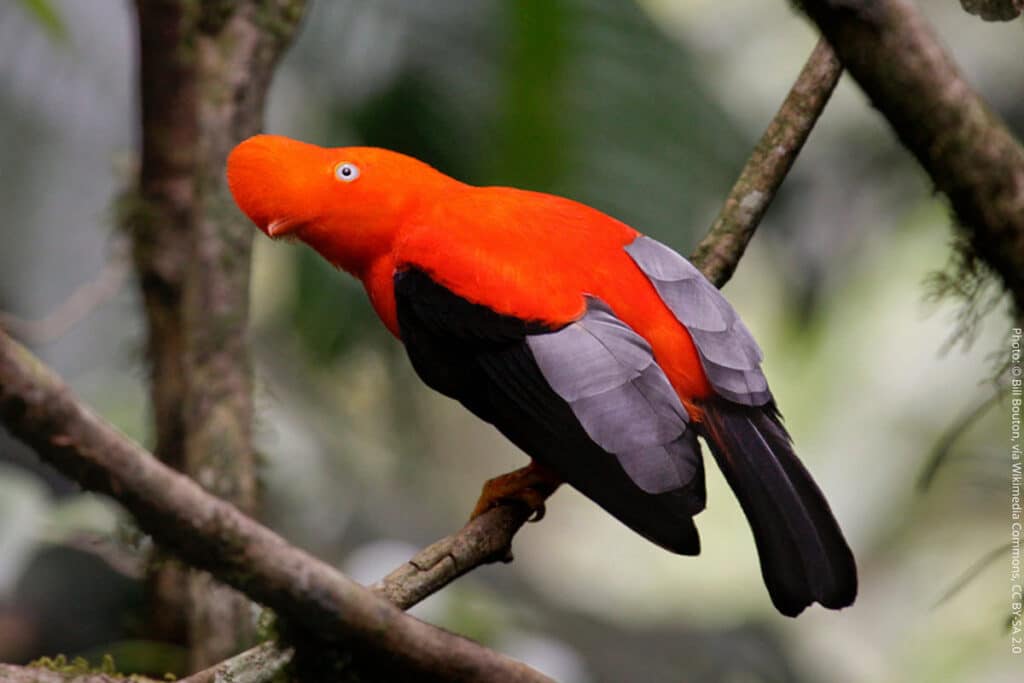
The cloud forest along the trail supports a level of biodiversity unusual even by Amazonian standards. The Andean cock-of-the-rock — Peru’s national bird, the male’s plumage a vivid orange-red — is among the most commonly sighted species on the Gocta trail. Hummingbirds are present throughout.
The wider Chachapoyas region is habitat for the endangered yellow-tailed woolly monkey, one of the rarest primates in South America, and the spectacled bear. Sightings of either on a casual day hike are uncommon, but their presence here indicates intact forest, not a managed tourist corridor. Orchids and bromeliads decorate the vegetation throughout the cloud forest section.
Binoculars improve your chances with birds considerably. Quiet, subdued clothing helps.
7. Where to Stay and Eat in Cocachimba
Several small restaurants operate in Cocachimba village. Accommodation ranges from budget guesthouses at roughly 15–30 USD per night through mid-range options including Gocta Miradors Hotel, up to Gocta Andes Lodge, which prices from approximately 80–150 USD per night depending on season. Gocta Andes Lodge has waterfall views from the property and an outdoor dining area — the view of the falls at dusk is a practical argument for overnighting in Cocachimba rather than returning to Chachapoyas the same evening.
8. Frequently Asked Questions
Is Gocta Falls worth the hike?
Gocta rewards visitors who are prepared for a genuine half-day trek. The lower drop, at 540 meters (1,772 feet), is difficult to process at a distance — the scale only becomes clear when you are standing at the base in the spray. The hike itself is varied: working sugarcane farms, cloud forest with orchids and birds, valley views, and a mist-heavy final approach. The site is rarely crowded even in high season, and the oral tradition around the waterfall — kept secret for generations by local residents who believed a mermaid guarded it — gives Gocta a cultural dimension that more accessible natural attractions typically lack.
How much time do I need for Gocta Falls?
The round-trip hike from Cocachimba takes five to six hours depending on pace. Add approximately one hour of travel each way from Chachapoyas, and a day trip is feasible but leaves no margin. A night in Cocachimba before the hike is the more practical option: you can start at 7:00 AM, reach the base without rushing, and return without worrying about catching the last colectivo back to Chachapoyas.
How do I get from Chachapoyas to Cocachimba?
Take a colectivo (shared minivan) heading toward Pedro Ruiz and ask the driver to drop you at the Cocahuayco bridge — approximately 5–10 soles. From the bridge, a mototaxi will take you to Cocachimba for around 10–15 soles. Total travel time is roughly one hour. A private taxi from Chachapoyas costs 50–70 soles. The Cocachimba tourist office, where you pay entrance fees and can arrange a guide, is your first stop on arrival.
What does it cost to visit Gocta Falls?
Entrance fees run approximately 10–15 soles per adult, payable in cash at the Cocachimba tourist office. A local guide costs around 50 soles. Horse hire covers roughly the first 3–4 kilometers of the trail (about two-thirds of the route) for 40–50 soles each way, or 30 soles for the return only. Day tours from Chachapoyas start at around 45 soles for a basic group option. Private tours with lunch are priced higher.
When is the best time to visit Gocta Falls?
April through June is the practical sweet spot: the rainy season has ended, the falls are still running strongly from recent precipitation, and skies are clearer than during the wet months. July and August are the most popular months but Gocta stays uncrowded relative to Peru’s major sites. The falls are fullest from December through March, but trail mud and low cloud cover are consistent trade-offs during that period. The site is open daily from 7:00 AM to 5:30 PM.
Why did local residents avoid Gocta Falls for generations?
Local oral tradition held that a mermaid guarded the waterfall and would curse anyone who revealed its location. The most commonly told version describes a man who kept a secret relationship with the mermaid. When the relationship was discovered, the mermaid pulled him into the water and he was never seen again.
Residents of Cocachimba watched the falls from a distance but did not approach them. As one local guide recalled, villagers were taught from childhood that visiting the falls meant danger or enchantment.
The belief held until international tourists began arriving safely after Stefan Ziemendorff’s 2006 announcement — at which point the falls, and the local economy around them, changed permanently.
Plan Your Visit to Gocta Falls
Gocta is a half-day hike, but the Chachapoyas region rewards more time. Kuelap, the Sarcophagi of Karajía, the cloud forest of Huembo — the area has a depth that most travelers only scratch the surface of. We build itineraries around your schedule, pace, and interests, with local guides who know the trails and the history.
If you’re putting together a trip to northern Peru, we can help you make the most of it.

Related Posts
Comments (0)