Travel in Peru is more connected than ever. Whether you are checking flight details in…
Best Time to Visit Cusco: A Month-by-Month Weather Guide
The best time to visit Cusco depends on what matters most to you — clear skies for trekking, lower prices, greener landscapes, or a specific festival. At 3,399 meters (11,152 ft) above sea level, Cusco has two main seasons: a dry season from roughly May to September and a rainy season from November to April. Each comes with real trade-offs. This guide covers Cusco weather by month, the festivals that define each season, and practical planning advice so you can choose the window that best fits your trip.
Cusco: When to Visit at a Glance
- Location: Cusco, southeastern Peru — former capital of the Inca Empire, 3,399 m (11,152 ft) above sea level
- Dry season: May–September — best for trekking, clear skies, and mountain views
- Rainy season: November–April — best for budget travel, green scenery, and fewer crowds
- Best overall months: Late April–May and September–early October
- Peak season: June–August — driest weather, highest demand; book Machu Picchu and Inca Trail permits well in advance
- Inca Trail closure: All of February (annual maintenance and conservation)
- Key festival: Inti Raymi, June 24 — one of the largest festivals in South America; coincides with peak season

Overview of Best Time to Visit Cusco
Open
1. Best Time to Visit Cusco for Weather, Value, and Crowds
Best overall months
Late April, May, September, and early October usually offer the strongest overall balance. The skies are often clear, the countryside still carries some green from the wet season, and visitor pressure is lower than in the peak months of June through August. May is particularly reliable: the rainy season has usually ended, trails are drying out, and Machu Picchu crowds have not yet reached their June–August heights.
Best months for hiking and outdoor travel
If your plans include trekking the Inca Trail, Lares Trek, or long walking days in the Sacred Valley, the window from May through September is the safest choice. Trails are drier, landslide risk is lower, and high-altitude visibility is better. June, July, and August are the driest months — and also the busiest, which means permits sell out quickly.
Best months for budget travelers
For lower hotel rates and easier last-minute availability, look at November through March. January and February are typically the cheapest months. The trade-off is the heaviest rain of the year. March and October offer a middle ground: prices soften before or after peak season, but conditions are more manageable than in January or February.
Best months to avoid crowds
April, May, September, and October are the least pressured months for popular sites. The rainy season also draws fewer international visitors, which can make Machu Picchu and Sacsayhuamán feel less crowded — provided rain and cloud cover are acceptable trade-offs.
Best Time to Visit Cusco by Traveler Type
| Traveler type | Best months | Reason |
|---|---|---|
| Trekkers | May–September | Dry trails, low landslide risk, reliable visibility on high passes |
| Photographers | May, September–October | Clear light, green hills still fresh from rains, less heat haze than July–August |
| Festival seekers | June (Inti Raymi / Corpus Christi), July (Virgen del Carmen), March–April (Semana Santa) | Some of the largest indigenous and Andean festivals in South America; book 3–6 months ahead |
| Families | June–August (high season) or April–May | Dry weather reduces logistics stress; April–May avoids peak crowds while keeping weather reliable |
| Budget travelers | January–March, November | Lowest hotel rates and most availability; accept rain and possible trail disruptions |
| Machu Picchu visits (best visibility) | May–September | Cloud forest at Machu Picchu receives more rain than Cusco; dry season gives clearest views |
| Crowd-avoiders | April, May, September, October | Shoulder-season months with dry-season conditions but significantly fewer visitors than June–August |
2. Cusco’s Climate at a Glance
Cusco sits high in the Andes at 3,399 meters (11,152 ft). Altitude shapes the experience as much as season: the sun is intense, the air is thin, and the gap between afternoon and nighttime temperatures can be surprisingly large. Understanding these dynamics helps you pack correctly and avoid being caught out.
Why altitude matters
At this elevation, UV radiation is significantly stronger than at sea level, even on overcast days. Most visitors also need a day or two to acclimatize — altitude sickness affects a meaningful proportion of first-time visitors. Factor in an acclimatization day when planning your itinerary, particularly before any trekking.
Cusco dry season (May–September)
The Cusco dry season runs from approximately May to September, with April and October behaving as transitional months. Sunny days are common, rainfall drops sharply, and sky conditions are reliably clearer than at any other time of year. Afternoons feel pleasant, but nights can be cold — June and July can see temperatures drop close to or below freezing, so warm layers are essential even if daytime feels mild. This is the best season for trekking, mountain views, and Inca Trail treks. It is also the busiest and most expensive.
Cusco rainy season (November–April)
The Cusco rainy season runs from November to April. January and February are typically the wettest months, with average precipitation above 130 mm each. Rain tends to fall in the afternoon or evening rather than all day, so mornings often remain usable. Even so, the wet season can affect trail conditions, road travel, and visibility at altitude. The advantage: the landscape turns vividly green, hotel prices soften, and visitor numbers drop considerably.
Day-to-night temperature swings
Monthly average temperatures do not fully capture what travelers actually experience in Cusco. In the dry season, a sunny afternoon at 21°C (70°F) can be followed by a night that drops below 5°C (41°F). In the rainy season, daytime temperatures are slightly more moderate, but nights remain cold. Layering is essential year-round.
3. Cusco Weather by Month
Temperature and precipitation data sourced from Peru’s National Meteorology and Hydrology Service (SENAMHI).
Wet season
Dry season
Transitional
| Month | Season | Temp range | Mean temp | Avg precipitation | |
|---|---|---|---|---|---|
| January | Wet | 47–68°F / 8–20°C | 57°F / 14°C | 5.9 in / 150 mm | |
| February | Wet | 47–68°F / 8–20°C | 58°F / 14°C | 5.2 in / 132 mm | |
| March | Wet | 46–69°F / 8–21°C | 58°F / 14°C | 4.4 in / 111 mm | |
| April | Transitional | 43–70°F / 6–21°C | 57°F / 14°C | 2.0 in / 50 mm | |
| May | Dry | 38–70°F / 3–21°C | 54°F / 12°C | 0.6 in / 14 mm | |
| June | Dry | 35–69°F / 2–21°C | 52°F / 11°C | 0.4 in / 10 mm | |
| July | Dry | 34–69°F / 1–21°C | 52°F / 11°C | 0.4 in / 10 mm | |
| August | Dry | 37–70°F / 3–21°C | 54°F / 12°C | 0.4 in / 11 mm | |
| September | Dry | 41–71°F / 5–22°C | 56°F / 13°C | 1.0 in / 26 mm | |
| October | Transitional | 44–72°F / 7–22°C | 58°F / 14°C | 2.4 in / 62 mm | |
| November | Wet | 46–72°F / 8–22°C | 59°F / 15°C | 3.2 in / 82 mm | |
| December | Wet | 46–70°F / 8–21°C | 58°F / 14°C | 5.2 in / 132 mm | |
Source: Peru’s National Meteorology and Hydrology Service (SENAMHI)
January
One of the wettest months of the year. Rain is frequent, often falling in afternoon bursts rather than all day. The countryside is lush and hotel prices are at their lowest. Expect muddier trail conditions, cloud cover, and possible transportation delays. Average precipitation: 5.9 in / 150 mm. Temperature range: 47–68°F / 8–20°C.
Crowds: Low
Prices: Lowest
Best for: budget travel · lush-landscape photography · avoiding crowds
February
Remains very wet and is the month the Classic Inca Trail closes entirely for maintenance. Machu Picchu stays open and train access continues, but trekking conditions are difficult across the region. Carnival celebrations — with parades, water fights, and traditional Andean dances — take place in Cusco and the surrounding altiplano. Average precipitation: 5.2 in / 132 mm. Temperature range: 47–68°F / 8–20°C.
Crowds: Very low
Prices: Lowest
Note: Inca Trail closed all month
Best for: budget travel · Machu Picchu by train · Carnival
March
The heaviest rains begin to ease, though conditions remain wet. Semana Santa (Holy Week) falls in March or April and brings significant religious processions to Cusco’s streets — including the procession of El Señor de los Temblores on Holy Monday. A reasonable option for travelers who want lower prices and can accept some weather uncertainty. Average precipitation: 4.4 in / 111 mm. Temperature range: 46–69°F / 8–21°C.
Crowds: Low
Prices: Low
Best for: Semana Santa · budget travel · transition-season scenery
April
One of the most appealing transition months. Rainfall drops sharply but the hills retain their green from the wet season. Trekking conditions improve noticeably toward the end of the month. Semana Santa may fall in April (date varies by year), bringing impressive religious processions through the historic center. Average precipitation: 2.0 in / 50 mm. Temperature range: 43–70°F / 6–21°C.
Crowds: Low–moderate
Prices: Low–moderate
Best for: shoulder-season sweet spot · Semana Santa · green hills without heavy rain
May
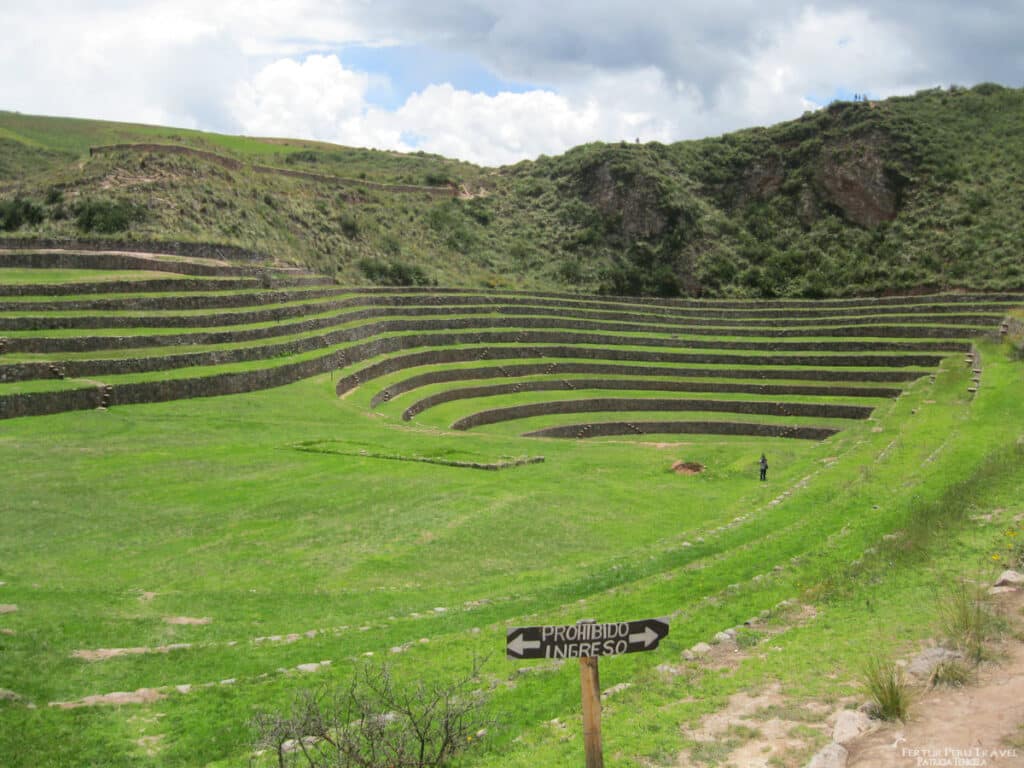
One of the strongest months for travel. The dry season is underway, the landscape remains fresh from the rains, and hiking conditions are excellent. Inca Trail conditions are very good and Sacred Valley sites like Pisac and Ollantaytambo are still surrounded by green terraces. Average precipitation: 0.6 in / 14 mm. Temperature range: 38–70°F / 3–21°C.
Crowds: Moderate
Prices: Moderate
Best for: almost everything — trekking · photography · Sacred Valley · Machu Picchu
June
One of the driest months and the heart of festival season. Inti Raymi falls on June 24, and Corpus Christi (date varies, usually early-to-mid June) draws elaborately dressed parish processions to the Cathedral. Both events demand advance bookings — hotels fill months ahead. Clear skies, strong sun, and cold nights throughout the month. Average precipitation: 0.4 in / 10 mm. Temperature range: 35–69°F / 2–21°C.
Crowds: High (peak near June 24)
Prices: Peak
Best for: Inti Raymi · Corpus Christi · trekking — book everything well ahead
July
Remains very dry and very busy. Excellent for outdoor travel, photography, and trekking. Peru’s national independence holiday falls July 28–29, adding domestic travel demand that further tightens accommodation. Book Inca Trail permits and Machu Picchu entry well in advance — some dates sell out four to six months ahead. Virgen del Carmen in Paucartambo (July 16) is a highlight for those who want a less-touristed Andean festival. Average precipitation: 0.4 in / 10 mm. Temperature range: 34–69°F / 1–21°C.
Crowds: Peak
Prices: Peak
Best for: clear skies · Virgen del Carmen in Paucartambo — advance booking essential
August
Dry conditions continue. Favorable for hiking and sightseeing, though mornings and evenings can feel especially cold. Winds (known locally as surazos) can make the temperature feel lower than the thermometer suggests — pack warm layers. Crowd and price pressure remain near peak, but begin to ease toward month-end. Average precipitation: 0.4 in / 11 mm. Temperature range: 37–70°F / 3–21°C.
Crowds: High
Prices: High
Best for: trekking · photography · Machu Picchu — pack warm layers for wind and cold nights
September
An excellent and often underrated month. Dry conditions usually continue, but visitor numbers ease after the August high. Trails are still in good shape, and the light for photography is often very clear. A strong choice for families and photographers who want dry-season reliability without full peak-season pressure. Average precipitation: 1.0 in / 26 mm. Temperature range: 41–71°F / 5–22°C.
Crowds: Moderate
Prices: Moderate
Best for: trekking and Sacred Valley with fewer crowds · families · photographers
October
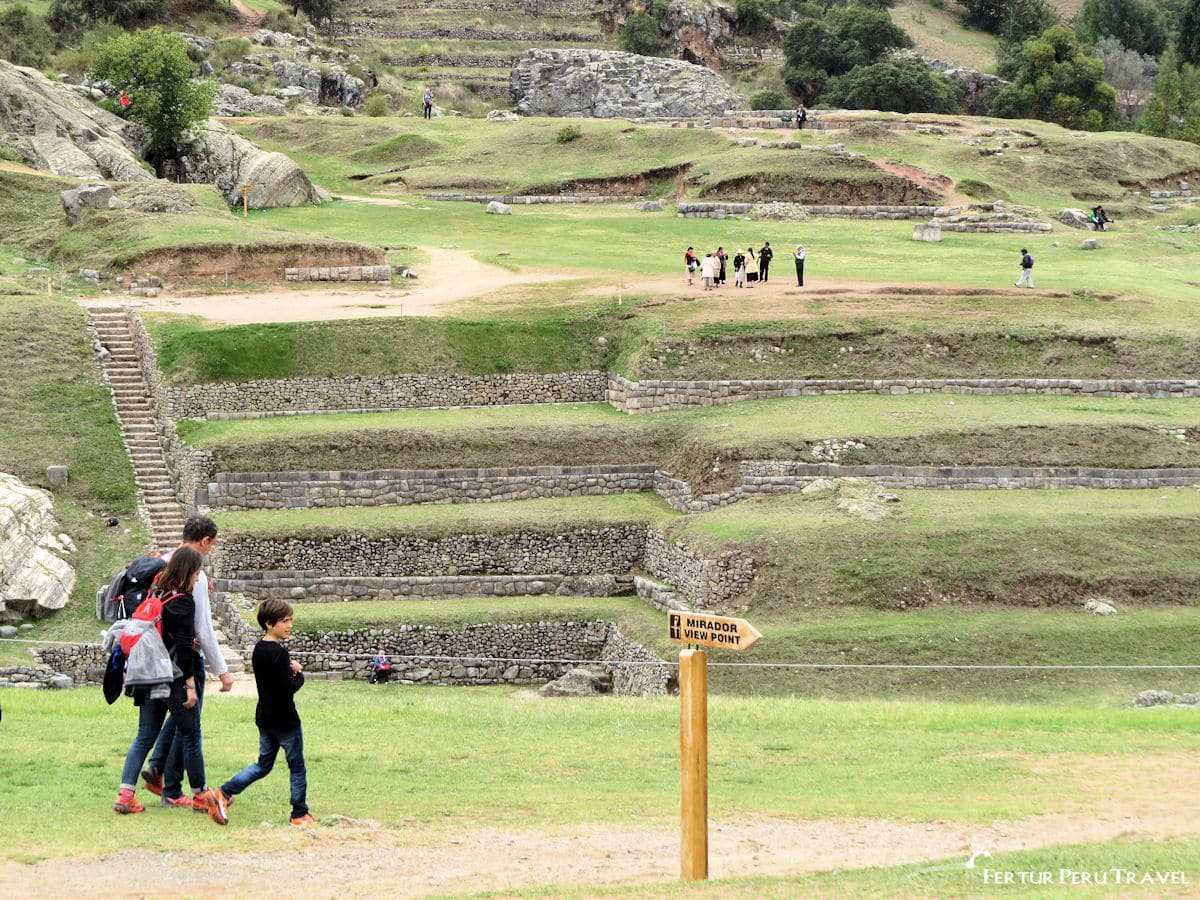
A transitional month. Some days remain dry and clear; others hint at the coming rains. Temperatures are among the most pleasant of the year and crowds are lighter than at any point in the dry season. A good middle-ground option for travelers who want decent weather without peak-season prices. Average precipitation: 2.4 in / 62 mm. Temperature range: 44–72°F / 7–22°C.
Crowds: Low–moderate
Prices: Low–moderate
Best for: value seekers · families · city touring and Sacred Valley
November
The wet season begins again. Rain becomes more regular, though mornings are often still clear. Prices soften and international visitor numbers drop considerably. A practical option for travelers who prioritize value and are comfortable with afternoon rain and some logistics uncertainty. Average precipitation: 3.2 in / 82 mm. Temperature range: 46–72°F / 8–22°C.
Crowds: Low
Prices: Low
Best for: budget travel · early wet-season green scenery · city-focused itineraries
December
Rain becomes more frequent. Santurantikuy, Cusco’s centuries-old artisan market, fills the Plaza de Armas from the early hours of December 24 — one of the most atmospheric events on the Cusco calendar and one of the last major surviving traditional markets of its kind in the Andes. Arriving before dawn gives you the best selection. Holiday-season demand creates a price spike and a surge in movement during the Christmas–New Year window. Average precipitation: 5.2 in / 132 mm. Temperature range: 46–70°F / 8–21°C.
Crowds: Low
Prices: Low
Note: holiday spike Dec 22–Jan 2
Best for: Santurantikuy (Dec 24) · holiday atmosphere · budget travel outside the holiday window
4. Cusco Festivals by Season
Cusco’s festival calendar is one of the densest and most distinctive in the Andes. Several events draw visitors specifically — and some require bookings months in advance. Below is a practical overview organized by season.
Rainy season (November–April)
Carnival (February, date varies): Celebrated across Peru, but the Andean version in Cusco and the surrounding altiplano has its own character — water fights, parades, and traditional dances that predate the Spanish colonial overlay. Not heavily marketed to tourists; this is a genuinely local festival worth timing a visit around.
Semana Santa (March or April, date varies by year): Holy Week brings major religious processions through the streets of Cusco’s historic center. The procession of El Señor de los Temblores (the Lord of Earthquakes) on Holy Monday is the most significant — a revered icon carried through the city amid a sea of red ñucchu flowers. The blend of Andean and Catholic traditions is visible in every detail.
Dry season (May–October)
Corpus Christi (June, date varies — usually 60 days after Easter): Fifteen parish saints and virgins are carried in procession to the Cathedral, where they remain for a week. The silver-mounted sculptures are among the finest colonial religious art in Peru. The event draws Cusqueños from across the city and the surrounding villages — more genuinely local in character than Inti Raymi, and correspondingly less crowded with foreign visitors.
Inti Raymi — Festival of the Sun (June 24): The most internationally recognized event on the Cusco calendar. The modern Inti Raymi is a large-scale theatrical reconstruction of the Inca Festival of the Sun, staged at three locations: the Qorikancha, the Plaza de Armas, and the fortress of Sacsayhuamán. Our full Inti Raymi guide covers ticket categories, seating options, ceremony structure, and what to expect. Coincides with the Fiestas del Cusco (Cusco Week), a multi-day civic celebration surrounding the city’s official anniversary.
Fiestas del Cusco / Cusco Anniversary Week (late June, centered on June 24): The city’s founding anniversary brings parades, music, folk dance competitions, and civic ceremonies throughout the last week of June. Hotels fill completely. If you are visiting for Inti Raymi, budget for the full week of events — the surrounding days are worth it.
Virgen del Carmen in Paucartambo (July 16): Paucartambo, a small colonial town roughly 110 km (68 miles) from Cusco, hosts one of the most important religious festivals in the southern Andes. Masked dance troupes representing characters from Andean folklore — the Ukuku, the Qhapaq Negro, the Saqra — perform for three days around July 16. Less internationally known than Inti Raymi but widely regarded among Andean scholars as the more authentic surviving expression of syncretized Andean-Catholic ritual. Fertur arranges day excursions and overnight stays in Paucartambo for the festival period — accommodation is extremely limited and must be booked well in advance.
Wet season re-entry (November–December)
Santurantikuy (December 24): Cusco’s centuries-old artisan market fills the Plaza de Armas from the early hours of December 24. Craftspeople arrive from across the region to sell religious figurines, Nativity pieces, miniatures, and traditional objects. The market is both a major commercial event and one of the last major surviving traditional markets of its kind in the Andes. Arriving before dawn gives you the best selection and the most atmospheric experience.
5. When the Weather Defies the Calendar
Cusco’s seasonal patterns are a reliable guide, not a guarantee. Weather in the Andes can shift with little warning, particularly in transitional months.
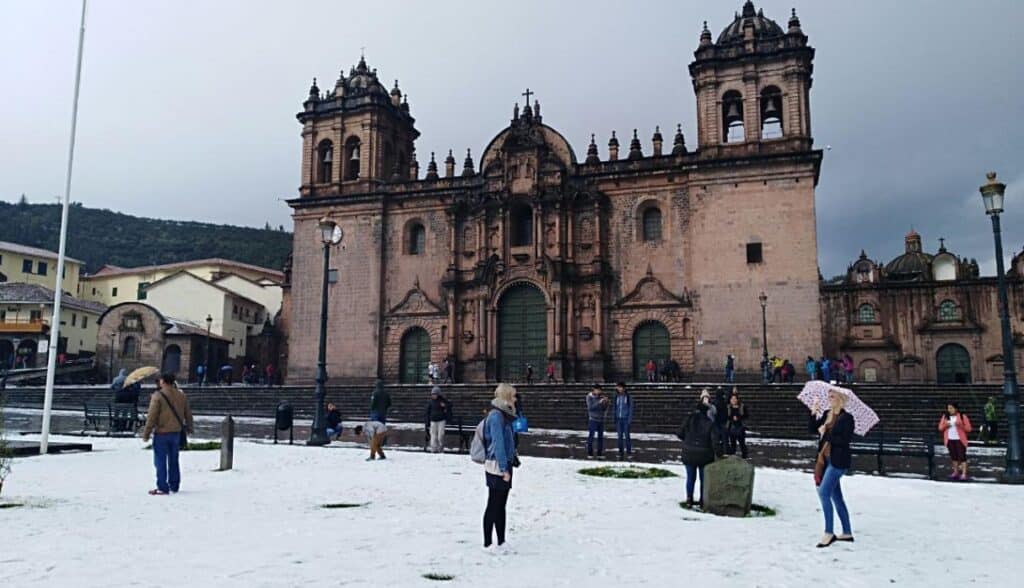
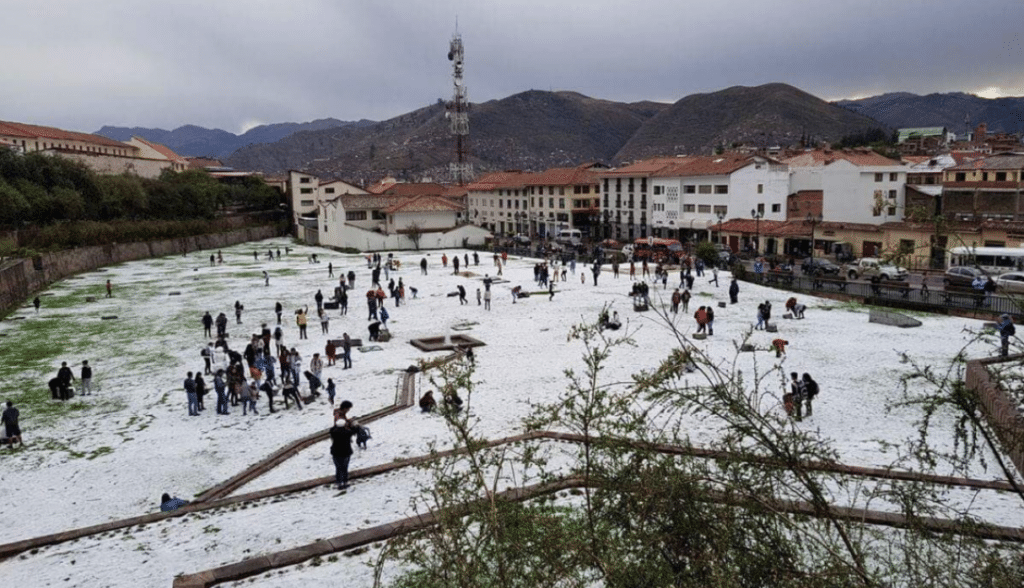
On a Saturday afternoon in November 2017, an unusually intense hailstorm struck Cusco’s historic center. The Plaza de Armas and surrounding streets were carpeted in white hail deeply enough to look, briefly, like a highland snowfield. It was an extreme event — but it illustrates the point. Pack for the season you expect; also pack for what the season occasionally produces.
6. How Weather Affects Machu Picchu and Regional Travel
Cusco and Machu Picchu have meaningfully different weather patterns. Machu Picchu sits at a lower elevation — approximately 2,430 meters (7,970 ft) — in a cloud-forest environment that receives more rain than Cusco. A dry day in Cusco can still mean cloud cover at Machu Picchu. That matters when planning.
Machu Picchu visits
Even in the rainy season, mornings at Machu Picchu often begin with relatively clear conditions before clouds build in the afternoon. In wet months, however, fog can settle in and obscure the views for hours. Mountain trails — including Huayna Picchu and Montana — become slippery and demand extra care. The dry season from May to September generally delivers the clearest views and the safest mountain-trail conditions. Fertur’s Machu Picchu circuits include transport, entry tickets, and guide service.
Inca Trail and alternative treks
The Classic Inca Trail closes every February for maintenance. Alternatives — the Lares Trek, Salkantay Trek, and Choquequirao route — remain open, but wet-season trail conditions make them significantly more demanding. If you are planning any multi-day trek to Machu Picchu, May through September is the recommended window. Inca Trail permits sell out months in advance; check current availability and secure your group size early.
Road and train conditions
Heavy rain during the wet season can trigger landslides and cause transport delays on mountain roads. Train services to Aguas Calientes (the town below Machu Picchu) also face periodic disruptions when river levels rise. Travelers visiting in the wet season should build flexibility into their itinerary — a rigid one-night plan for Machu Picchu in February carries real weather risk.
7. What to Pack for Cusco’s Weather
The biggest packing mistake travelers make in Cusco is bringing clothes for one temperature range. The altitude means you may need sun protection and a warm jacket on the same afternoon. A simple three-layer system works well year-round: a breathable base layer, a mid-layer (fleece or merino wool), and a waterproof outer layer. In the rainy season, a proper waterproof jacket matters more than a cheap poncho. Waterproof footwear with good grip is also important on Cusco’s stone streets and wet trail surfaces.
Do not underestimate the sun. At 3,399 meters (11,152 ft), UV intensity is significantly higher than at sea level, even on overcast days. Bring SPF 50 sunscreen, sunglasses with UV protection, and a hat regardless of season. Cotton clothing becomes uncomfortable when wet or sweaty at altitude — quick-dry synthetic or merino wool layers are a better choice for Cusco’s variable conditions.
8. So, What Is the Best Time to Visit Cusco?
For most travelers, the best time to visit Cusco is late April through May or September through early October. These months combine dry-season reliability with manageable crowd levels and moderate prices.
If your priority is trekking or guaranteed clear skies, choose May through September — and book Inca Trail permits and Machu Picchu entry well ahead of arrival. If your priority is budget and flexibility, the rainy season from November through March offers the best hotel rates, with January and February at the low point. If you want festivals, June gives you Inti Raymi and Corpus Christi, July gives you Virgen del Carmen in Paucartambo, and December 24 gives you Santurantikuy.
Once you know your priorities, Cusco’s weather calendar becomes a planning tool rather than an obstacle. Fertur’s team in Cusco can help you match your travel dates to the right itinerary.
Planning a trip to Cusco?
Fertur Peru Travel is a MINCETUR-accredited agency based in Peru. We handle Cusco tours, Sacred Valley itineraries, Machu Picchu circuits, and Inca Trail permits — including for the current season. Contact us to check availability for your dates.
Get in touch with FerturBest Time to Visit Cusco — FAQs
What is the best time to visit Cusco for good weather?
The best months for reliable weather are late April through May and September through early October. These shoulder-season months typically offer clear skies and comfortable daytime temperatures — between 18°C and 22°C (64°F–72°F) — without the intense peak-season crowds of June through August. For the driest conditions of all, June, July, and August deliver the most consistent sunshine, but also the highest demand and prices.
When should I visit Cusco to hike the Inca Trail?
The Inca Trail is open from March through January. The Classic route closes entirely in February for maintenance. The recommended trekking window is May through September, when trails are drier, high-pass visibility is better, and landslide risk is lowest. Inca Trail permits sell out months in advance — permit capacity is fixed by Peru’s Ministry of Culture and demand routinely exceeds supply during peak season. If your dates fall in June or July, book at least four to six months ahead.
What are the wettest months in Cusco?
January and February are the wettest months, with average precipitation of around 150 mm (5.9 in) and 132 mm (5.2 in) respectively. December is also very wet, averaging 132 mm (5.2 in). These three months form the core of the rainy season. Rain typically falls in afternoon or evening bursts rather than all day, but trail and road conditions are significantly affected.
Is Cusco worth visiting in the rainy season?
Cusco in the rainy season offers real advantages that the dry-season version does not. Hotel rates drop significantly, visitor numbers fall, and the Andean landscape turns a deep, vivid green that the dry season — for all its clear skies — cannot match. Machu Picchu visits require more flexibility since cloud cover can obscure the ruins, but the site remains open and train access is unaffected by normal wet-season rain. The trade-off is genuine: expect some disrupted days, slower road travel, and muddier trails. For city-focused trips, the wet season is entirely viable.
What should I pack for Cusco regardless of season?
Pack layers for a wide temperature range — Cusco afternoons can reach 21°C (70°F) while the same evening drops to 5°C (41°F) or below, particularly in the dry season. A waterproof outer layer is useful year-round; in the rainy season it is essential. Bring SPF 50 sunscreen and sunglasses — at 3,399 meters (11,152 ft) UV intensity is significantly stronger than at sea level, even on overcast days. Quick-dry or merino wool fabrics work better than cotton for Cusco’s variable conditions.
When is Inti Raymi, and do I need to book ahead?
Inti Raymi — the Inca Festival of the Sun — is held annually on June 24, which is also the date of the winter solstice in the Southern Hemisphere. The ceremony takes place at three sites across Cusco: the Qorikancha temple, the Plaza de Armas, and the fortress of Sacsayhuamán. Tickets for the ticketed grandstand seating at Sacsayhuamán sell out well in advance, and hotels in Cusco fill for the entire week surrounding June 24. If you plan to attend, secure accommodation and any guided tour bookings at least three to four months ahead. Our complete Inti Raymi guide covers ticket categories, ceremony structure, and what to expect on the day.
What festival in Cusco most travelers haven’t heard of but should know about?
Corpus Christi, held in June (60 days after Easter, date varies by year), is one of the most visually extraordinary events in the Cusco calendar and draws a fraction of the attention that Inti Raymi receives. Fifteen saints and virgins from parishes across the Cusco region are carried into the Cathedral in elaborate silver-mounted sculptures, where they remain for a week before being carried back in procession. The event blends Catholic and Andean ritual in a form that has not been significantly altered for public consumption — it is genuinely communal, the participants are from the parishes, and the atmosphere is different in kind from the theatrical staging of Inti Raymi. Corpus Christi sometimes falls within days of Inti Raymi; in those years, Cusco in late June becomes one of the most festival-dense places in South America.

Related Posts

Comments (0)