The best time to visit Cusco depends on what matters most to you — clear…
Salkantay Trek to Machu Picchu: A Practical Guide
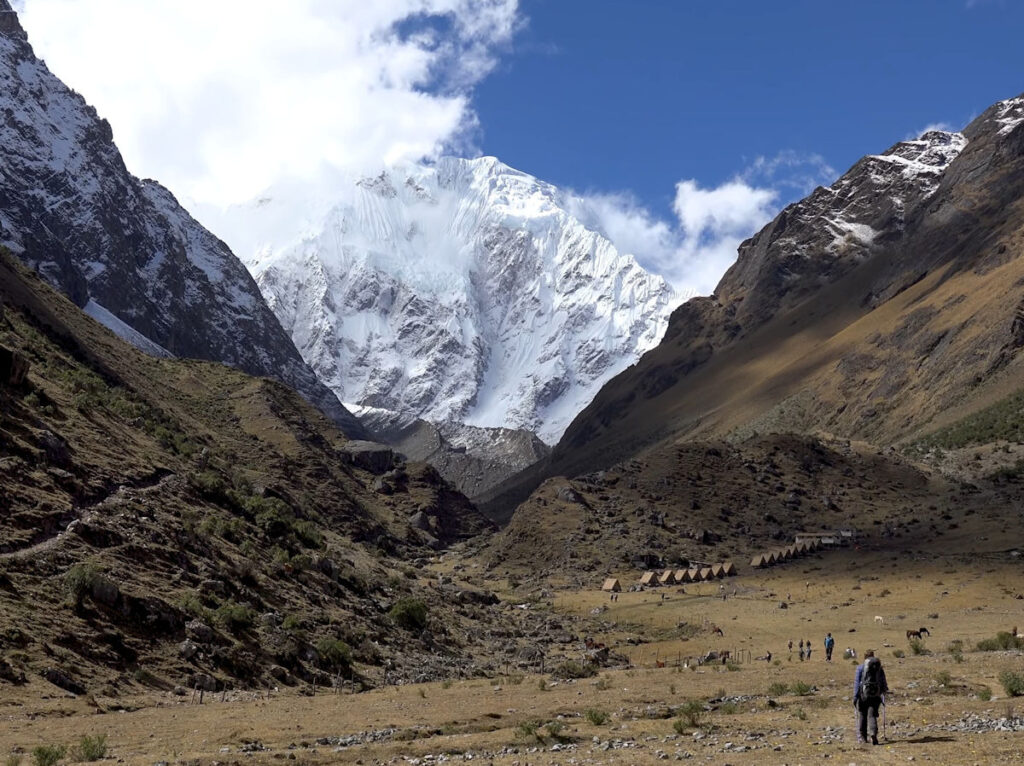
The Salkantay Trek is one of the best alternatives to the Classic Inca Trail for travelers who want big mountain scenery, a real physical challenge, and a memorable approach to Machu Picchu. National Geographic highlighted the Salkantay trek to Machu Picchu route as one of the leading alternate hikes to the Inca citadel — a reputation well deserved. The trek crosses high Andean terrain below Nevado Salkantay, then descends through cloud forest and greener valleys before ending at Peru’s most famous archaeological site.
If you are planning the Salkantay Trek to Machu Picchu, the most important questions are simple: when should you go, how difficult is it, what will you see, and how should you prepare? This guide answers those questions clearly so you can plan the trek with realistic expectations.
Overview of the Salkantay Trek to Machu Picchu
Open
What Is the Salkantay Trek?
The Salkantay Trek is a multi-day hiking route in the Cusco region that leads toward Machu Picchu through the Vilcabamba range. Its namesake peak, Nevado Salkantay, rises above 20,000 feet, and the route is known for combining high mountain scenery with a dramatic descent into more humid cloud-forest terrain. National Geographic describes it as one of the most popular alternatives to the oversubscribed Inca Trail.
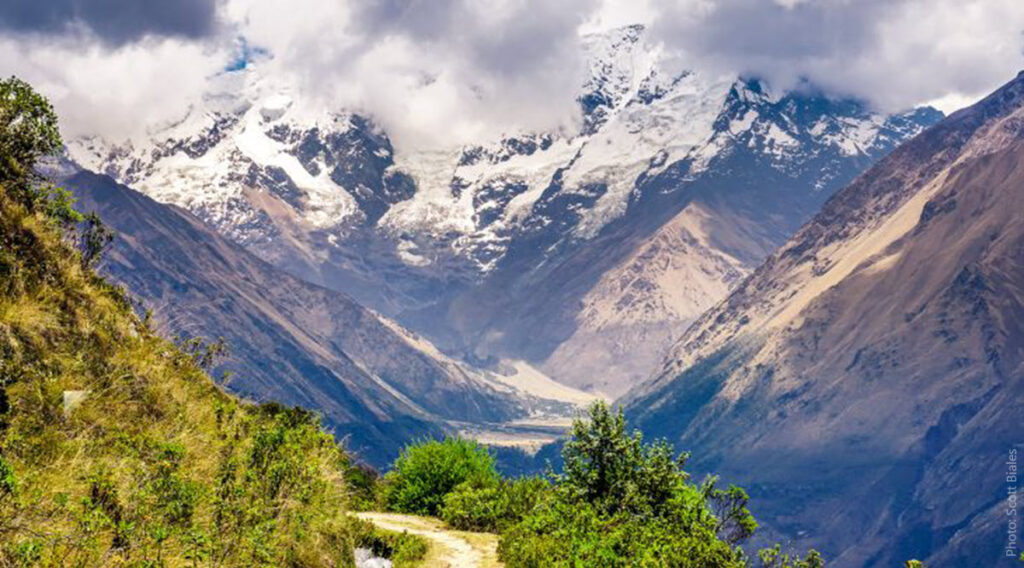
One of the route’s strongest advantages is variety. You do not spend the whole trek in one landscape. Instead, you move from cold alpine terrain to glacial viewpoints, then down into warmer valleys with thicker vegetation. That environmental transition is part of what makes the trek feel so rewarding.
Where Is the Salkantay Trek?
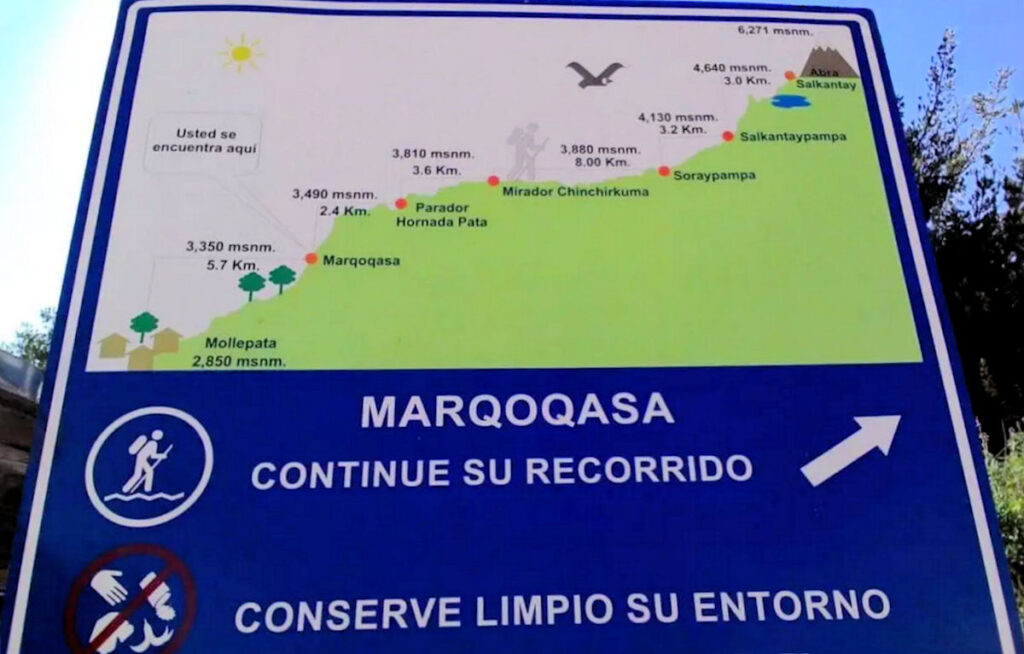
The route lies in the Cusco region of southern Peru and passes through the mountain environment associated with Salkantay and Humantay. Most itineraries begin in the Mollepata or Challacancha area and finish in Aguas Calientes before the final visit to Machu Picchu. Official tourism information for Humantay Lake places this landscape in the Cusco Andes, where trekking routes pass beneath snow-capped peaks and glacial scenery.
How Long Is the Salkantay Trek?
The classic Salkantay itinerary usually takes 5 days and 4 nights. Depending on the operator and route variation, total distance is generally about 46 to 49 miles (74 to 79 kilometers). National Geographic specifically described one popular version as a 46-mile (74-kilometer) route.
Some operators also offer faster 4-day versions, but the 5-day format is usually the better choice for travelers who want a more balanced pace and a fuller experience.
Salkantay Trek 5-Day Itinerary
Day 1: Cusco to Soraypampa and Humantay Lake
Most tours leave Cusco early and drive toward the trailhead area before beginning the hike to Soraypampa. Many itineraries include an afternoon hike to Humantay Lake, one of the best-known natural attractions on this route.
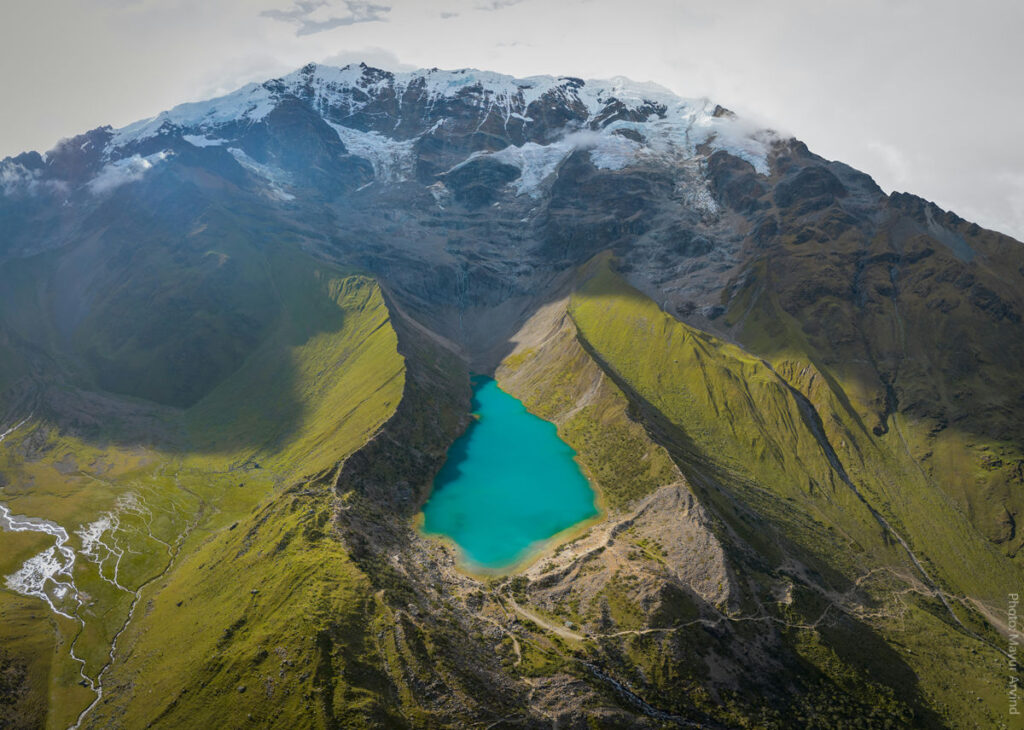
Humantay Lake sits at about 13,780 feet (4,200 meters) and is known for its vivid turquoise color and dramatic mountain setting. Peru’s official tourism promotion highlights it as one of Cusco’s striking high-Andean trekking destinations.
Day 2: Soraypampa to Salkantay Pass, then descent
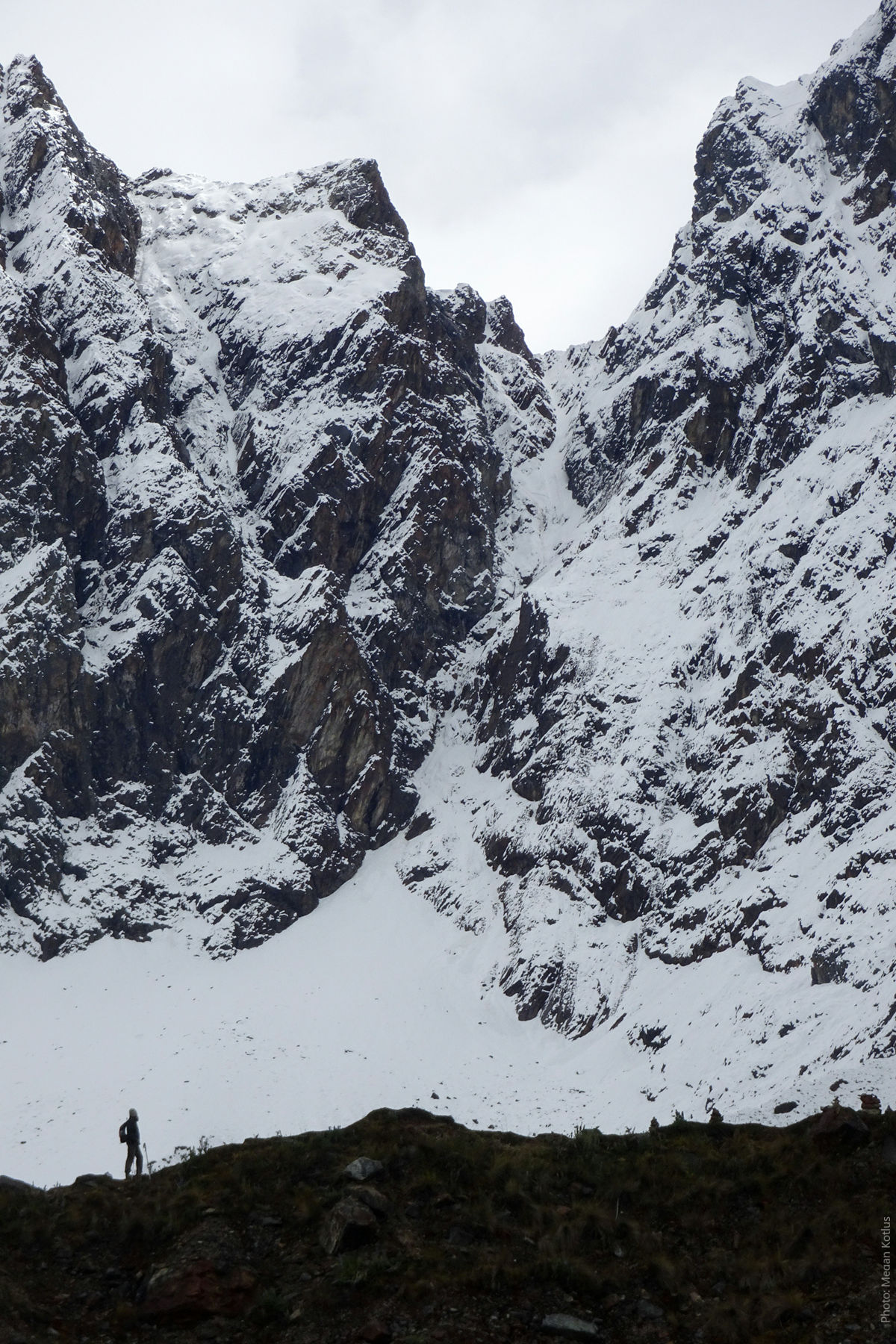
This is usually the hardest day of the trek. You climb to Salkantay Pass, then begin a long descent into lower and greener terrain. This is the day that defines the trek physically and visually.
The pass reaches roughly 15,190 feet (4,630 meters), which is why acclimatization matters so much. Peru’s official tourism guidance for Salkantay emphasizes the high-altitude nature of the route and the need to prepare for mountain conditions.
Day 3: Cloud forest and coffee-growing zone
By the third day, the landscape changes noticeably. You leave the harsh high-altitude environment behind and move into warmer terrain with thicker vegetation. Many tours include a visit to a local coffee-growing area, which adds a cultural dimension to the trek beyond the mountain scenery.
Day 4: Llactapata and the approach to Aguas Calientes
Many 5-day itineraries include Llactapata, where you can often see Machu Picchu from across the valley. This is one of the route’s most satisfying moments because it gives you a first distant look at the citadel before your main visit the next day. National Geographic highlights this side of the trek as part of what makes Salkantay such a compelling approach to Machu Picchu.
Day 5: Machu Picchu
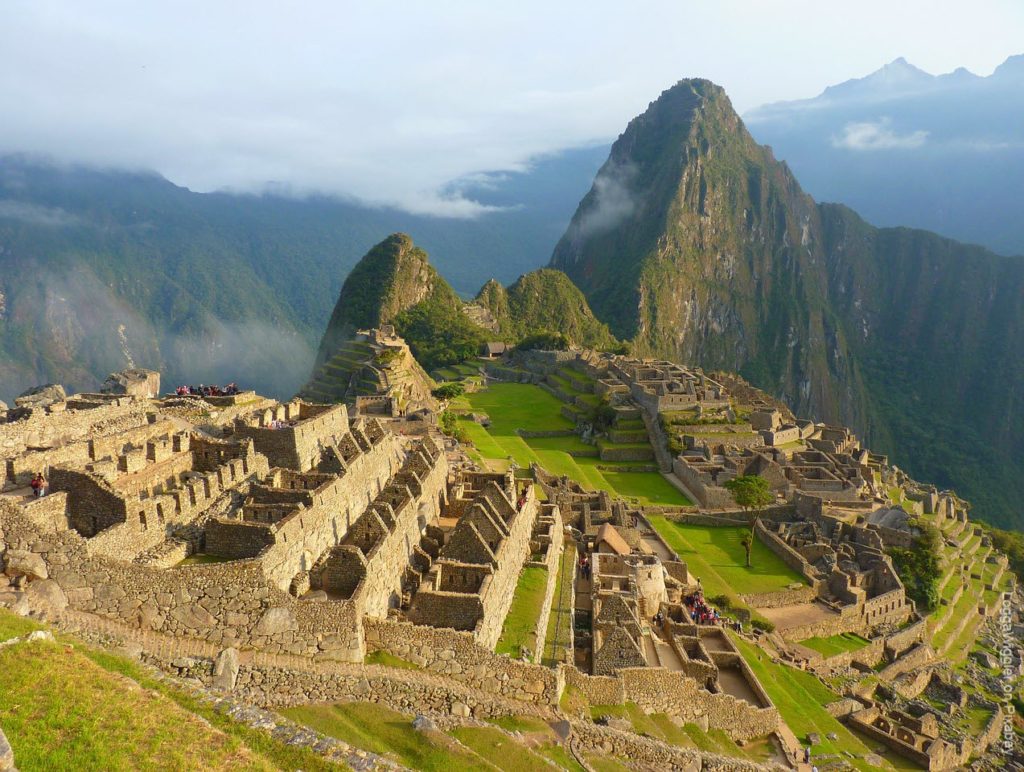
On the final day, you visit Machu Picchu, the unforgettable culmination of the 5-day Salkantay Trek. Most Salkantay trek packages that include Machu Picchu build the sanctuary visit into the overall program, making it easier to coordinate entry, local transport, and the final approach from Aguas Calientes. Your exact visit will depend on the circuit included in your package and ticket availability at the time of booking, so it is best to reserve well in advance, especially during peak travel months.
Why Choose the Salkantay Trek Instead of the Inca Trail?
The Salkantay Trek appeals to travelers who want more flexibility and more dramatic mountain scenery. The Inca Trail is more tightly regulated and is famous for its archaeological route and classic gateway arrival. Salkantay, by contrast, is known for its high mountain pass, glacial scenery, and changing ecosystems. National Geographic specifically identifies it as a top alternative to the Inca Trail for travelers heading to Machu Picchu.
It is also a good option for travelers who cannot secure Inca Trail permits but still want a multi-day trek rather than a train-based approach.
Best Time to Hike the Salkantay Trek
The best time to hike the Salkantay Trek is generally during the drier part of the year. Official and operator guidance consistently point to the dry season as the most reliable period for trail conditions, mountain views, and lower rain risk. Peru Travel and Salkantay route guidance both point to roughly April through October as the best overall trekking window.
In practical terms:
- April, May, September, and October are often the best balance of decent weather and somewhat lighter crowds.
- June through August usually bring the driest conditions, but they also bring colder nights and more demand.
- December through March are wetter months, so conditions can be less predictable.
How Difficult Is the Salkantay Trek?
The Salkantay Trek is best described as moderate to challenging. The route does not require technical mountaineering skills, but the altitude, long hiking days, and steep ascents make it demanding.
The biggest challenge is elevation. Any route that climbs to around 15,190 feet (4,630 meters) will feel hard, even for fit travelers. Thin air slows you down, especially on the ascent to the pass. Official tourism guidance for Salkantay emphasizes the high-altitude nature of the trek, and that should not be underestimated.
How to Prepare for the Salkantay Trek
Arrive in Cusco early
Give yourself at least 2 to 3 nights in Cusco before starting the trek. That extra time helps your body adjust to the elevation before you move to even higher camps.
Train before you go
Focus on cardio, leg strength, and hiking endurance in the weeks before departure. Stair workouts, hill training, and longer walks with a daypack are all useful.
Pack for changing conditions
The trek crosses different climate zones, so you need layers. Bring broken-in hiking boots, warm clothing for high camps, rain protection, sun protection, and a comfortable daypack.
Bring the right documents
Your passport details must match your Machu Picchu booking, and official ticketing is handled through the state platform. That makes it important to review your documents carefully before departure.
What You Will See on the Salkantay Trek
The trek is not just about reaching Machu Picchu. It is also about what you experience along the way.
Humantay Lake
Humantay Lake is one of the route’s best-known natural highlights, with bright glacial water and a spectacular mountain backdrop. Peru Travel promotes it as a major trekking experience in the Cusco Andes.
Salkantay Pass
The pass is the physical and symbolic high point of the trek. This is where the scale of the mountains becomes most obvious.
Cloud forest
After the pass, the route changes quickly. The descent introduces warmer air, greener slopes, and thicker vegetation.
Llactapata
Llactapata offers one of the most interesting views on the route because it lets you see Machu Picchu from across the valley before your final visit. National Geographic’s coverage of Salkantay has highlighted that distinctive approach as one of the trek’s strongest features.
Machu Picchu
The trek ends with the main prize: Machu Picchu itself, entered through the official circuit system.
Booking Tips for the Salkantay Trek
Even though Salkantay is more flexible than the Inca Trail, you should still book early if you are traveling in high season. Machu Picchu entry, train logistics, and the better operators can all fill well ahead of time. The official Machu Picchu platform remains the key part of that planning process because final site access depends on ticket availability and circuit selection.
Before you book, confirm:
- whether Machu Picchu entrance is included
- which Machu Picchu circuit is included
- whether Humantay Lake is part of the itinerary
- what type of camp or accommodation you will use
- what meals, transfers, and baggage support are included
Why the Salkantay Trek Is Worth the Effort
The Salkantay Trek is not the easiest way to reach Machu Picchu, but that is exactly why so many travelers remember it so vividly. You do not simply arrive at the citadel. You earn the experience by crossing high Andean terrain, adapting to altitude, and watching the landscape change day by day. National Geographic’s recognition of Salkantay as a standout alternative to the Inca Trail reflects what many hikers already know: this is one of Peru’s most rewarding multi-day routes.
For travelers who want mountain scenery, a stronger sense of journey, and a more adventurous lead-in to Machu Picchu, the Salkantay Trek remains one of the best choices in Peru.

Related Posts


Comments (0)