Stand at the rim of Quechuyuc Muyu, peer down at the central terraced monument of…
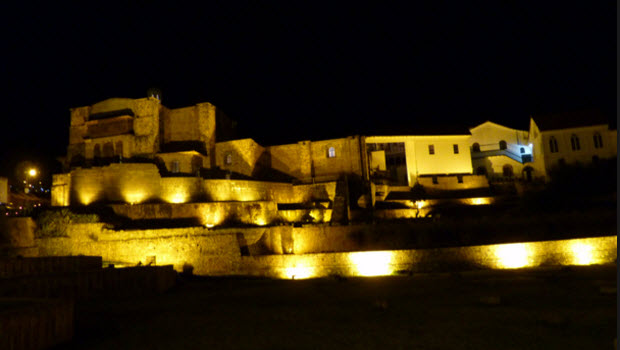
A history travel must: tour Cusco’s Koricancha Sun Temple
☼ Koricancha: Cusco’s Inca Temple of the Sun ☼
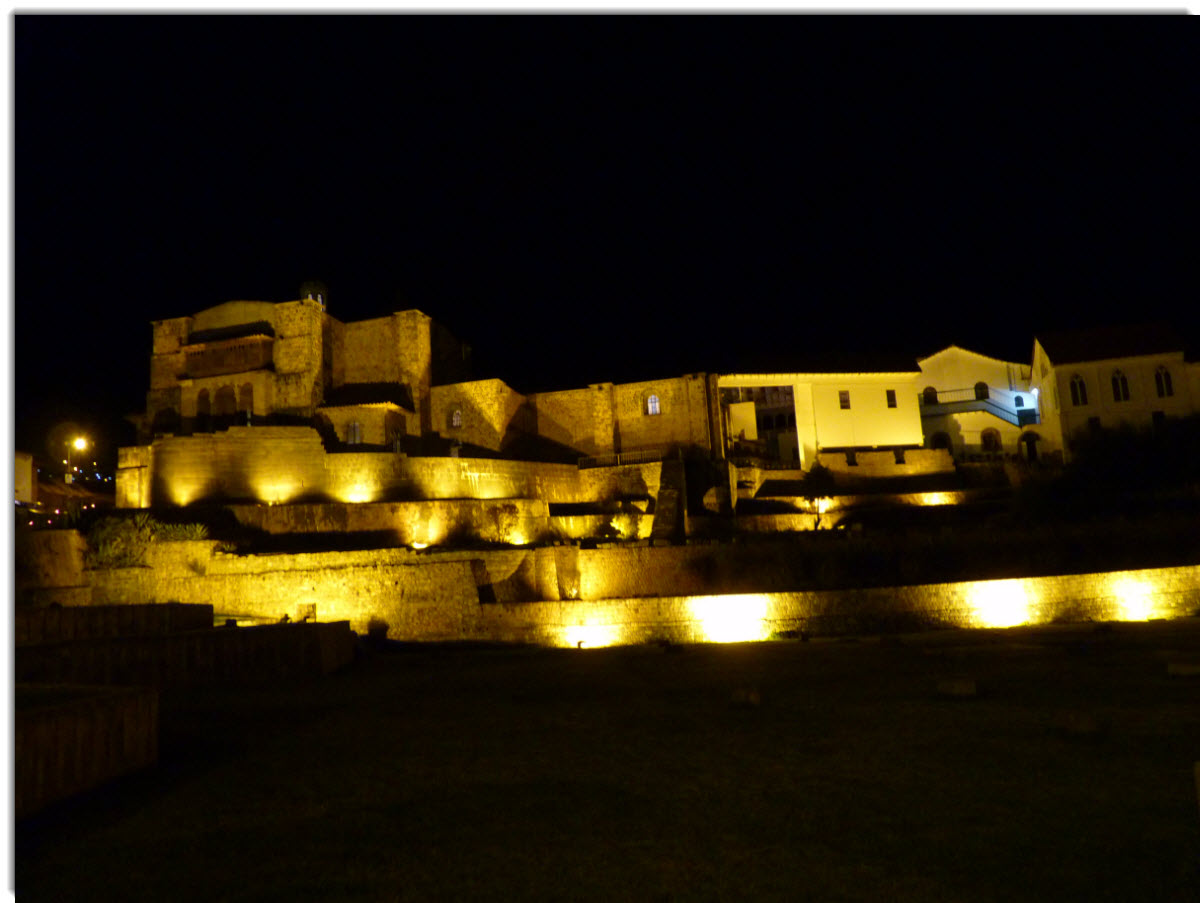
In Quechua, “Koricancha” (also spelled Coricancha or Qoricancha) means “courtyard of gold” — and to the utter amazement of the Spanish conquistadors, that’s exactly what they beheld when they first laid eyes on the temple complex in 1533. Today the site sits two blocks from Cusco’s Plaza de Armas, its curved Inca foundation walls still visible beneath the colonial church built on top of them.
Koricancha at a Glance
- Location: Corner of Av. El Sol and Calle Santo Domingo, two blocks southeast of Plaza de Armas, Cusco
- Altitude: 3,399 m (11,152 ft) — same as central Cusco
- Best time to visit: Early morning (opening time) or late afternoon, any season — Koricancha is an indoor/courtyard site, so weather matters less than avoiding mid-day tour-bus groups
- Recommended stay: 45–60 minutes
- Getting there: 5–8 minute walk from Plaza de Armas down Av. El Sol; no transport needed
- Hours: Mon–Sat, approx. 8:30 a.m.–5:30 p.m.; Sun, approx. 2:00–5:00 p.m. (shorter; subject to change for religious services and holidays)
- Key ticket / entry: Direct-entry ticket purchased at the door, separate from the Cusco Tourist Ticket — currently around S/15 per adult, reduced rate for students, free for young children
- UNESCO status: Within Cusco’s historic center, a UNESCO World Heritage Site since 1983
- Not to miss: The curved outer Inca wall on Calle Santo Domingo; the original temple chambers revealed by the 1953 earthquake
You Might Also Like: Which experiences are best for private tours in Cusco?
1. The Most Sacred Shrine in the Inca Empire
Koricancha was the Inca empire’s principal shrine to Inti, the sun god, until the Spanish stripped its gold cladding in 1533 and built the Church and Convent of Santo Domingo over its foundations. Presided over by the chief astronomer-priest, the Huillac-Umu, the complex held six major structures: sanctuary temples venerating the Sun, Moon, Stars, Lightning, and Rainbows, plus a residence for its priests. The massive gold-plated walls were positioned to catch the rays of the setting sun.
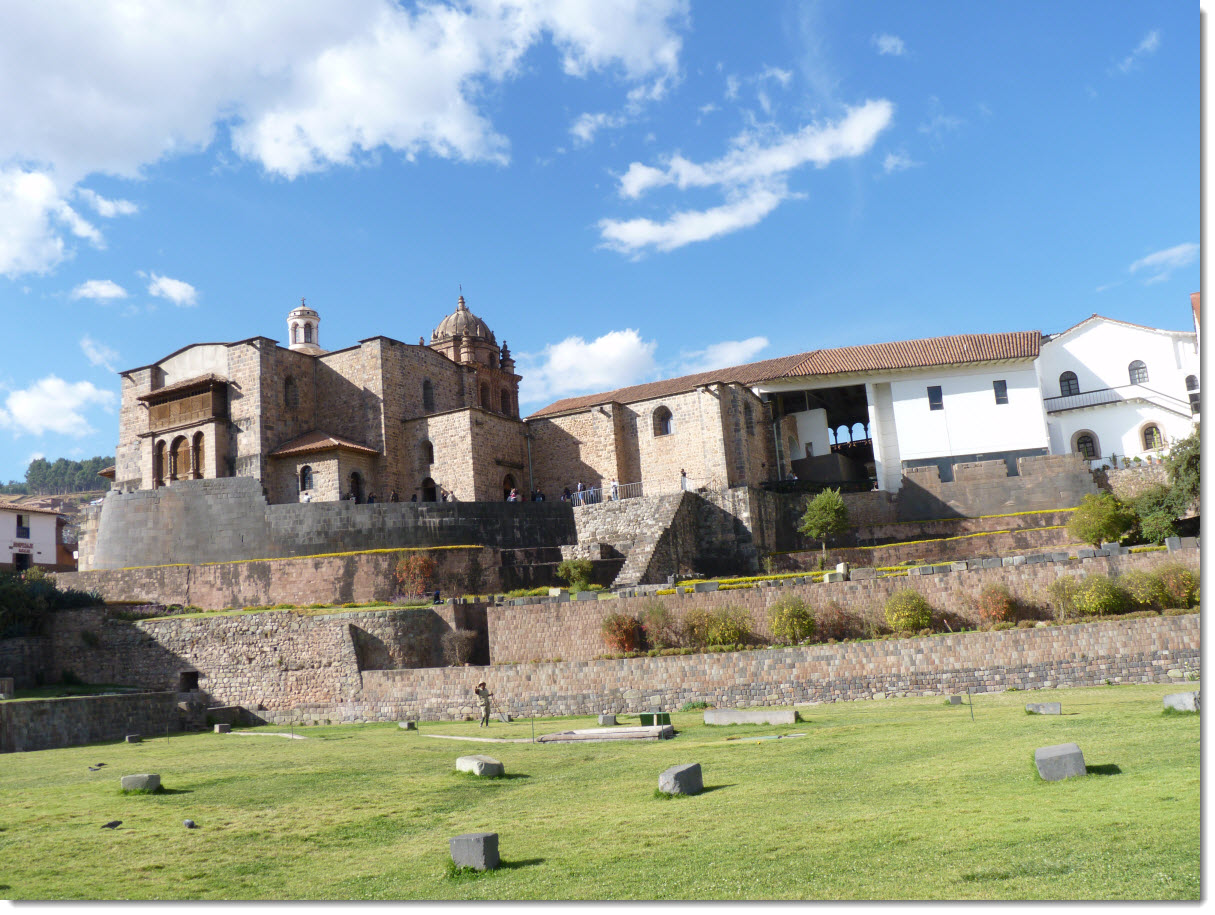
The temples were arranged around the Inti Pampa, or Field of the Sun. At its center stood a fountain mounted with the legendary Inca Sunburst, a solid gold image of the sun.
2. From Solid Gold to Spanish Convent
The treasure inside Koricancha was looted and used as part of the ransom paid to free Inca Emperor Atahualpa, who was being held prisoner in the northern town of Cajamarca. The Spanish murdered Atahualpa after the ransom was delivered anyway. The temple itself was razed soon after, and the Church and Convent of Santo Domingo was built directly on top of its foundation — but much of the original complex, including its curved, once-gold-covered outer wall, survived intact and remains visible today.
3. The Chronicles: How We Know This Wasn’t Myth
Spanish chronicle accounts describe a garden of gold mimicry surrounding the temple. The 16th-century chronicler Pedro de Cieza de León recorded that maize was reproduced at actual size, its stalks “cunningly wrought in gold”:
“The garden where the clods [of earth] were pieces of fine gold, and it was artificially sown with cornfields which were of gold, as well as the stems of the leaves and the [corn] cobs. Besides all this they had more than twenty llamas of gold with their young, and the [indigenous] shepherds life-size, with their slings and crooks to watch them … all made of gold.”
This is corroborated by an independent eyewitness with no literary motive to embellish: Miguel de Estete, the inspector sent by the King of Spain to officially record every ounce of gold received in Cajamarca. Estete’s own account nearly matches Cieza’s:
“Straws made of solid gold, with their spikes just as they grow in the fields. And if I was to recount all the different varieties in the shape of gold my story would never end…”
Two independent sources — a chronicler writing decades later and a royal inspector recording in real time — describing the same garden of gold is what moves this from travelers’ legend to corroborated history.
4. Visiting Koricancha Today
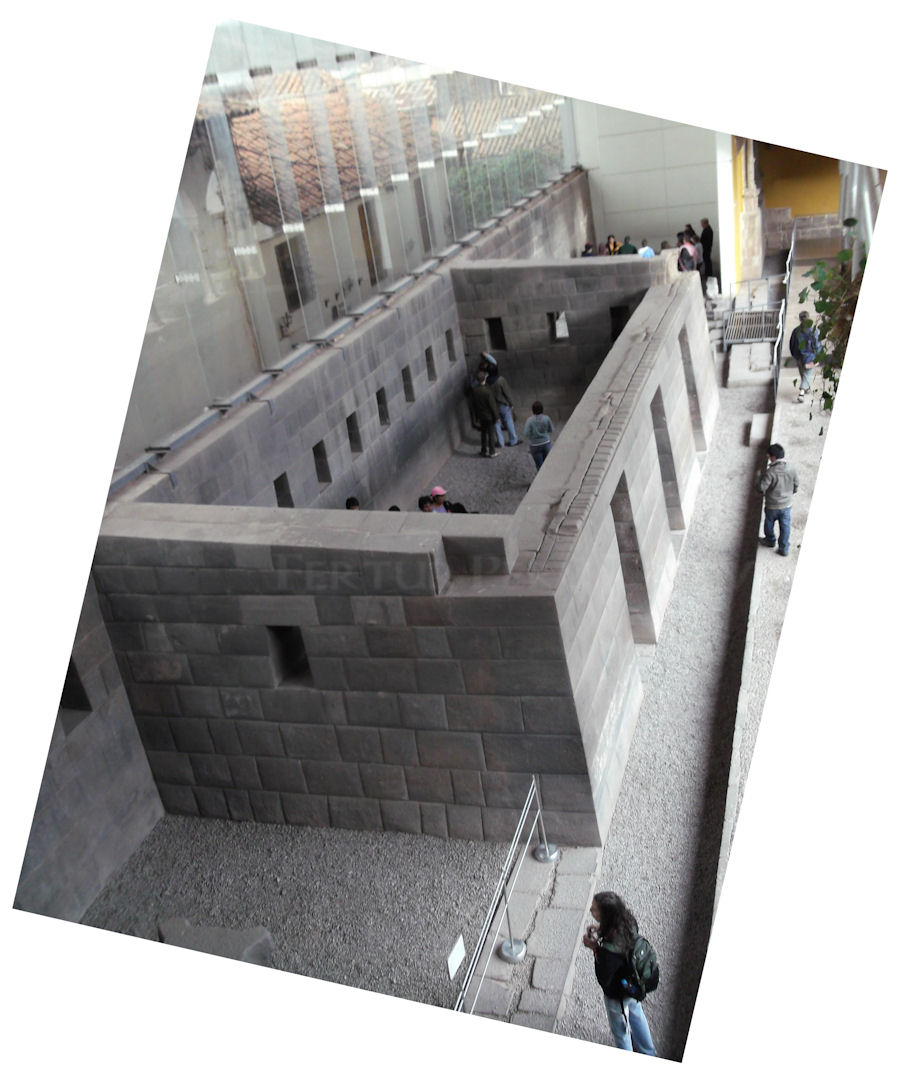
An earthquake damaged the convent in 1953, exposing several of the original Inca temple chambers beneath it. Visitors can now walk through these chambers to see trapezoidal archways and sloping, anti-seismic walls — among the most intricate, mortar-free stonework found anywhere in Peru. The contrast is the visit itself: Spanish colonial arches and a Catholic convent built directly on, and around, Inca masonry that has outlasted multiple earthquakes that damaged the structure above it.
Koricancha keeps regular visiting hours most days of the week, with shorter hours on Sunday: generally Monday through Saturday from about 8:30 a.m. to 5:30 p.m., and Sunday afternoons from roughly 2:00 p.m. to 5:00 p.m., with occasional adjustments for religious services and holidays. Entry is by a direct-entry ticket purchased at the door — separate from the Cusco Tourist Ticket — currently around S/15 per adult, with reduced rates for students and free entry for young children. Because prices and hours can change without much notice, confirm the latest details at the ticket office or with your travel consultant shortly before your visit.
5. Getting There & Combining Your Visit
Koricancha sits at the intersection of Avenida El Sol and Calle Santo Domingo, a flat 5–8 minute walk from Plaza de Armas — no taxi or transport needed. Because the visit only takes 45–60 minutes, it pairs easily into a half-day Cusco city walk alongside the Cathedral, San Blas, and the Plaza de Armas itself, or as the first stop on a guided Cusco City Tour that continues to Sacsayhuamán, Q’enqo, Puka Pukara, and Tambomachay.
6. Frequently Asked Questions
Is Koricancha worth visiting?
Koricancha offers something most Cusco itineraries miss if they go straight to the outlying ruins: the literal collision of Inca and Spanish history in one building, with original gold-era foundations still standing under a working convent. Yes — for travelers interested in Cusco’s colonial layering rather than ruins alone, it’s one of the highest-value short visits in the city.
How much time do I need at Koricancha?
Plan on 45–60 minutes for a self-guided visit, or about 30 minutes as part of a guided Cusco City Tour stop. The site is compact — one main courtyard and a handful of temple chambers — so it doesn’t require a half-day commitment the way Sacsayhuamán or the Sacred Valley sites do.
What does it cost to enter Koricancha?
Koricancha has its own direct-entry ticket — it is not included in the standard Cusco Tourist Ticket (Boleto Turístico). The ticket currently runs around S/15 per adult, with a reduced rate for students and free entry for young children, purchased at the door. Prices and hours can shift without much notice, so it’s worth confirming the current rate with the ticket office or your travel consultant shortly before your visit.
When is the best time of day to visit?
Arrive at opening time or in the late afternoon. Koricancha is generally open Monday through Saturday from about 8:30 a.m. to 5:30 p.m., and Sunday afternoons from roughly 2:00 p.m. to 5:00 p.m. (hours shift occasionally for religious services and holidays, so confirm before you go). Because the site is largely indoor and courtyard-based, weather and season matter less here than at outdoor ruins — the bigger factor is avoiding the mid-morning window when guided tour groups from the city center cluster at the site.
Why has the Inca stonework survived earthquakes that damaged the Spanish convent built on top of it?
Inca masons built Koricancha’s walls with a slight inward lean and interlocking, mortar-free stone joints engineered to flex and resettle during seismic activity. The colonial convent above, built with rigid European construction methods, has needed repeated repair after Cusco’s earthquakes — including the 1953 quake that cracked open the chambers visitors walk through today — while the Inca foundation beneath it has remained structurally sound for over 500 years.
Koricancha and Santo Domingo are a must-experience for anyone visiting Cusco. Contact Fertur Peru, your Peru travel agency, about this and other Cusco tours.

Related Posts
Nice place to see it
Very nice to place to see in cusco