A 10 days in Peru itinerary gives first-time visitors enough time to see Peru’s best-known…
AI Video Reimagines Ancient Paracas Faces in Peru
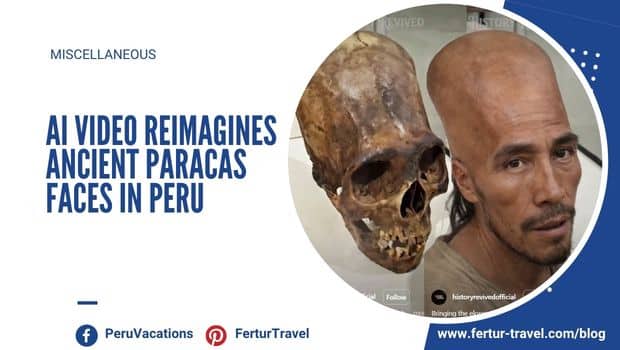
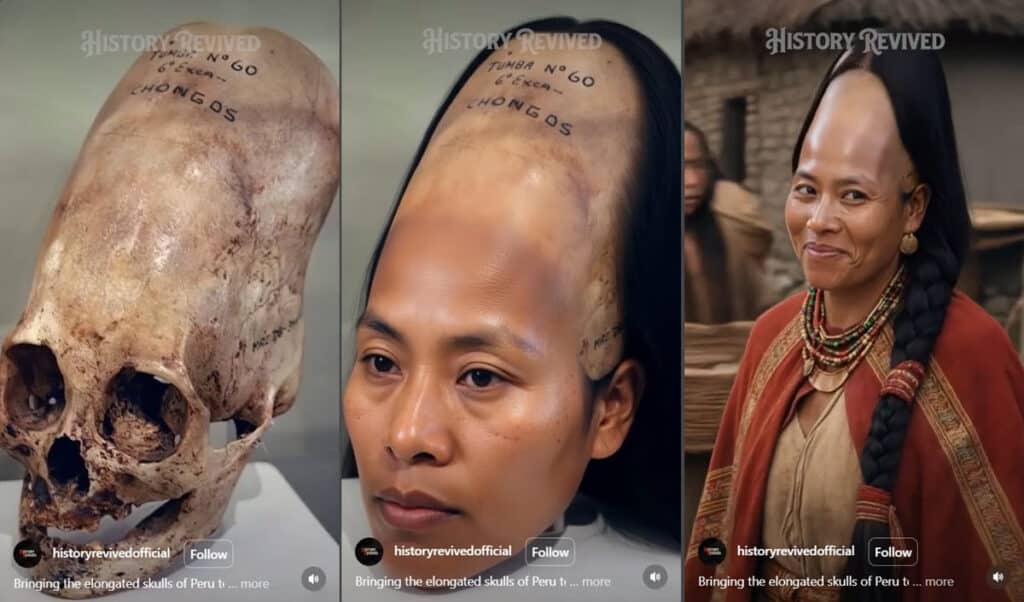
A newly circulating AI-generated video vividly reimagines what members of Peru’s ancient Paracas culture may have looked like.
History Revived, an Instagram channel focused on AI-assisted historical recreations, recently turned its attention to ancient Peru.
Using images of real elongated Paracas skulls, the account created a striking digital reconstruction of how some members of this culture may have looked more than 2,000 years ago.
The result is visually compelling not simply because of the technology, but because it gives a more human dimension to one of Peru’s most distinctive ancient civilizations.
A Culture That Still Fascinates
It flourished on the Paracas Peninsula and the desert coast south of Lima, and it remains one of ancient Peru’s most important early cultures.
Today, travelers encounter the name Paracas in the Paracas National Reserve, the Ballestas Islands, and regional museums that interpret the area’s deep archaeological heritage.
The Meaning of the Elongated Skulls
Among the most striking features of Paracas are the elongated skulls archaeologists have found in burials.
Archaeologists generally understand this practice as a marker of identity, rank, or social distinction, and possibly of symbolic or spiritual belief. In Paracas burials, archaeologists often find such skulls alongside elaborate mantles and offerings, suggesting links to elite status.
Why the AI Reconstruction Works
That background gives the video its impact. By digitally restoring skin, muscle, and hair onto the forms suggested by the skulls, the reconstruction offers a vivid approximation of living individuals from the ancient Paracas world.
It is not a definitive portrait, but it does help bridge the gap between archaeological remains and the people behind them.
Bringing Ancient Peru Closer
Part of the appeal is that AI can make the distant past feel more immediate. Ancient Peru is often understood through artifacts, museum displays, and archaeological terminology. Reconstructions like this encourage viewers to look beyond the skull itself and think about the human being it once belonged to.
For travelers interested in Peru’s lesser-known archaeological heritage, that is especially powerful. The Paracas world offers much more than a scenic coastal stop. It opens a window onto the cultural depth of pre-Columbian Peru long before the rise of the Inca.
More Than a Social Media Curiosity
This AI-generated clip might seem like a passing curiosity. But it is another reminder that modern technology can create new ways of engaging with Peru’s ancient past and spark fresh interest in the civilizations that shaped it.

Related Posts


Comments (0)