For most travelers, Peru’s history fascinates from the very first moment, but for others, the…
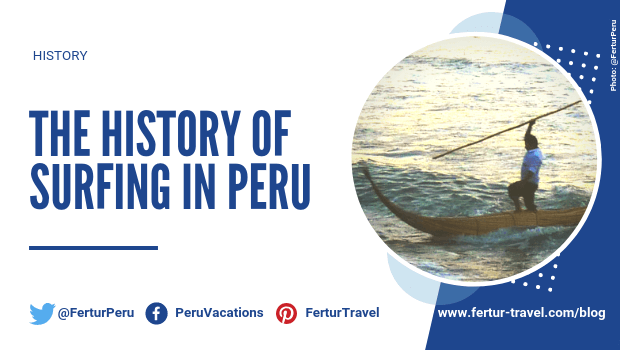
The History of Surfing in Peru
Boasting two world surfing champions — Felipe Pomar in 1965 and Sofa Mulánovich in 2003 — it’s no secret that Peru is a surfing haven. But the history of surfing in Peru dates back much, much farther than 1965, and it may even be the birthplace of the sport.
There is no definitive answer to where surfing began. Still, Peru has some of the oldest physical evidence of wave riding anywhere in the world, which is why the north coast belongs in any serious discussion of surfing’s origins.
Where did surfing originate?
Polynesia and Hawaii
The best-known origin story places surfing in Polynesia, especially Hawaii, where wave riding developed into a highly visible cultural practice with boards, ritual meaning, and later written historical descriptions. That remains the most widely recognized origin point for surfing as a codified sport.
Peru’s North Coast
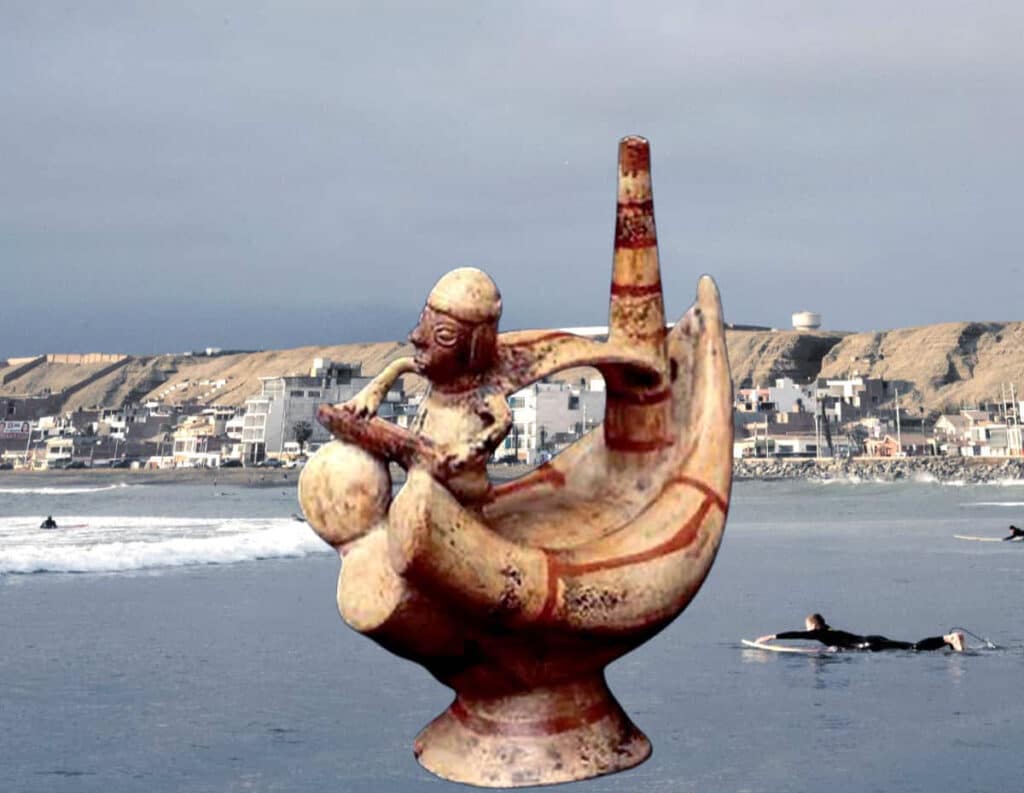
Peru’s case rests on much older coastal traditions. Along the north coast, communities used caballitos de totora, slender reed craft that fishermen still ride through the surf today. Supporters of the Peru-origin theory point to evidence from around 1000 BC and to later north-coast ceramics, especially from the Moche world, that show people on reed craft in fishing and wave-riding scenes.
Official sources inconclusive about ancient history of surfing in Peru
Official Peruvian materials note that Mochica ceramics from about AD 150 to 700 include numerous depictions of people on these craft, while the Smithsonian describes archaeological vessels from Huanchaco’s region showing fishermen riding the raft astride and paddling with a double-bladed oar.
That does not settle the argument. What it does show is that ancient surfing in Peru, or at minimum a very early form of intentional wave riding, has a serious archaeological basis. Peru may not offer the final answer, but it clearly offers some of the oldest visual evidence in the debate.
Contact Between Peru and Polynesia
The question gets even more interesting when you consider possible contact between South America and Polynesia.
The late Peruvian historian José Antonio del Busto believed that as late as the year 1500, the Inca traveled to Polynesia and engaged in cultural and commercial exchange.
Thor Heyerdahl’s 1947 Kon-Tiki voyage demonstrated that a raft journey across the Pacific was possible. But that expedition did not prove that such contact happened in the way Heyerdahl imagined, and his broader diffusionist theory did not gain acceptance in mainstream scholarship.
More recent genetic research, however, has found evidence of prehistoric contact between Polynesian and Native American populations around AD 1200, which supports the possibility of interaction without proving that surfing itself traveled from one region to the other.
Was Surfing Invented in Peru?
That depends on what you mean by “surfing.”
If the term refers to the modern sport associated with shaped boards, clubs, and competitive lineups, Peru’s story begins later. Official Peruvian sources credit Carlos Dogny with bringing the first modern surfboard to Peru from Hawaii in 1937, and he later founded the Waikiki Club in Miraflores in 1942, helping establish modern Peruvian surf culture.
If, however, surfing is defined more broadly as riding waves intentionally, Peru has one of the strongest ancient claims in the world. That is why the safest and most credible conclusion is also the most interesting one: Peru may not be the universally accepted birthplace of surfing, but it is undeniably one of the oldest homes of wave riding ever documented.
Caballitos de Totora and Huanchaco Reed Boat Surfing
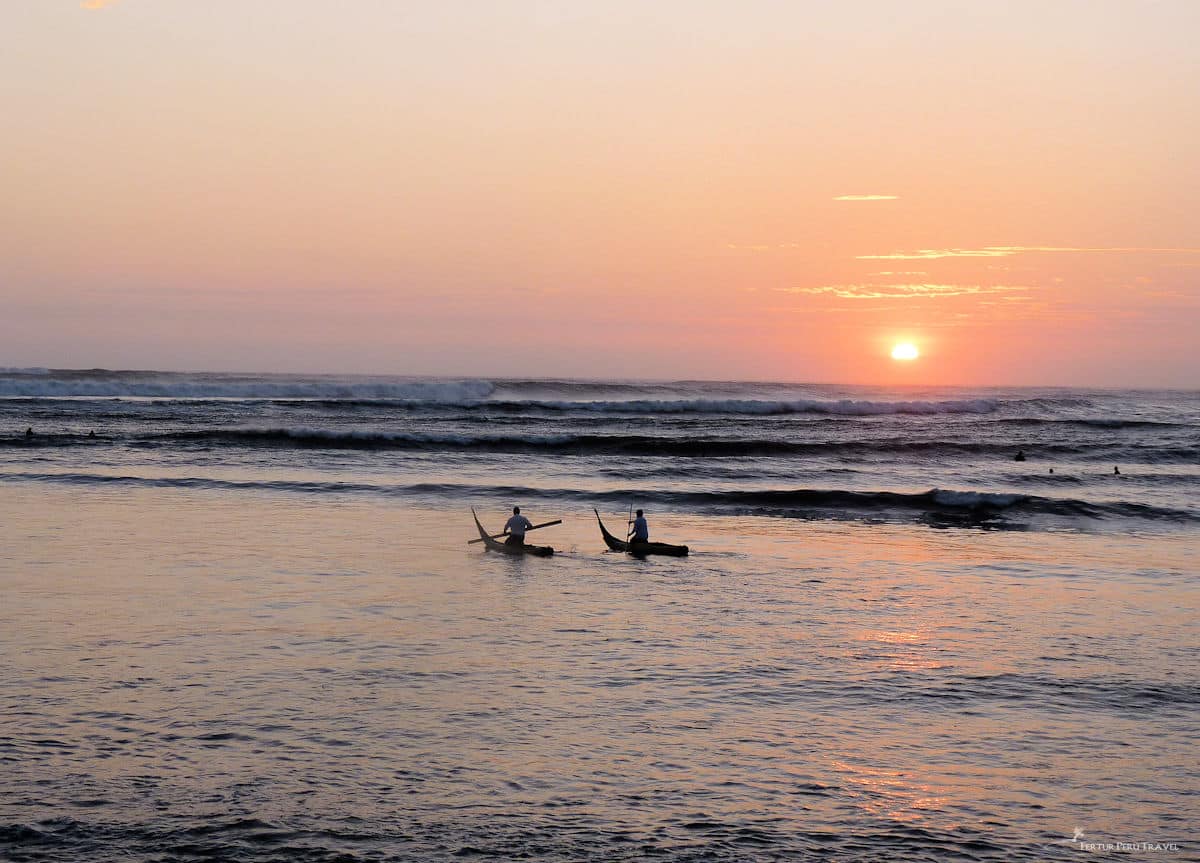
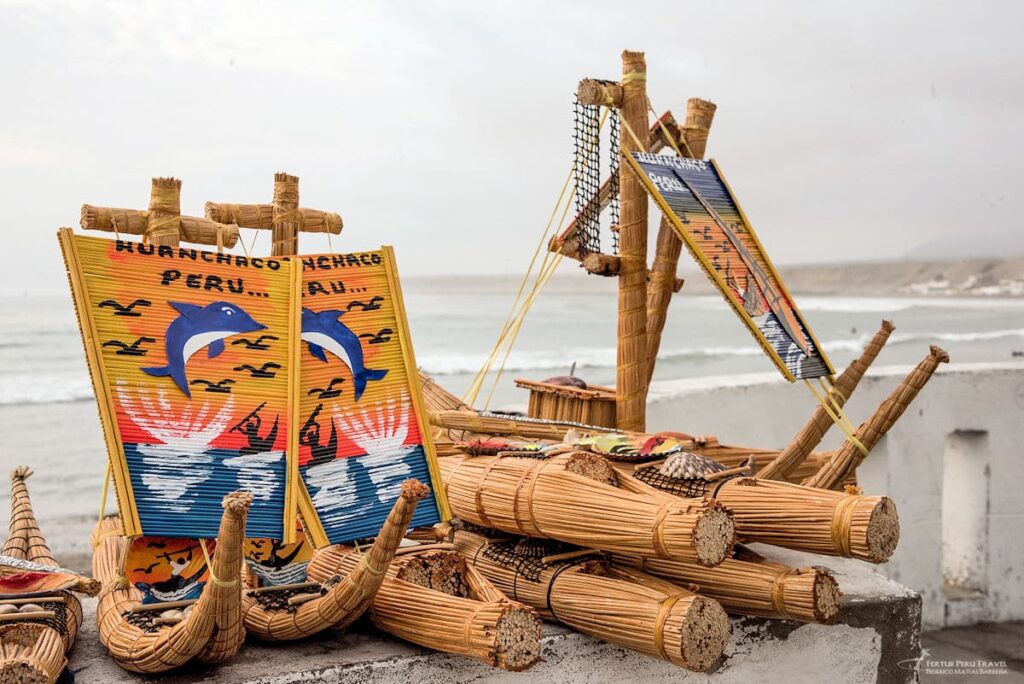
At the center of this story is the caballito de totora. These reed craft are ridden straddled, which helps explain the Spanish name, or “little reed horses.” In Huanchaco, local fishermen still build them, launch them through the surf, and return to shore on the waves. The tradition goes back thousands of years, and organizations focused on surf heritage continue to describe the caballito as one of the earliest known surf craft.
For travelers, that continuity is what makes Huanchaco so compelling. This is not a story preserved only in museums. It is still visible on the beach, especially at sunrise and late afternoon, when caballitos de totora fishermen and modern surfers share the same stretch of coast.
Surfing in Peru Today
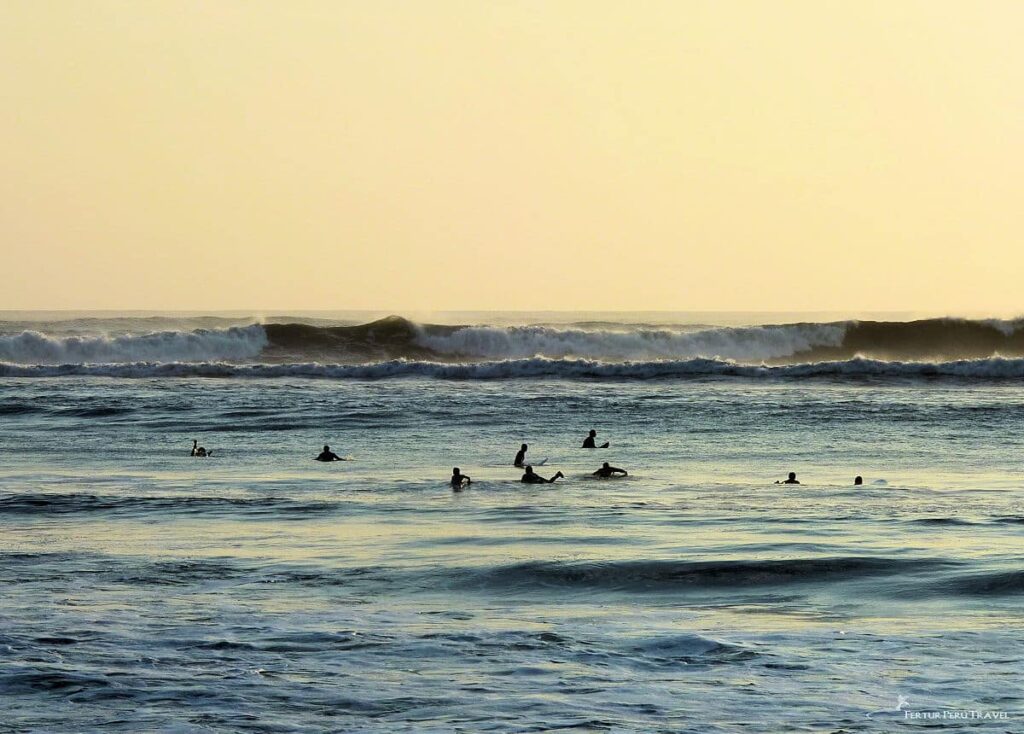
Peru’s ancient surf legacy is not just historical. It still shows in the country’s coastline. Official Peru travel sources highlight the north as one of the best regions to surf thanks to warm water and a range of breaks for different skill levels. Huanchaco is suitable for all levels and carries the deepest historical resonance. Máncora is another all-level option with warmer northern waters. Chicama is legendary for having the longest left-hand wave on the planet.
That combination is what makes the north coast so unusual. In a relatively compact region, you can move between archaeology, living fishing traditions, and some of the best surfing beaches in northern Peru without losing the thread of the story. One day can begin at Chan Chan or Huaca de la Luna and end with the sunset over Huanchaco’s surf lineup.
Visiting Peru’s Northern Coast
For readers drawn to both history and the sea, northern Peru works best as more than a beach trip. Huanchaco offers living tradition and approachable surf. Chicama offers the long, famous left that has made it a pilgrimage site for surfers. Máncora adds warmer water and a more relaxed resort atmosphere. Together, they turn the coast into a journey through both surf culture and pre-Columbian history.
Fertur’s 11-day northern Peru itinerary can be framed as that kind of experience: archaeology by day, coastal culture in the afternoon, and time to watch the lineup in Huanchaco before evening. That makes the tour feel like a natural continuation of the story rather than a sales add-on.
Plan your northern Peru surfing and archaeology trip → Fertur’s 11-day northern Peru tour.
History of Surfing in Peru FAQs
Is Peru the birthplace of surfing?
There is no definitive scholarly consensus that Peru is the single birthplace of surfing. But Peru does have some of the oldest visual and cultural evidence for wave riding, which is why the claim remains so compelling.
Where can you see caballitos de totora today?
The best-known place is Huanchaco, on Peru’s northern coast near Trujillo, where fishermen still build and use caballitos de totora.
Can beginners surf in Huanchaco?
Yes. Official Peruvian tourism materials list Huanchaco as suitable for all levels, which helps explain why it appeals to both first-timers and experienced surfers interested in its history.
When is the best time to surf in northern Peru?
Northern Peru is attractive because of its warmer water and strong variety of breaks. Conditions vary by beach, but the region has year-round appeal, with iconic spots like Huanchaco and Chicama drawing surfers for different reasons.
You Might Also Be Interested In…

Related Posts


Comments (0)