Stand at the rim of Quechuyuc Muyu, peer down at the central terraced monument of…
Where to See Pink Dolphins in Peru
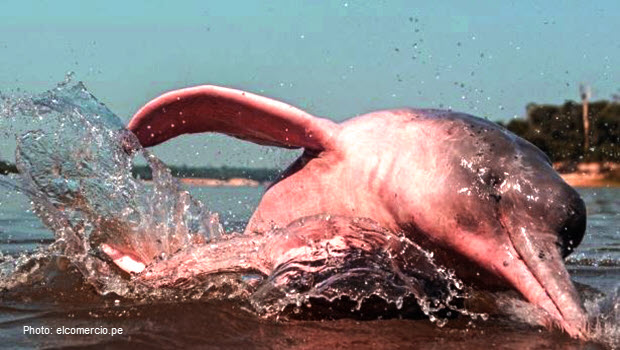
Did you know that there are pink dolphins in Peru? A pink dolphin sounds like something from a fantastical dreamworld — for most people, even seeing a regular dolphin is a once-in-a-lifetime experience. But in the rivers of Northern Peru, the Amazon river dolphin is real, and wild, and genuinely pink. They live in the flooded forests and main channels of the Amazon Basin, and with a good guide and a little patience, you can see them in person.
You Might Also Like: The Top 5 Iquitos Tours & Excursions
Pink Dolphins in Peru at a Glance
- Species: Amazon river dolphin (Inia geoffrensis), locally called bufeo
- Location: Northern Peruvian Amazon; best seen in Pacaya-Samiria National Reserve
- Conservation status: Endangered (IUCN)
- Getting there: Fly Lima to Iquitos (approx. 1 hr 45 min), then 2+ hours by riverboat into the reserve
- Best season: May–October (dry season; lower water levels concentrate wildlife and improve sighting odds)
- Reserve size: Over 20,000 sq km (about 8,000 sq miles) — Peru’s largest protected Amazon area
- Not to miss: Dawn or dusk spotting from a small riverboat with a naturalist guide; responsible wildlife viewing with a certified operator
1. About the Amazon River Dolphin
The Amazon river dolphin (Inia geoffrensis) — called boto in Brazil and bufeo in Peru — is the largest of the world’s four freshwater dolphin species, reaching up to 2.5 meters (about 8 feet) in length and over 180 kilograms (around 400 pounds), with a lifespan of up to 30 years in the wild.
The pink coloration develops gradually. Calves are born pale gray; the skin becomes progressively pinker with age, and the effect is more pronounced in males. The color intensifies further during periods of excitement or physical exertion, when increased blood flow brings more color to the surface. Researchers attribute the pink tone to several factors: dense networks of capillaries near the skin, scar tissue from social interactions (males fight regularly), and possible camouflage benefits in the tannin-rich, reddish-brown water of the Amazon.
Pink river dolphins are versatile hunters, feeding on a wide variety of fish and aquatic animals near the river bottom and in flooded forests — catfish and crustaceans among them. One structural adaptation sets them apart from most dolphin species: their neck vertebrae are not fully fused, allowing them to rotate their heads up to 180 degrees. In the tangled root systems of the flooded forest, this flexibility is not incidental — it is how they hunt.
In indigenous cultures of the Peruvian Amazon, the pink dolphin carries deep mythological weight. One widespread legend holds that botos transform into handsome men at night and come ashore to seduce village women. Across many traditions, harming a pink dolphin is believed to bring serious misfortune — a cultural protection that has historically provided real shelter for the species in communities where the legend is taken seriously.
You Might Also Like: This week-long expedition through the jungle that guides you to three of the Northern Amazon’s top and most captivating jungle lodges.
2. Conservation Status
The Amazon river dolphin is now classified as endangered by the IUCN, with populations declining across much of its range. The threats are multiple and reinforcing: illegal hunting for use as bait in catfish fisheries, accidental entanglement in fishing nets, habitat loss from deforestation and river development, and water pollution from agricultural runoff and mining activity.
In Brazil, despite a moratorium on the practice, research estimates suggest that hundreds to thousands of river dolphins are killed each year and used as bait in the piracatinga catfish fishery. The precedent that conservation organizations cite most often is the Yangtze river dolphin (baiji) in China — declared functionally extinct in 2007 — as evidence of what happens to freshwater dolphin species when legal protections arrive too late or go unenforced.
In Peru, the species benefits from stronger cultural and institutional protections than in many parts of its range. The Pacaya-Samiria National Reserve prohibits hunting and places strict limits on commercial fishing within its boundaries. Responsible wildlife tourism — operators that enforce no-feeding, no-touching protocols — is part of the conservation argument for keeping populations intact: it gives local communities a direct economic stake in protecting the animals rather than exploiting them.
You Might Also Like: From the Andes to the Amazon — 15 Days
3. Where to See Pink Dolphins in Peru
Most pink dolphin tourism in Peru is centered in the northern Amazon, accessible from Iquitos — a city of roughly 500,000 people reachable only by air or river (no roads connect it to the rest of Peru). Flights from Lima take approximately 1 hour 45 minutes. From Iquitos, organized expeditions travel two or more hours by riverboat into the jungle to reach the best wildlife areas.
The premier destination is the Pacaya-Samiria National Reserve, Peru’s largest protected Amazon area at more than 20,000 square kilometers (about 8,000 square miles). The reserve encompasses flooded forests, oxbow lakes, and braided river channels — exactly the habitat pink dolphins favor — and much of it is inaccessible without a guide and a boat, which works in the animals’ favor.
Sightings are most reliable at dawn and dusk, when dolphins surface frequently as they feed. Experienced naturalist guides know which channels and oxbow lakes to check at which seasons. On some river cruises, guests are invited to swim in carefully selected stretches of river; wild dolphins occasionally surface nearby on their own terms, and these brief encounters do happen. They should be understood as a possible bonus rather than a scheduled activity — and any operator who guarantees dolphin contact is not running a responsible trip.
4. Responsible Dolphin Watching
Pink river dolphins are endangered animals in a fragile ecosystem. How you observe them — and which operator you choose — has a direct effect on their welfare. The following guidelines apply whether you are watching from a boat or in the water nearby:
- Travel in small groups and keep noise to a minimum. Sudden sound drives dolphins away and disrupts natural feeding behavior.
- Never feed the dolphins. Feeding disrupts their natural hunting patterns and can create dependency on human contact.
- Do not attempt to touch or chase them. Any approach should be entirely passive — let the dolphin decide whether to come close.
- Choose operators with a documented no-feeding, no-touching wildlife policy and guides who enforce it on the water.
- If a tour is marketed primarily as a “swim with dolphins” experience, ask specifically how encounters are managed. Responsible operators never guarantee contact.
5. Frequently Asked Questions
Are pink dolphins in Peru real?
The Amazon river dolphin (Inia geoffrensis) is a real, wild species that inhabits the rivers and flooded forests of the Amazon Basin, including northern Peru. Adults genuinely turn pink as they mature — the coloration is biological, not cosmetic, and is most pronounced in older males. They are not an aquarium species or the result of selective breeding; pink is simply what they look like in the wild.
Why are Amazon river dolphins pink?
Researchers attribute the coloration to several overlapping factors: dense networks of capillaries close to the skin’s surface, scar tissue accumulated from social interactions (males in particular fight frequently), and possible camouflage benefits in the sediment-rich, reddish-brown water of the Amazon. Calves are born gray and become progressively pinker with age. The color intensifies during periods of excitement or physical exertion, when increased blood flow brings more pigment to the surface.
Where is the best place to see pink dolphins in Peru?
The Pacaya-Samiria National Reserve, accessible by riverboat from Iquitos in northern Peru, is the most reliable location in the country. The reserve’s protected status means dolphin populations here are healthier than in unprotected waterways. Dawn and dusk, when dolphins surface frequently while feeding, offer the best sighting windows. A small-group expedition with an experienced naturalist guide is the recommended format.
Can you swim with pink dolphins in Peru?
On some responsible river cruises, guests are invited to swim in carefully selected stretches of river, and wild dolphins occasionally surface nearby of their own accord. These encounters are genuine — and genuinely unpredictable. Responsible operators do not chase, feed, or touch the animals to make a sighting happen. If a tour markets guaranteed dolphin contact, that is a warning sign: it means the animals are being disturbed or conditioned, which is harmful to wild populations.
Are Amazon river dolphins endangered?
Yes. The IUCN classifies the Amazon river dolphin as endangered, with populations declining across much of its range. The primary threats are illegal hunting (particularly for use as bait in catfish fisheries), bycatch in fishing nets, habitat destruction, and water pollution. In Peru, protections within reserves like Pacaya-Samiria provide meaningful shelter — but the species remains under serious pressure across the broader Amazon Basin. The 2007 functional extinction of China’s Yangtze river dolphin is the reference point conservation organizations use when arguing that the window for effective action is not indefinitely open.
How do I get to Iquitos to see the pink dolphins?
Iquitos is served by direct flights from Lima (approximately 1 hour 45 minutes). There are no road connections to the city — it is accessible only by air or multi-day river passage. From Iquitos, organized expeditions travel two or more hours by riverboat into the Pacaya-Samiria National Reserve. Most visitors book a package that combines the Iquitos flight, riverboat transfer, naturalist guide, and jungle lodge accommodation in a single itinerary. Fertur’s travel consultants can arrange a customized trip based on the length of stay and budget.
Plan Your Amazon Adventure
Explore jungle lodges and river cruises in the Pacaya-Samiria National Reserve — Peru’s premier pink dolphin habitat.
View Iquitos Jungle Packages
Related Posts
My family and I are exploring different locations and the Peruvian rain forest and river basins have comes up high on our lists. What options exist for transportation and accommodations assuming we are interested in some days of comfort and some days of sparse? Mixed interest in history, nature, and people of Peru as well.
I would like a quote for 1 and 2 people for July