Gocta Falls is a two-tier cascade in Peru's northern Amazonas region, standing 771 meters (2,530…
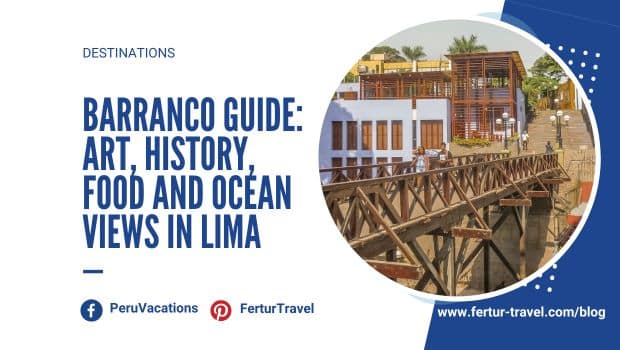
Barranco Guide: Art, History, Food and Ocean Views in Lima
Barranco is the Lima district to choose when you want history, atmosphere and some of the city’s best food in one walkable area. It gives you sea cliffs, old republican houses, murals, museums, cafés, taverns and some of the capital’s most rewarding food, all in an area that still works best on foot. It is easier to feel Lima here than in districts built around malls, towers and traffic.
That is the real strength of Barranco. It is not one attraction. It is a district where the bridge, the ravine, the music, the literature, the old summer mansions and the restaurant scene all belong to the same story.
Barranco At A Glance
- Location: Coastal district of Lima, approximately 12 km (7.5 miles) south of the historic center
- From Miraflores: 3 km (2 miles) south; 5–10 minutes by taxi, 20 minutes on foot along the Malecón
- From Jorge Chávez Airport: Approximately 35 km (22 miles); 45–60 minutes by taxi depending on traffic
- Best season: December–April for sun and coastal light; year-round for culture, food, and nightlife
- Recommended time: Half day minimum; full day strongly recommended
- Price tier: Mid-range to upscale dining; boutique hotels from approximately US$188/night
- Walkability: Excellent — bridge, museums, restaurants, and most bars within a 10–15-minute walk of each other
- Not to miss: Puente de los Suspiros and La Ermita, Pedro de Osma Museum, Jade Rivera’s mural on the Bajada de Baños
1. What to See in Barranco
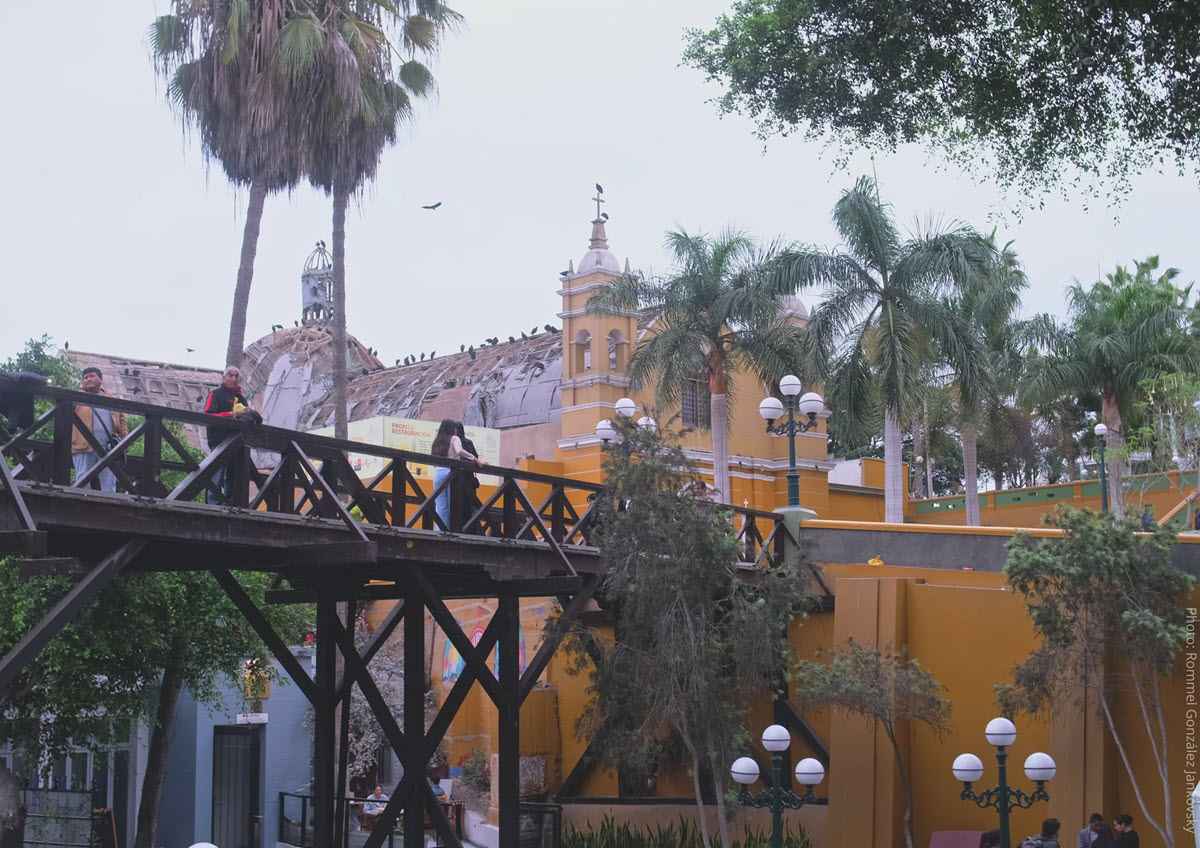
Puente de los Suspiros, La Ermita and the Bajada de los Baños
Start here. The Puente de los Suspiros still gathers the district into one scene: bridge, ravine, old core, descent to the sea and a mood that is hard to fake. The Municipality of Barranco notes that Chabuca Granda popularized the bridge in 1960 with her song “Puente de los Suspiros,” which is one reason the place carries more cultural weight than its modest scale might suggest.
Near the bridge, La Ermita and the Bajada de los Baños anchor the district’s founding legend and its geography at the same time. This is the part of Barranco where the old coastal settlement, the religious story and the modern visitor experience still overlap most clearly.
Travel Notice: Puente de los Suspiros Maintenance
The Bridge of Sighs (Puente de los Suspiros) in Barranco is currently closed for maintenance and is scheduled to reopen on **August 2, 2026**.
The **Bajada de los Baños** remains open and accessible, including its restaurants, ocean lookout and stairway down toward the Costa Verde.
The historic wooden bridge closed on **February 15, 2026**, for a six-month restoration and conservation project. The work was originally planned to begin on February 3, but the start date was delayed to allow public access through Valentine’s Day.
Plazuela Chabuca Granda
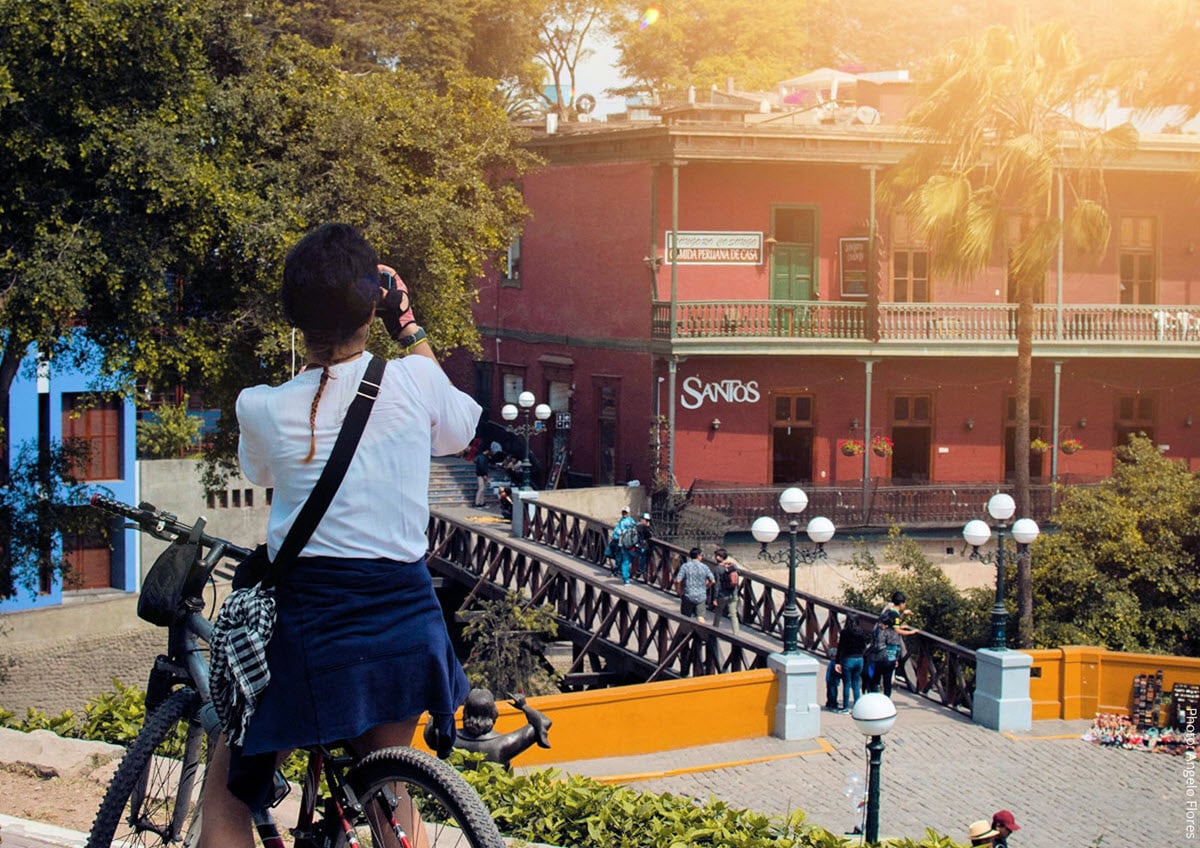
The plazuela beside the bridge deserves a stop because Chabuca Granda and Barranco remain inseparable. A recent cultural route in El País places her childhood squarely in Barranco and treats the bridge, the ravine and the district’s criollo atmosphere as part of the world that shaped her songs.
Pedro de Osma Museum
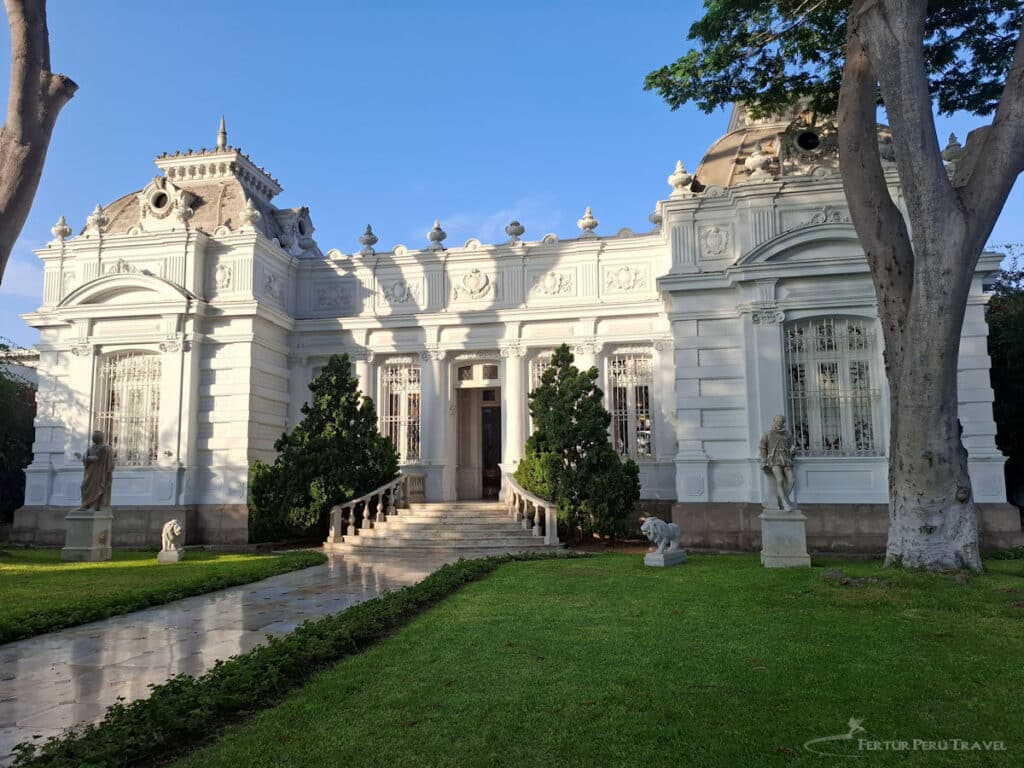
For one substantial museum visit, Pedro de Osma is still the strongest choice in Barranco.
The museum boasts one of the most important assemblies of viceregal art in Peru and Hispanic America, housed in an early-20th-century mansion in Barranco.
It is open Tuesday-to-Sunday hours, with general admission costing around S/30 for Peruvian adults and S/35 for foreign adults, with reduced categories available.
MAC Lima
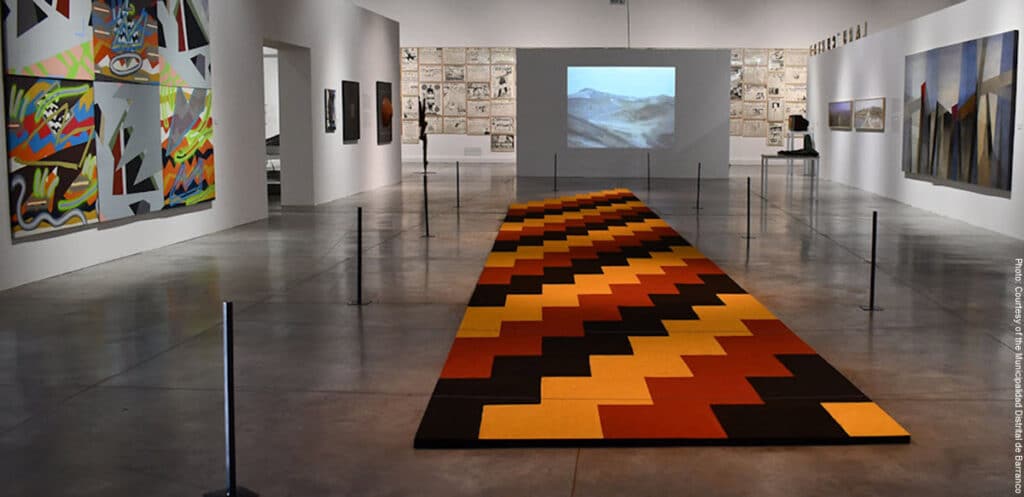
For contemporary art, go to MAC Lima on Av. Grau 1511.
The museum’s current hours are Tuesday to Sunday, 10 a.m. to 7 p.m.
Current ticket prices are S/12 general admission for Peruvians and residents and S/20 for non-residents, with reduced categories for students, children and seniors.
Jade Rivera Museum
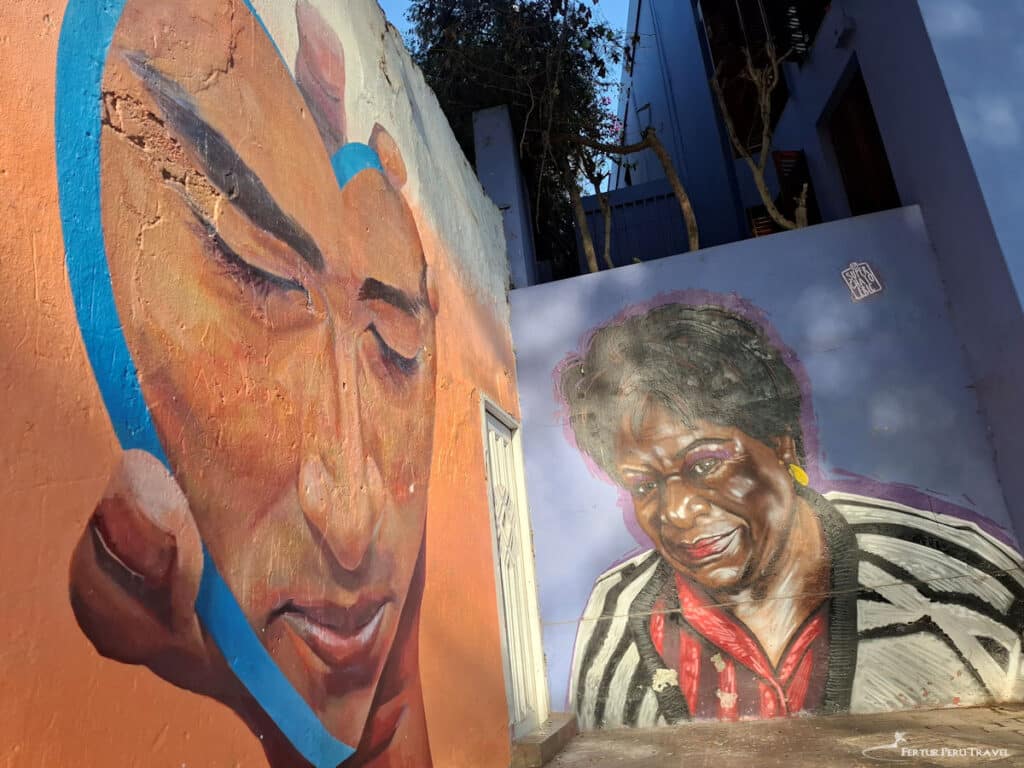
If Barranco’s mural culture is the draw, the Jade Rivera Museum is worth adding. The museum currently operates in the historic Casona Goicoechea on Sáenz Peña, which makes it an easy addition to a walking route through the district’s art circuit.
That stop matters for more than the museum alone. Jade Rivera is also the artist behind some of Lima’s most striking public murals. In Barranco, his best-known work is El Hogar de un Suspiro, on the Bajada de Baños, just steps from the Puente de los Suspiros. It has become one of the images most closely tied to the district’s contemporary visual identity. Together, the museum and the mural give visitors a clearer sense of how one artist has helped shape modern Barranco.
2. Where to Eat and Drink
Barranco’s food scene is one of the strongest reasons to give the district a full day rather than a quick walk-through.
For a destination meal, start with Mérito, Juan Luis Martínez’s acclaimed Barranco restaurant on Jr. 28 de Julio. It is the right pick for travelers who want one polished, memorable lunch or dinner built around contemporary Lima cooking with Venezuelan threads. For a more traditional table, Isolina remains one of Barranco’s best-known criollo addresses, a place to settle in for hearty classics and generous portions that are best shared.
For seafood, Canta Rana still earns its place as a Barranco institution. On Génova 101, it is the stop for ceviche, cold beer and a lively neighborhood atmosphere that feels informal in the best way. Pan Sal Aire, on Avenida Grau, covers a different mood altogether: breakfast, brunch, pastries, sandwiches, pizzas and a calmer sit-down break that works well earlier in the day or when you want a change of pace from heavier criollo fare.
Barranco is also one of Lima’s better districts for coffee. Demo, on Jirón Domeyer, is a strong choice for breakfast, pastries and coffee in a stylish all-day setting. Ciclos Café, on Jirón Colina, is one of the district’s specialty-coffee standouts. With in-house roasting and a more coffee-forward identity, Ciclos appeals to travelers who care about the cup as much as the setting.
For drinks, Ayahuasca Restobar remains one of Barranco’s classic evening addresses, set inside the restored Berninzon mansion on Av. San Martín 130. República del Pisco, near the Puente de los Suspiros, is the more straightforward choice when the goal is a pisco-based stop after dinner or at the end of an afternoon in the district.
3. Shopping, Crafts and Design
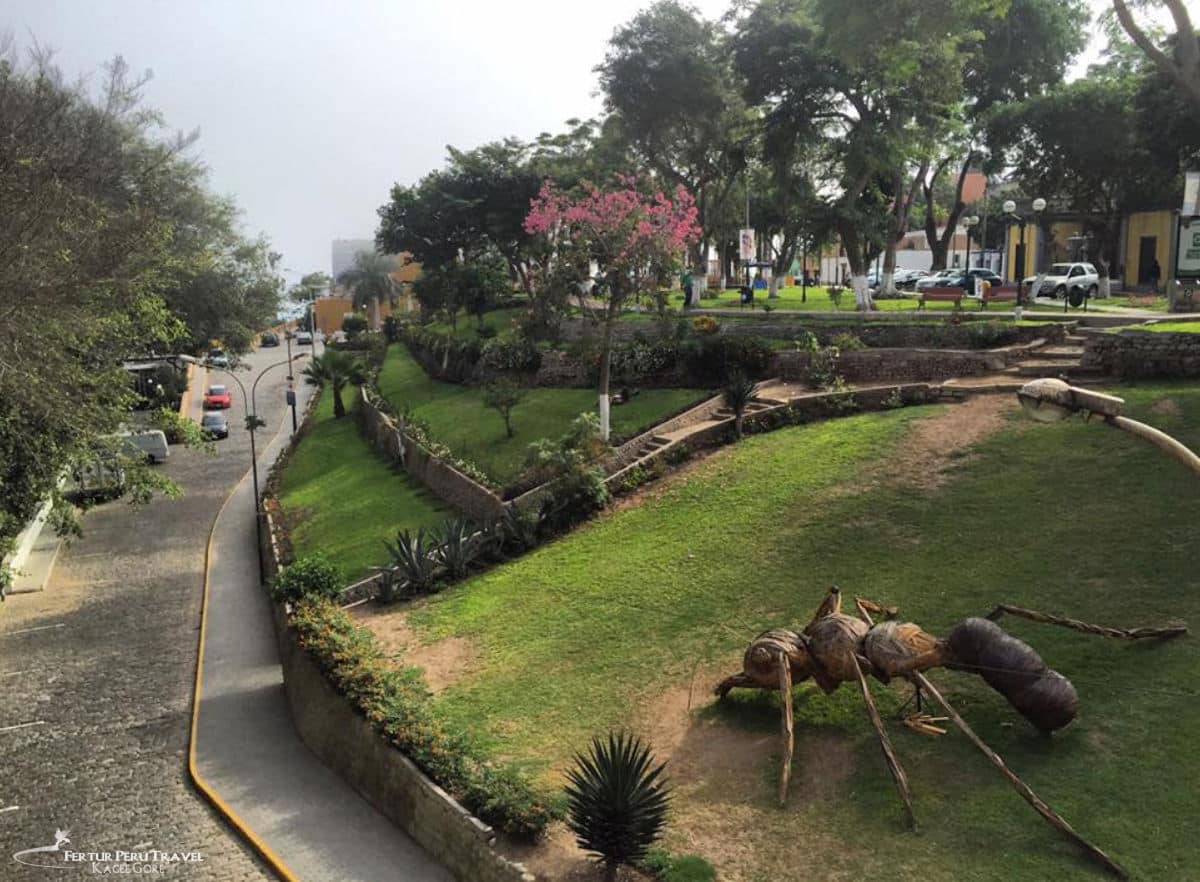
Barranco also works well for travelers who want to shop with some discrimination.
Dédalo remains one of the district’s essential addresses for design, art, jewelry and gifts. Its official site lists the address as Av. Sáenz Peña 295, Barranco, and it still feels more curated than commercial.
PUNA belongs in the same conversation. The studio’s official contact page places it at Calle Colina 128 D in Barranco and lists visiting hours Monday through Saturday, 11 a.m. to 7 p.m. It is a good stop for travelers who want contemporary Lima design rather than standard souvenir shopping.
Artesanías Las Pallas fills the traditional end of the spectrum. It remains one of the district’s best-known addresses for serious Peruvian folk art, with longtime recognition for working directly with artisans and presenting regional craft with more depth than a typical gift shop.
La Feria Unión should also be on the list. Its current social presence identifies it as a permanent fair in Barranco operating Wednesday through Sunday, with secondary listings continuing to place it on Jirón Unión 108. This is the stop for independent local brands, small gifts and a more casual neighborhood browse.
4. Where to Stay in Barranco
Barranco is at its best as a place to stay for character rather than convention. Travelers choose it not for large full-service hotels, but for atmosphere, walkability and the pleasure of waking up in one of Lima’s most distinctive districts.
Casa República remains one of Barranco’s classic boutique addresses. Set in a restored mansion on Av. Sáenz Peña, it offers the kind of stay that feels elegant without becoming stiff. Current rates on its official booking engine show offers from approximately US$221. Casa República places guests within easy reach of the district’s galleries, restaurants and historic streets.
Villa Barranco offers a quieter and more intimate alternative. With its restored early-20th-century house and smaller scale, it suits travelers who prefer calm, charm and a more residential feel near the coast. Rates start at around US$188/night.
At the top end, Hotel B remains Barranco’s luxury reference point. Its Belle Époque mansion, art-filled interiors and refined sense of service make it one of Lima’s most distinctive hotels. Hotel B is a natural choice for travelers who want Barranco at its most polished.

Budget options do exist in and around the district, but Barranco is strongest when chosen for mood and setting rather than the lowest possible rate. This is where to stay when you want Lima to feel personal, stylish and deeply tied to place.
Travel agency in Peru
Ready to explore Barranco — and all of Peru?
Fertur Peru Travel designs custom itineraries with hand-picked Barranco hotels, guided Lima experiences, and seamless connections to Cusco, Machu Picchu and beyond. Every detail arranged by local experts.
5. Getting There and Getting Around
Barranco sits approximately 35 km (22 miles) from Jorge Chávez Airport — plan on 45–60 minutes by taxi depending on traffic. From Miraflores, the distance is just 3 km (2 miles) south; taxis take 5–10 minutes, or the walk along the Malecón cliffs takes about 20 minutes and is worth doing at least once. From Lima’s historic center, allow 30–40 minutes by taxi.
From the airport, the most economical organized option is Airport Express Lima, which advertises fares starting at S/15 if two or more people are traveling. Otherwise the fare is S/20. For Barranco itself, the more direct route is still an authorized airport taxi or a prearranged transfer. Authorized taxi counters are located in national and international arrivals and guide passengers to the exclusive pickup area inside the airport.
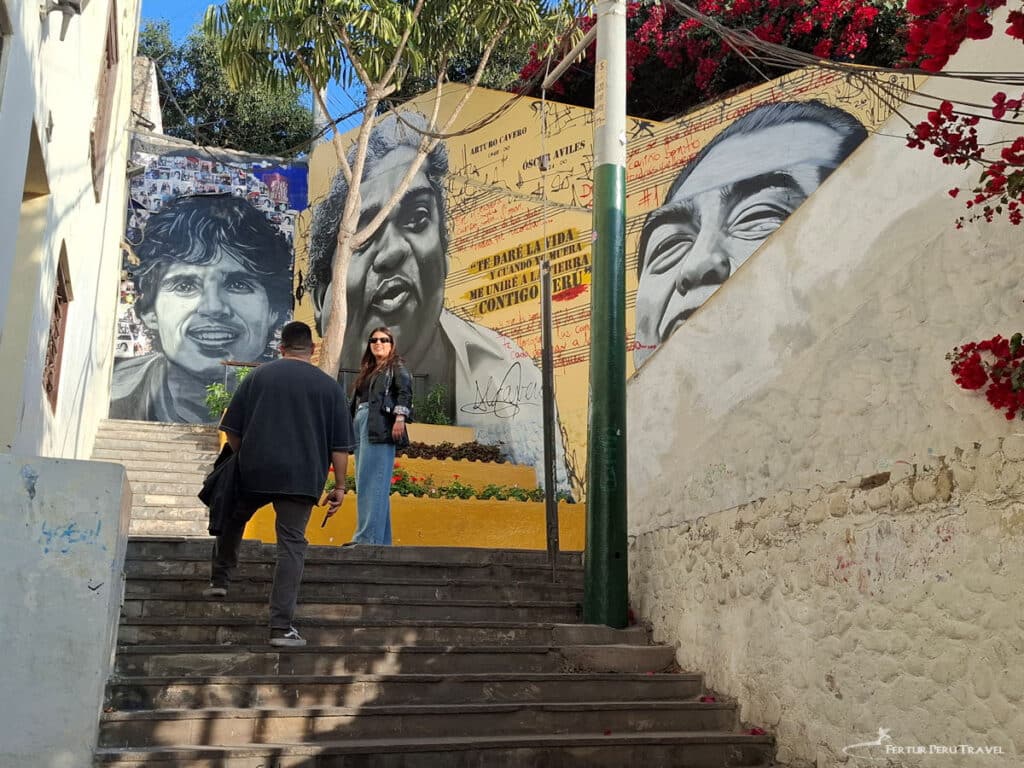
Once you are in Barranco, walk. That is one of the district’s real advantages. You can move from bridge to museum to café to bar without spending the day in a car. For longer jumps, especially after dark, use a ride app rather than improvising transport on the street.
6. When to Visit
For sun and clearer coastal light, December through April remains the safer recommendation. That is when Barranco’s terraces, sea views and longer walks are easiest to enjoy. June through October brings Lima’s garúa season, which can be atmospheric in its own way, but it changes the look of the district substantially.
Barranco still works well in the greyer months because its appeal is not only visual. Museums, cafés, taverns, bars and literary atmosphere carry the district even when the sky does not.
7. Barranco’s History
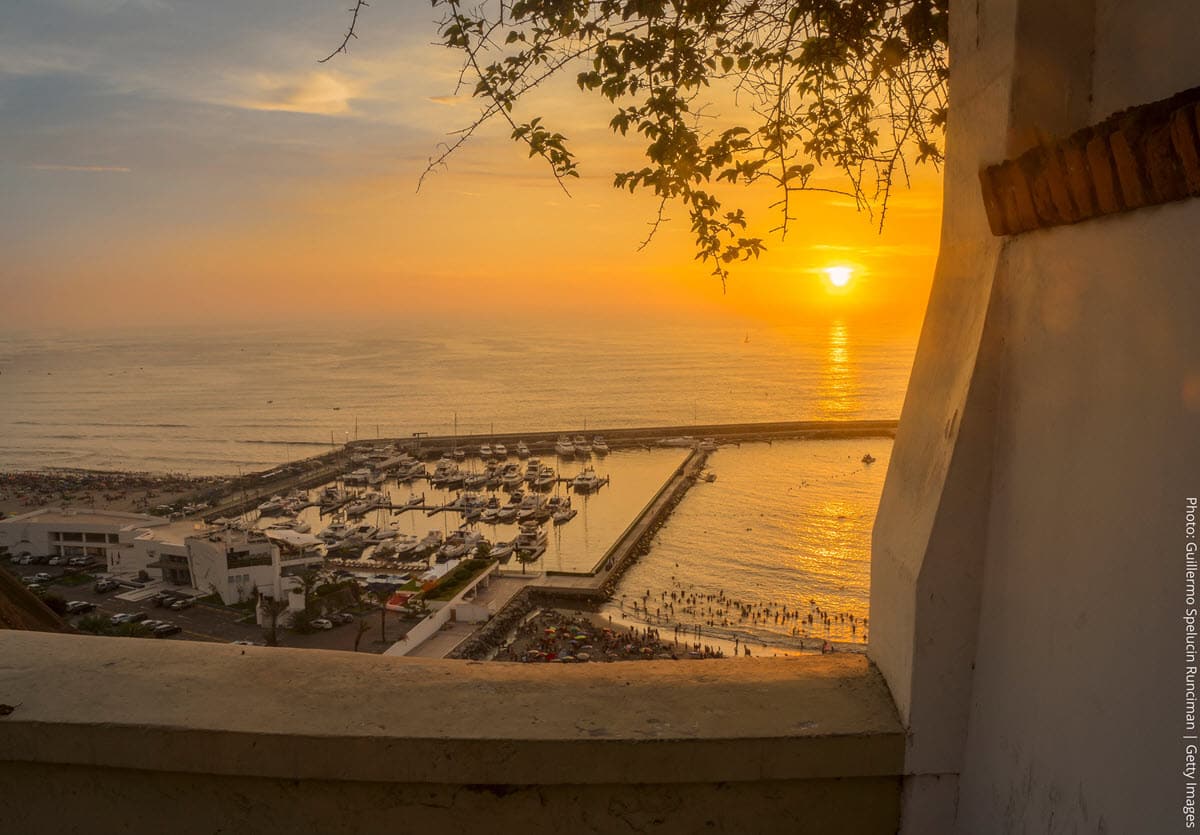
Barranco was formally established as a district on October 18, 1874, but its story runs from pre-Columbian Ichma-culture fishermen through a colonial miracle legend, a railway-driven beach resort era, partial destruction in the War of the Pacific (1879–1884), and an aristocratic-era rebuild that produced the neoclassical mansions still lining its streets today.
Ancient Beginnings
The land that would become Barranco was once part of the señorío de Zulco, a domain of farmers and fishermen connected to the Ichma culture, whose capital was the great Pachacamac. The Rímac valley was divided into several such lordships — Surco, Zulco, covering what are now the districts of Santiago de Surco, Chorrillos, Barranco, and Miraflores. Archaeological aerial photographs from the 1940s revealed a scattering of ancient huacas across the area, though sadly almost none survived into the modern era.
The coast here was a working place long before it became a fashionable one. Fishermen from Armatambo would descend to the cliffs, sleep near the shore, and head out to sea at dawn on their caballitos de totora. These humble, temporary encampments were the true origin of what would one day become a bohemian jewel of Lima.
The Colonial Era and the Miracle of the Ermita
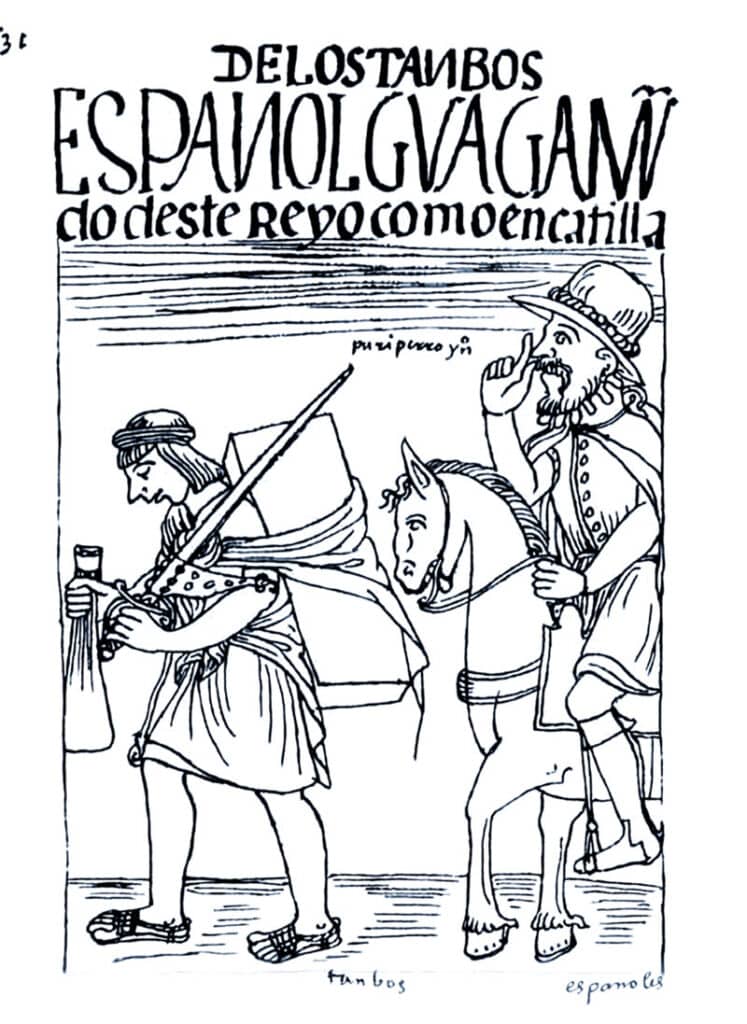
During the colonial period, the area was handed over in encomienda to the Spaniard Antonio Solar — whose surname eventually gave name to the Morro Solar. The Jesuits later established haciendas across the zone, and by the late colonial period, the land was dotted with pacares (paca fruit orchards) and vineyards, so dense that Barranco was said to look like a forest of pacae trees.
Then came the legend that would define the district forever. According to the chronicler Juan de Arona, toward the end of the 17th century, fishermen from Surco spotted a strange glow emanating from the cliffs near what is now the Bajada de Baños.
After several days of curiosity and hesitation, they approached and discovered a luminous image of a crucified Christ. Word spread quickly, and pilgrims began arriving from Lima. Not long after, a baker named Caicedo brought his terminally ill wife to the site — and she was miraculously cured. In gratitude, Caicedo built the first ermita (chapel), a modest structure of quincha and adobe. Around this chapel, the first permanent houses of Barranco began to cluster. The ermita was not just a church — it was the founding act of the district itself.
The Republic and the Age of the Balneario
After independence, Barranco grew slowly. The real transformation came with a single invention: the train. In 1858, during the government of Ramón Castilla, the Lima–Chorrillos railway was inaugurated, making the coast newly accessible to Lima’s urban population. In 1866, a stop was added at the fondo Tejada in Barranco, near a ranch belonging to a German named Domeyer. Visitors began flooding in, drawn by the sea air and the beauty of the cliffs.
The district’s organic, winding layout — so different from Lima’s colonial grid — was shaped by these natural and human forces: the Talana canal, the railway line, the steep descent to the ocean. This irregularity would come to be one of Barranco’s most cherished qualities.
On October 18, 1874, the government of Manuel Pardo formally created the District of Barranco. Its second mayor, Enrique García Monterroso Yureta, ordered the construction of the iconic Puente de los Suspiros (Bridge of Sighs). Decades later, Chabuca Granda — who spent her childhood in Barranco — would immortalize it in song.
War and Rebirth
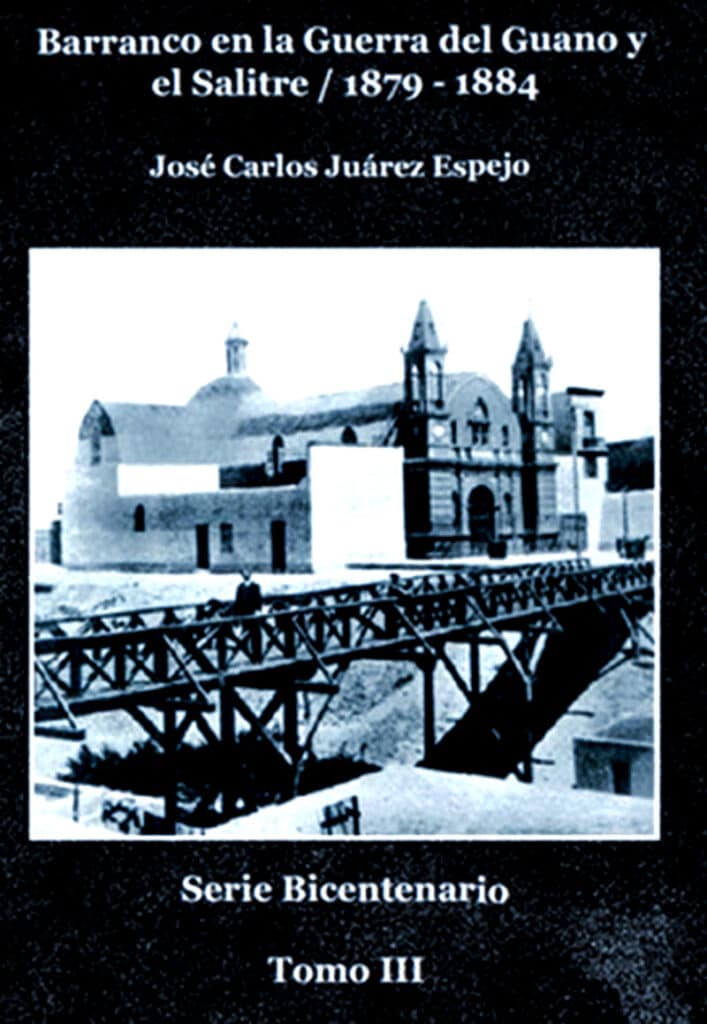
The golden age was abruptly shattered by the War of the Pacific (1879). Chilean troops invaded, sacking and burning much of the district. The ermita was invaded, looted, and its beloved sculpture of the Santo Cristo de Barranco was lost in the flames. One Chilean commander even set up artillery in the large house of mayor Benito Bregande to fire on Peruvian troops at the Battle of Miraflores.
But Barranco rose again — and rose magnificently. From 1882, reconstruction began, led in part by Father Manuel de la Fuente Chávez who rebuilt the ermita. The República Aristocrática (1895–1919) brought running water, sewage systems, and an explosion of beautiful architecture. The elegant neoclassical and French-inspired mansions that still line Barranco’s streets largely date from this period.
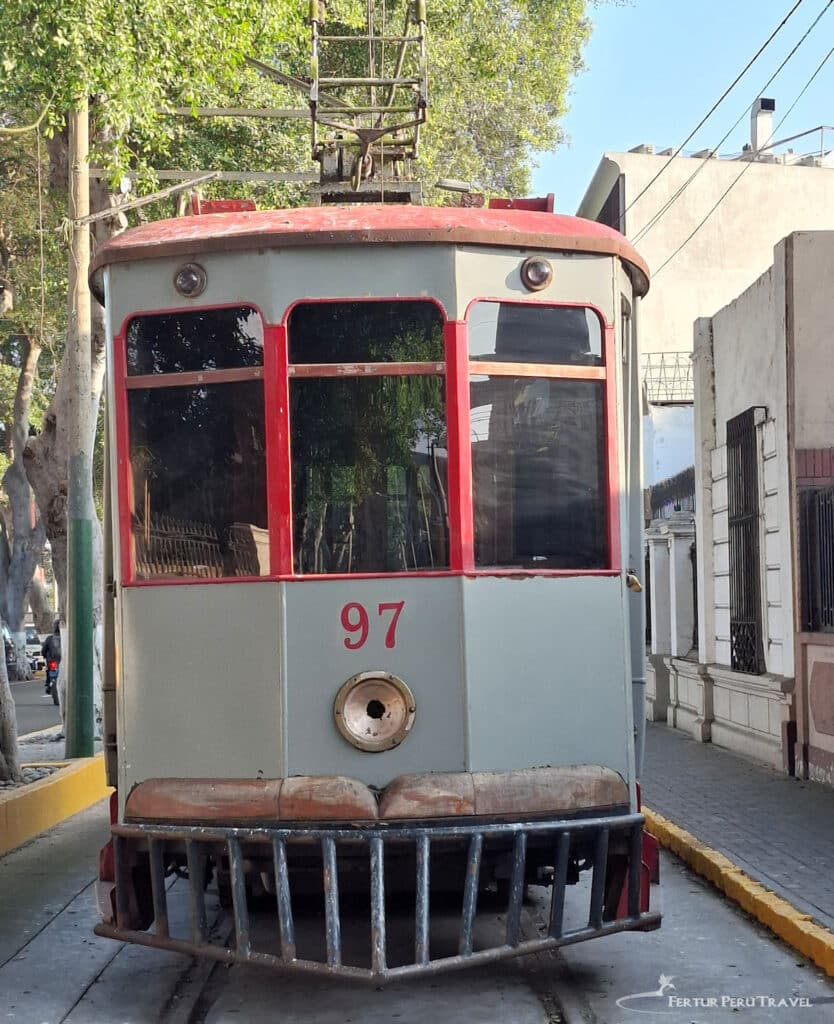
In 1896, German engineer Rodolfo Holting installed hydraulic funiculars to carry bathers down the cliffs to the beach — they operated until 1971. In 1904, the first electric tram in Peru connected Lima directly to Barranco, cementing the district’s status as the city’s premier resort destination. The famous Baños de Barranco — iron structures extending over the sea, complete with bars, restaurants, an orchestra stage, and even a barbershop — became the most celebrated beach facilities in the entire country.
Foreign residents arrived too: the German Domeyer, the British Carlos Saudwell, the German Carlos Weis. They found in Barranco’s ranchos — open, airy houses with shaded corridors and lush gardens, a uniquely Lima typology — an ideal refuge from the noise of the capital.
8. Barranco as a Literary District
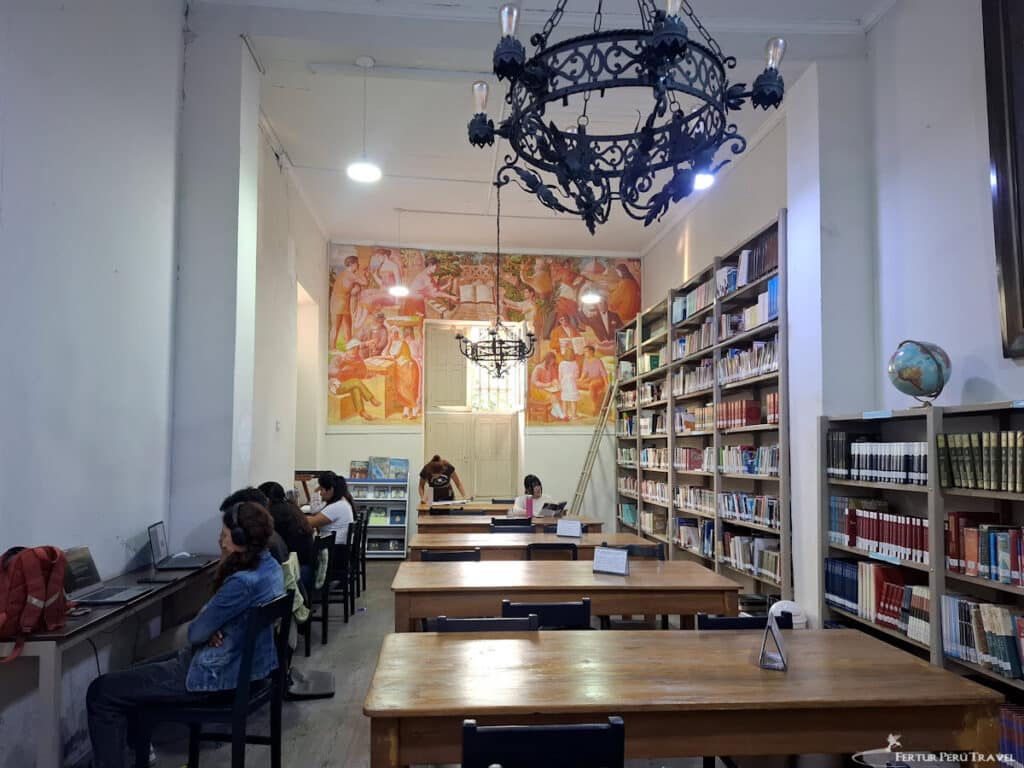
Barranco has long attracted writers, and walking its streets it is not hard to see why. The light off the ocean, the quiet residential blocks, the old walls and the coastal edge create exactly the kind of atmosphere that makes people want to describe it. Several of Peru’s most important literary figures did just that, and their connection to the district gives it a cultural depth that goes well beyond its photogenic reputation.
José María Eguren, one of Peru’s great modernist poets, spent much of his life in Barranco near the sea, writing from a world of contemplation, delicacy and coastal light. His presence here is part of why the district became, in the early twentieth century, a gathering point for Lima’s artistic life rather than just a fashionable address.
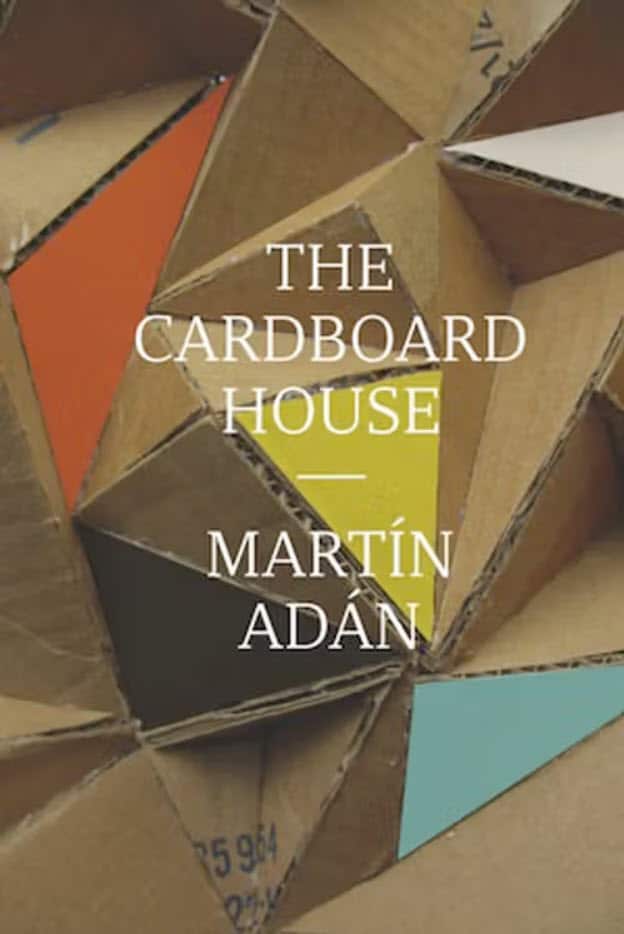
The most vivid literary portrait of Barranco comes from Martín Adán, who published La Casa de Cartón in 1928 when he was about twenty years old. It is less a novel than a series of moods and flashes — the narrator wandering through Barranco’s streets, taking in the houses, the ocean, the atmosphere. If you want to understand what the district felt like before it became a destination, this slim book is the place to start. New Directions, which publishes it in English as The Cardboard House, describes it as a novel built from scenes and dreams, the narrator drifting through Barranco (then an exclusive seaside resort outside Lima) in a sequence of flashes rather than a conventional plot.
Abraham Valdelomar, a writer of short stories and essays and one of the most charismatic literary personalities of his generation, is also associated with Barranco. He represents the social side of the district’s literary life: the conversation, the performance, the sense that ideas mattered here.
9. Frequently Asked Questions
Is Barranco worth visiting?
Barranco earns its place in a Lima itinerary because it gathers so many parts of the city into one compact, walkable district: colonial history, criollo memory, literature, design, food, music and the Pacific at the edge. It is not a single attraction but a neighborhood with a coherent identity — one where the bridge, the ravine, the museums, the food scene and the literary past all belong to the same story. For travelers deciding where Lima becomes memorable, this is the area to give real time.
Is Barranco worth a full day?
A full day in Barranco rewards the investment in a way that a half day does not. The bridge and ravine in the morning, a museum late morning, a proper lunch, coffee and design shops in the afternoon, and drinks at dusk add up to an experience that makes Lima feel personal rather than transactional. Half a day is enough to see the main sights and eat well; a full day is when Barranco stops feeling like a stopover and starts feeling like a place.
How much should I budget for museums in Barranco?
MAC Lima charges S/12 for Peruvians and residents and S/20 for non-residents, with reduced prices for students, children and seniors. Pedro de Osma is a little higher: recent listings place adult admission at roughly S/30 for Peruvians and S/35 for foreign visitors, with reduced categories available. A single morning covering both museums costs a foreign visitor around S/55 before food or transport.
What is a realistic food budget for a good day in Barranco?
A traveler can keep Barranco moderate or make it a serious dining day. Coffee and pastries at Demo or Ciclos stay manageable, lunch at Canta Rana or Isolina moves into the mid-range, Ayahuasca’s current menu puts many mains around S/40 to S/55, and Mérito starts from about US$75 for the tasting menu. Budget accordingly based on whether you want one destination meal or a lighter day of grazing.
What should I expect to pay for a hotel in Barranco?
For boutique stays, Casa República currently shows future offers from about US$221 before local taxes on its official booking engine, while recent rate searches for Villa Barranco have started around US$188/night. Hotel B sits clearly above both in the luxury tier. Budget options exist in and around the district, but Barranco rewards being chosen for mood and setting rather than the lowest possible rate.
Who was Chabuca Granda and why does she matter to Barranco?
Chabuca Granda (1920–1983) was one of Peru’s most celebrated composers and singers, and the artist most closely identified with Barranco’s cultural memory. She spent part of her childhood in the district, and in 1960 she immortalized the Puente de los Suspiros in the waltz of the same name — describing the bridge, the ravine, and the emotion of the place with a precision that made the song inseparable from the neighborhood. The plazuela beside the bridge now bears her name. Understanding her connection to Barranco is the difference between seeing the Puente de los Suspiros as a photogenic landmark and understanding why it carries the weight it does.
Barranco does not need a hard sell. It earns its place in a Lima itinerary because it gathers so many parts of the city into a compact, walkable district: history, criollo memory, literature, design, food, music and the Pacific at the edge. For travelers deciding where Lima becomes memorable, this is the neighborhood to give real time.

Related Posts

Comments (0)