Peru is known as a country of superlatives. It contains the most and highest tropical glaciers and the deepest canyon in the world. The Inca formed the largest and most advanced pre-Columbian empire in the hemisphere. But Peru might just also hold title to the 20th century’s most bizarre shotgun wedding.
In September 1937, newspapers across the globe carried the story of Lewis Clarkson, an American business man who filed suit in a Washington D.C. divorce court seeking an annulment of his marriage to a Peruvian woman.
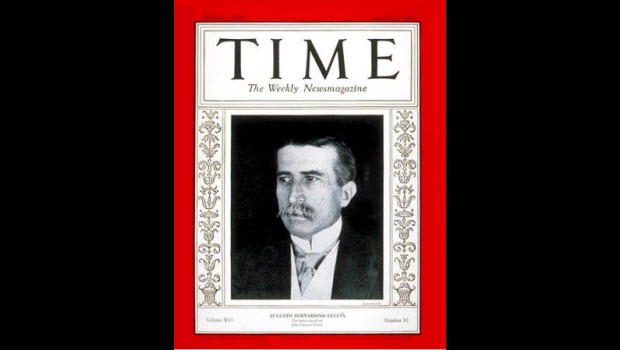
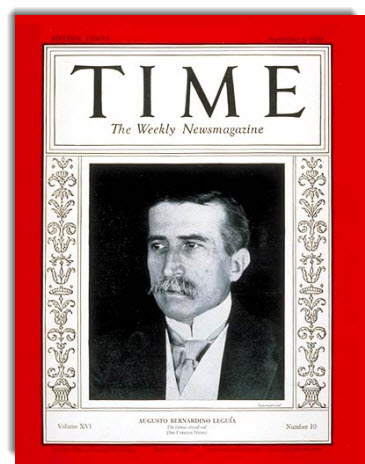
Clarkson claimed that 12 years earlier, he had been compelled to marry under threat of death by Peru’s former dictatorial president, Augusto B. Leguía.
The bride — a young widow named Mercedes de la Quintana — was Leguía’s very pregnant mistress, Clarkson contended.
“In court, Clarkson’s counsel related an astonishing story of an armed guard escorting Clarkson to the church, with revolvers pressed against his back, and threats of accidental death whispered in his ear,” the Sydney Morning Herald reported.
“Clarkson said that his previous relations with Señora Mercedes de la Quintana, the woman in question, had been wholly innocent, and that their relations after marriage had been wholly platonic,” the Morning Herald reported. “During their married life, he said, she had had several children, apparently by Leguía, which Leguía had compelled Clarkson to register as his own.”
Quintana was “known to be involved in Peruvian political intrigues and to be supported by various prominent government officials, including the then-president of the Republic,” reported The Associated Press, quoting Clarkson’s court filing.
The news stories offered conflicting versions of how Clarkson escaped Peru and returned to the United States. Leguía was deposed in 1930 and died in a naval prison two years later.
Clarkson reportedly filed for the annulment when his “wife” came to the United States and looked him up.
Whether Clarkson’s tale was a true accounting or a ruse is something of a mystery. Leguía was known to have maintained relationships with a variety of mistresses during his time in Peru’s Government Palace. But besides the press coverage in September 1937, there is no mention of either Quintana nor Clarkson in subsequent articles about the fallen dictator.
Peru Shotgun Wedding Postscript
Lewis M Clarksons Passport Photo c 1919
After I first wrote about Lewis Clarkson’s extraordinary claim of being forced into marriage at revolver-point by President Augusto B. Leguía, the story caught the attention of U.S. historian Daniel Buck.
Drawing on court records, passenger lists, census data and contemporary newspaper reports, Buck painstakingly reconstructed Clarkson’s life and revealed him to be a serial bigamist and inveterate fabulist whose trail of abandoned spouses and aliases stretched from Brooklyn to Peru, Mexico, Guatemala and beyond.
Buck’s article, “President Leguía and the Brooklyn Bounder,” published in Andean Air Mail & Peruvian Times, shows how Clarkson’s dramatic tale of political intrigue and a dictator’s mistress fit neatly into a long pattern of self-serving reinvention, rather than standing as a singularly bizarre episode in Peruvian history.
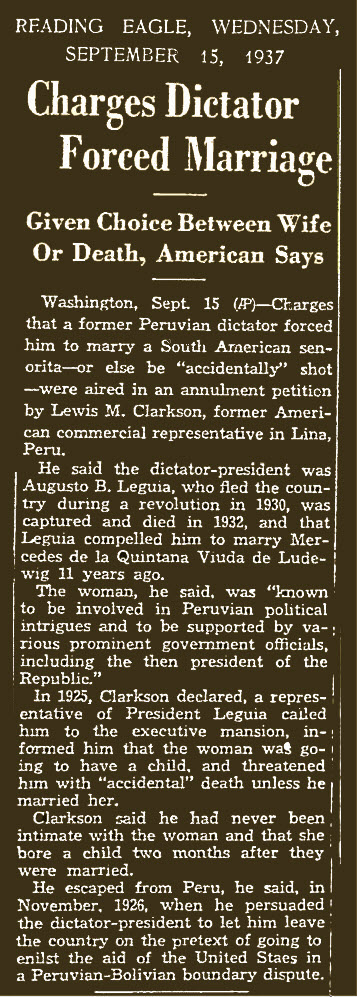
Original Wire Dispatch: Charges Dictator Forced Marriage
Given Choice Between Wife Or Death, American Says
_____________________
Washington, Sept. 15, 1937 (AP) — Charges that a former Peruvian dictator forced him to marry a South American señorita — or else be “accidentally” shot — were aired in an annulment petition by Lewis M. Clarkson, former American commercial representative in Lima, Peru.
He said the dictator-president was Augusto B. Leguía, who fled the country during a revolution in 1930, was captured and died in 1932, and that Leguía compelled him to marry Mercedes de la Quintana Viuda de Ludewig 11 years ago.
The woman, he said, was “known to be involved in Peruvian political intrigues and to be supported by various prominent government officials, including the then-president of the Republic.”
In 1925, Clarkson declared, a representative of President Leguía called him to the executive mansion, informed him that the woman was going to have a child, and threatened him with “accidental” death unless he married her.
Clarkson said he had never been intimate with the woman and that she bore a child two months after they were married.
He escaped from Peru, he said, in November, 1926, when he persuaded the dictator-president to let him leave the country on the pretext of going to enlist the aid of the United States in a Peruvian-Bolivian boundary dispute.
Rick Vecchio, Fertur's director of development and marketing, was educated at the New School for Social Research and Columbia Graduate School of Journalism. He worked for Pacifica Radio WBAI and as a daily reporter for newspapers in New Jersey, New York and Massachusetts. Then in 1996, he decided it was time to realize a life-long dream of traveling to Peru. He never went back.
While serving as Peru country manager for the South American Explorers from 1997-1999, he fell in love with Fertur's founder, Siduith Ferrer, and they married. Over the next six years, he worked as a correspondent for The Associated Press. Meanwhile, Siduith built the business, which he joined in January 2007.
Now he designs custom educational and adventure tour packages for corporate and institutional clients, oversees Fertur's Internet platform and occasionally leads special trips, always with an eye open for a good story to write about.


The Dictator made me do it – an inspired divorce dodge. Peru has hosted its share of picaros gringo.