On June 26, 1541, Francisco Pizarro was killed in Lima — not on a battlefield,…

Visit Sacsayhuaman to ponder an awesome megalithic mystery
Visit Sacsayhuaman and you can witness one of the greatest structures ever erected: the Inca fortress temple of Sacsayhuaman. This titanic feat of megalithic architecture has astounded observers from the time of the Spanish Conquest to the present day. In 1534, conquistador Pedro Sancho declared that neither the Roman aqueduct of Segovia nor the work of Hercules matched its dignity. Five centuries later, archaeologists are still chasing the question that puzzled Sancho’s contemporaries: how were stones weighing more than 100 tonnes (110 US tons) quarried and moved up to 32 km (20 miles), and what lies beneath the esplanade that has never been excavated? Two active research projects are now producing real answers — and new mysteries of their own.
Sacsayhuaman at a Glance
- Location: Cusco, Peru — hilltop archaeological park 2 km (1.2 miles) north of the Plaza de Armas
- Altitude: 3,701 m (12,142 ft) — about 200 m (650 ft) above central Cusco
- Best season: May–September for dry weather and clear views; June 24 for the Inti Raymi festival
- Recommended stay: 1.5–2 hours alone; 4–5 hours combined with the rest of Circuit I (Q’enqo, Puka Pukara, Tambomachay)
- Getting there: 10–15 minute taxi or 30–45 minute uphill walk from the Plaza de Armas / San Blas
- Key ticket / entry: Cusco Tourist Ticket (Boleto Turístico) — cash soles only, no standalone Sacsayhuamán ticket
- Not to miss: the 460+ m (1,500+ ft) zigzag terrace walls and the Rodadero rock slide
1. A Conquest-Era Mystery That Still Hasn’t Been Solved
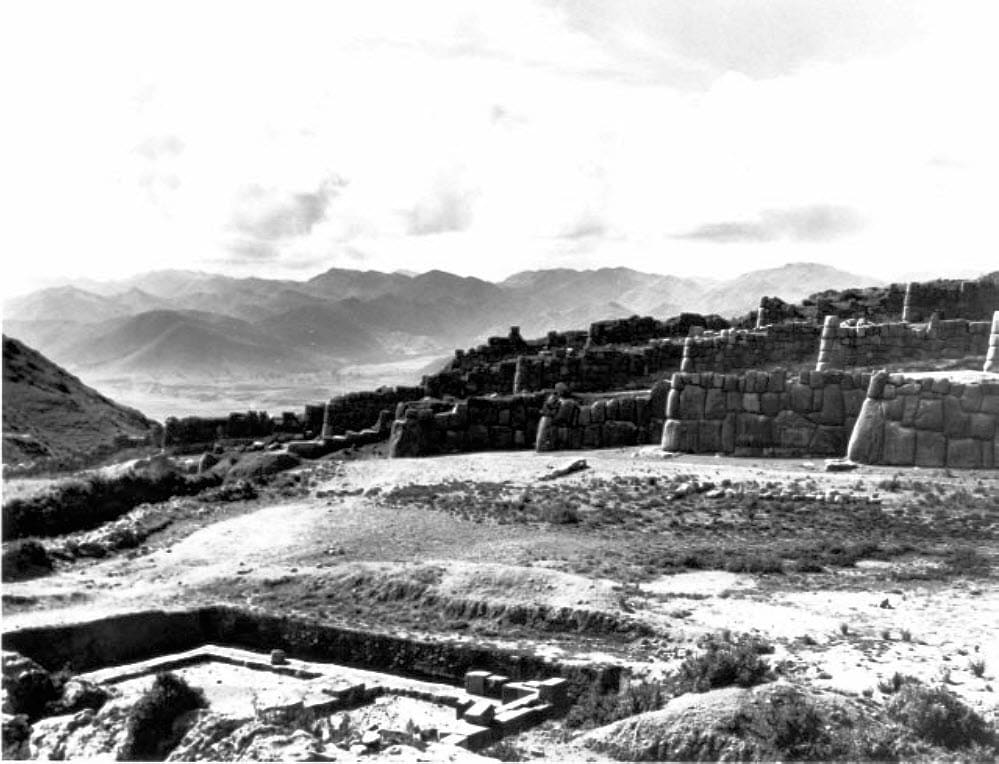
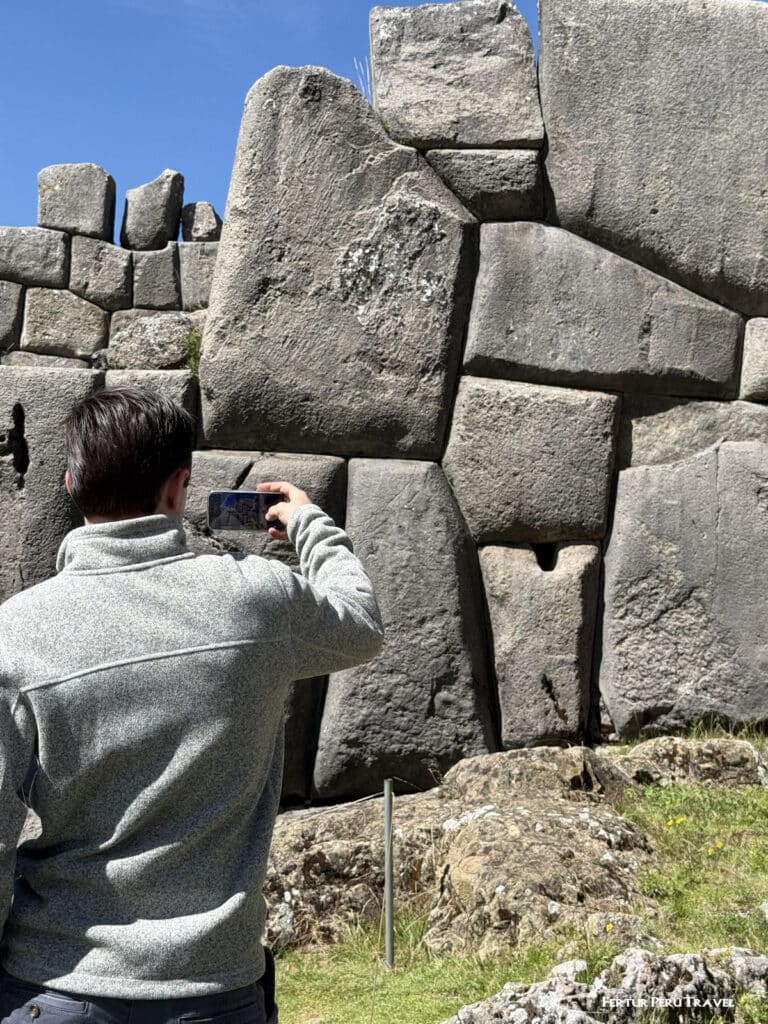
Sacsayhuaman’s outer terrace walls were built from stones weighing up to 100 tonnes (110 US tons), quarried as far as 32 km (20 miles) away, by a civilization with no iron tools, no draft animals, and no wheel — and no one has yet definitively explained how.
This titanic feat of megalithic architecture astounded observers from the moment the Spanish reached Cusco. Pedro Sancho wrote in 1534 that “neither the stone aqueduct of Segovia nor the buildings of Hercules nor the work of the Romans had the dignity of this fortress.” The site is described in detail by the chroniclers Pedro de Cieza de León, Pedro Sarmiento de Gamboa, and Garcilaso de la Vega — who mused that “because the Indians were so familiar with demons, the work is attributed to enchantment.”
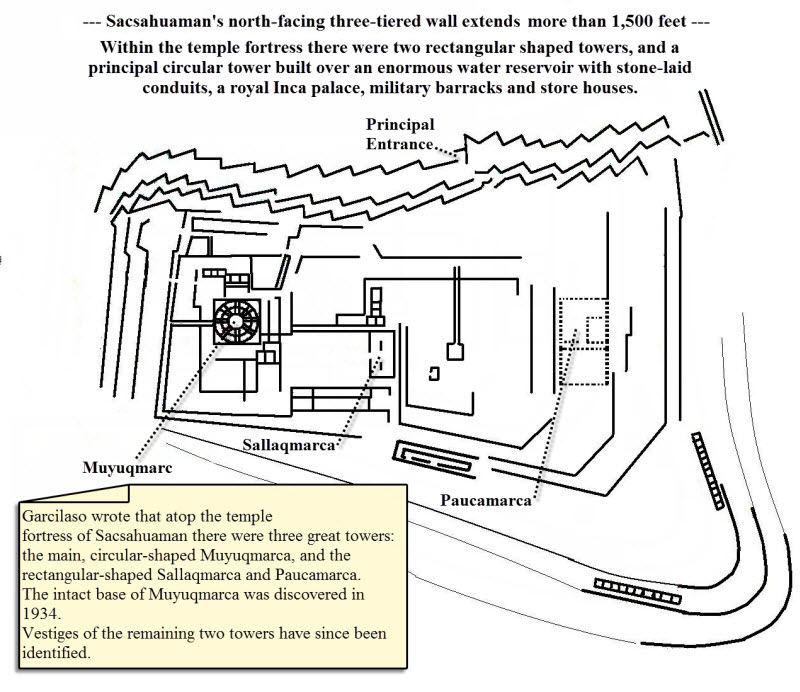
Sacsayhuaman’s north-facing three-tiered wall extends more than 460 m (1,500 ft). Within the temple fortress stood two rectangular towers and a principal circular tower — Muyuqmarka — built over an enormous water reservoir with stone-laid conduits, alongside a royal Inca palace, military barracks, and storehouses.
Many researchers have attributed the construction not to the Inca but to some vague, shadowy “Megalithic Empire” that predated them. The most exotic theories invoke stone-melting solvents, laser beams, a race of giants, or extraterrestrials — explanations premised on the assumption that transporting and shaping such boulders was beyond the means of a society Europeans considered “primitive.” Construction is most generally ascribed instead to the ninth Inca, Pachacutec (“Earthshaker”), and his son Topa Inca.
2. Built by Pachacutec, Read as a Puma
The Inca ruler Pachacutec rebuilt Cusco in the shape of a puma to reflect Inca cosmology, with Sacsayhuaman’s outer zigzag walls forming the great feline’s teeth and the Koricancha temple its heart.
Construction began after 1438 CE, during Pachacutec’s rule, and employed between 20,000 and 30,000 builders over roughly 70 years. After the Conquest, the Spanish used Sacsayhuaman as a convenient prefabricated quarry, dismantling its towers, palace, and storehouses to build new churches and colonial structures in Cusco — which is why so little of the upper city survives today.
Many researchers believe the three remaining rows of zigzagging ramparts correspond to the Inca’s three-tiered conception of the universe:
- Hanan Pacha — the sky, source of rain, associated with the condor
- Kay Pacha — the terrestrial world of people and animals, associated with the puma
- Uku Pacha — the subterranean world of the dead, associated with snakes and spiders
3. Vincent Lee’s Scribing-and-Coping Theory
Archaeologist Vincent R. Lee, who died in April 2024, offered one of the most cogent technical theories of how the stones were actually shaped and fitted. Lee proposed that the Inca — working only with stone hammers and axes, bronze chisels, sand abrasives, and wooden bracing and rollers — used scribing and coping methods similar to log-cabin construction, lifting, shaping, and fitting the boulders into place through iterative trial and error.
Lee detailed the theory in “The Building of the Sacsayhuaman,” published in 1986 in Ñawpa Pacha: Journal of Andean Archaeology (vol. 24, pp. 49–60).
4. New Evidence From the Ground: The 2024 Excavation
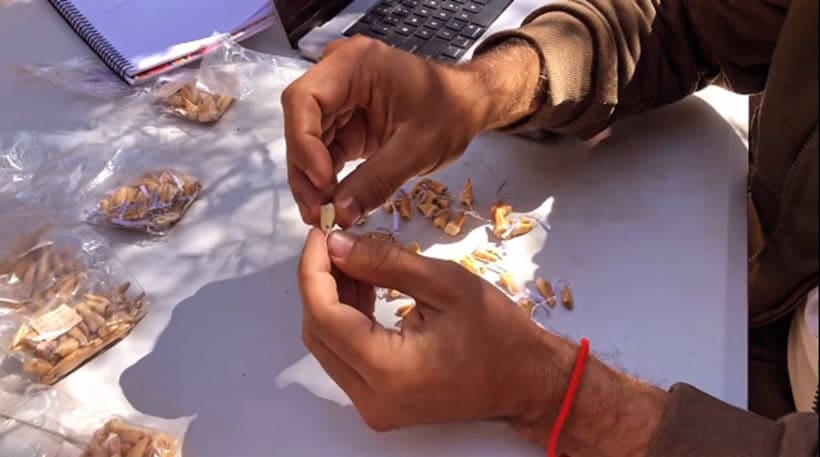
A three-year excavation jointly run by the Ministry of Culture’s Cusco Directorate and the University of Warsaw has confirmed pre-Inca occupation at Sacsayhuaman and recovered nearly 19,000 teeth from a single sector of the site.
Thirty-nine Peruvian and foreign archaeologists, historians, anthropologists, and architects — led by Peruvian archaeologist Sabino Quispe and Berkeley-trained archaeologist Alexei Vranich of the University of Warsaw — dug a half-dozen exploratory trenches across three sectors between June and August 2024: Muyuqmarka (the circular tower foundation), the base of one of the great zigzag wall’s bastions, and Cruzmoqo, a wooded sector southeast of the main ruins that few tourists ever see.
The finds so far include a fragment of an Inca mace weapon, traces of white, red, blue, and yellow pigment that once colored the site’s floors and walls, and the teeth themselves — monkey, jaguar, and overwhelmingly human, many bored with small holes suggesting they were once strung as ornaments.
Vranich’s team believes isotope, DNA, and carbon-14 analysis of the teeth could help map how the Inca expanded their empire by capturing and resettling people in Cusco. Excavations also confirmed that the Cruzmoqo sector was occupied earlier by the pre-Inca Killke culture (900–1200 CE), though the precise construction date of the fortress itself awaits carbon dating results.
Vranich, who previously used laser scanning and historical field notes to digitally reconstruct the Pumapunku monument at Tiwanaku in Bolivia, is applying the same 3D-modeling method to reconstruct two Inca buildings in the Cruzmoqo sector.
Read the full story: A Cutting-Edge Sacsayhuaman Archaeology Dig With Teeth
5. The Lost Tunnels Beneath Sacsayhuaman: Now on Camera
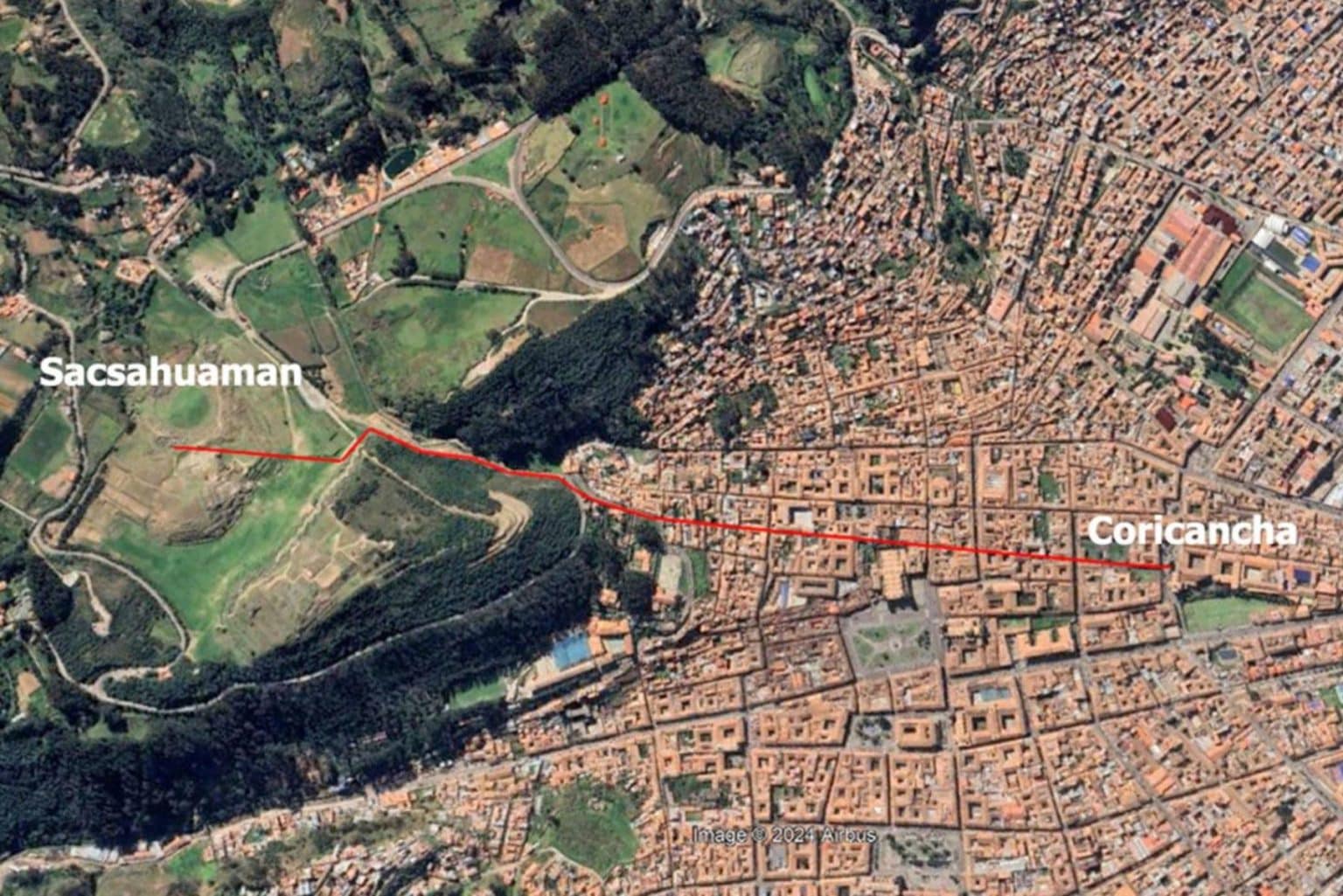
Television cameras have entered and filmed the Chinkana, the legendary tunnel system that colonial-era chroniclers described as linking Sacsayhuaman to the Qorikancha temple — the first time the passage has been documented on video, not just described by the excavation team.
The Chinkana (“labyrinth,” or “place where one gets lost” in Quechua) has appeared in Andean chronicles since the 1500s. Augustinian chronicler Antonio de la Calancha described a worked underground road more than ten blocks long connecting the fortress to the Temple of the Sun.
Spanish priest Martín de Murúa wrote that Emperor Huayna Capac built a serpent-headed temple on the site.
And American explorer Ephraim George Squier recorded in 1867 that the passages had been deliberately sealed with explosives in 1841–42, after fatal accidents involving lost children.
Peruvian archaeologists Dr. Jorge Calero and Dr. Mildred Fernández, leading the Chinkana-Cusco project, say they’ve now identified that original sealed entrance in Sector H of the park, near the “boca de la serpiente” (serpent’s mouth) structure Murúa described — finding a carved-arch passageway, out-of-place stone fragments, and a collapsed section consistent with 19th-century explosive damage more than 10 m (33 ft) underground.
Multi-method geophysical surveys — ground-penetrating radar and electrical resistivity tomography — point to a connected system exceeding 8,000 m (5 miles) of galleries beneath the historic center, with the main passage to the Qorikancha estimated at roughly 1,750 m (1.1 miles). In October 2025, Peruvian investigative program Cuarto Poder (América Televisión) sent a television crew inside the tunnels and broadcast the footage — independent, on-camera documentation beyond the excavation team’s own announcements, and coverage that’s since been picked up by outlets well beyond Peru. Full peer-reviewed publication of the findings is still pending, which is normal at this stage of an active, multi-year excavation rather than a reason for doubt.
Read the full story: Unearthing the Chinkana: Peru’s Search for the Inca’s Lost Tunnels
6. Visiting the Rodadero — Cusco’s Inca-Era Playground
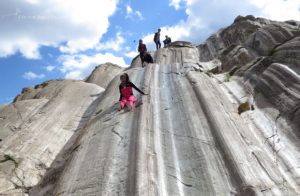
Directly across from the zigzag terrace walls, in the Suchuna sector of the park, sits the Rodadero — a natural diorite rock outcrop polished smooth by centuries of children sliding down its grooves, a tradition that continues with visitors today.
Jesuit chronicler Bernabé Cobo, writing in the 1650s, described a “well-carved seat where the Inca sat” on the same outcrop — a throne so significant that “on account of this seat, the whole fortress was worshiped.”
Nineteenth-century explorers documented the slide as well: American diplomat E. George Squier described locals “coursing through these polished grooves on festival days” in his 1877 book Peru: Incidents of Travel and Exploration in the Land of the Incas, and naturalists Mariano Edward Rivero and John James von Tschudi noted the same formation in their 1851 Peruvian Antiquities. Wear long pants if you plan to try it.
Read the full story: Visit Cusco’s Original Playground of the Inca at Sacsayhuaman
7. Practical Visit Information
Sacsayhuaman is included only in the Cusco Tourist Ticket (Boleto Turístico), administered by COSITUC. There is no standalone entrance fee, and it cannot be purchased online — bring cash in Peruvian soles. The one-day Circuit I partial ticket, which also covers Q’enqo, Puka Pukara, and Tambomachay, runs approximately S/70 (about US$20). Travelers planning to add the Sacred Valley and Cusco’s museums should consider the 10-day full ticket, approximately S/130 (about US$35–46), covering 16 sites.
The site sits at 3,701 m (12,142 ft), about 200 m (650 ft) above central Cusco, so altitude can hit harder here than in the city center even for travelers who feel acclimatized. A taxi from the Plaza de Armas takes 10–15 minutes, walking up from the Plaza de Armas or San Blas takes 30–45 minutes and is steep — many visitors prefer a taxi up and a walk down. Bring sun protection, a windbreaker, and sturdy footwear for uneven ground. Afternoon weather can shift quickly even in the dry season.
Frequently Asked Questions
Is Sacsayhuaman worth visiting?
Sacsayhuaman offers something genuinely singular among Peru’s Inca sites: three tiers of zigzag walls built from stones weighing up to 100 tonnes (110 US tons), fitted without mortar by builders working without iron tools or the wheel, and a methodology debate that remains unresolved nearly 500 years later. Yes, it’s worth visiting — and for travelers already acclimatizing in Cusco, it’s an easy half-day add-on rather than a special trip.
How much time do I need at Sacsayhuaman?
Plan on 1.5 to 2 hours to walk the terrace walls, the Rodadero, and the esplanade at an unhurried pace. Travelers combining Sacsayhuaman with the rest of Circuit I — Q’enqo, Puka Pukara, and Tambomachay — should budget 4 to 5 hours total.
How do I get to Sacsayhuaman from Cusco?
Sacsayhuaman sits about 2 km (1.2 miles) north of Cusco’s Plaza de Armas, on a hilltop roughly 200 m (650 ft) higher than the city center. A taxi takes 10 to 15 minutes, walking uphill from the Plaza de Armas or San Blas takes 30 to 45 minutes and is steep enough that unacclimatized travelers often prefer riding up and walking down.
What does it cost to visit Sacsayhuaman?
There is no standalone entrance ticket for Sacsayhuaman. Access requires the Cusco Tourist Ticket (Boleto Turístico), sold only for cash in Peruvian soles. The one-day Circuit I partial ticket, also covering Q’enqo, Puka Pukara, and Tambomachay, costs approximately S/70 (about US$20). Travelers planning to see the Sacred Valley and Cusco’s museums as well should buy the 10-day full ticket, approximately S/130 (about US$35–46), covering 16 sites.
Have archaeologists found the lost Inca tunnels beneath Sacsayhuaman?
Yes — with on-camera confirmation. Peruvian archaeologists Dr. Jorge Calero and Dr. Mildred Fernández identified what they believe is the original, 19th-century-sealed entrance to the Chinkana tunnel system in 2025, backed by ground-penetrating radar and electrical resistivity tomography surveys showing a network exceeding 8,000 m (5 miles), with a main passage toward the Qorikancha temple estimated at roughly 1,750 m (1.1 miles). In October 2025, Peruvian investigative program Cuarto Poder (América Televisión) became the first television crew to film inside the tunnels. Full peer-reviewed publication is still pending, as is typical for an active multi-year excavation. Read the full story on the Chinkana excavation for the chronicle sources and the dig’s progress.
What is the Rodadero?
The Rodadero is a natural diorite rock outcrop just across from Sacsayhuaman’s main terrace walls, polished smooth over centuries by Inca children — and now visitors — sliding down its grooves. Spanish chronicler Bernabé Cobo described a carved Inca throne on the same outcrop in the 1650s. See our full Rodadero guide for more on its history and how to visit.
Did aliens or a lost civilization build Sacsayhuaman?
No credible archaeological or historical evidence supports this. The walls are generally attributed to the Inca ruler Pachacutec and his son Topa Inca, construction beginning after 1438 CE with a workforce of 20,000 to 30,000 laborers over roughly 70 years. Claims involving stone-melting solvents, giants, or extraterrestrials rest on the assumption that moving and shaping 100-tonne (110-US-ton) stones was beyond the capability of Andean engineers — an assumption archaeologists reject. The genuine open question is methodology, not authorship: see Vincent Lee’s scribing-and-coping theory and the active 2024 excavation above for the leading explanations.
Ready to See Sacsayhuaman for Yourself?
Let us help you plan your Cusco visit around this living archaeological site.
• Tell us your travel dates for a customized Cusco itinerary.
• We confirm current Circuit I availability — Sacsayhuamán, Q’enqo, Puka Pukara, and Tambomachay — with private or small-group guides.
• We coordinate your Boleto Turístico, expert local guide, and transport, so you skip the lines and the logistics.

Related Posts
Comments (0)