Chavin de Huantar
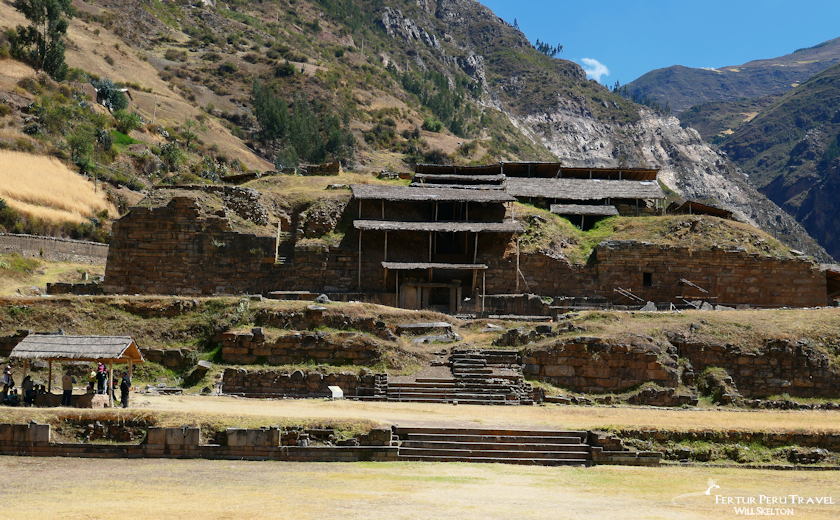
The ruins of Chavn de Huántar are a UNESCO World Heritage Site located in the Ancash Region of Peru. The site was a major religious and cultural center for the Chavn culture, which flourished from around 900 to 200 BC.
The ruins of Chavn de Huántar are dominated by a large central plaza surrounded by temples, pyramids, and other structures. The most famous monument at the site is the Lanzón, a carved stone monolith that depicts a fanged deity. The Lanzón is thought to have been a central figure in Chavn religion.
Other notable structures at Chavn de Huántar include the Circular Plaza, the Old Temple, and the New Temple. The Circular Plaza is a large sunken plaza that was used for religious ceremonies. The Old Temple is a pyramid-shaped structure that contains a number of carved stone heads and other artifacts. The New Temple is a later addition to the site and is thought to have been built by a different culture.
Chavn de Huántar was an important center of pilgrimage and trade in the ancient Andes. The site’s influence can be seen in the art and architecture of many other cultures in the region.
The image you sent shows a group of people standing in front of one of the pyramids at Chavn de Huántar. The pyramid is thought to be the Old Temple. The people in the image are likely tourists who are visiting the site to learn about its history and culture.