Peru Belmond Hotels will keep operating the Machu Picchu Sanctuary Lodge until March 2028 after…
Archaeological Discovery Reveals Virú Elite Residence
An important archaeological discovery in northern Peru is shedding new light on the ancient Virú culture and drawing attention to the rich heritage of La Libertad.
Archaeologists on the slopes of Cerro Blanco in Huancaquito Alto have uncovered a complex of adobe enclosures believed to have been the residence of a Virú elite figure more than 1,500 years ago, Agencia Andina reports.
The excavation took place during the fourth research season of the Virú Valley Archaeological Project. It revealed three enclosures with notable architectural features. Among them were well-preserved floors, benches, niches, and spinning tools. Researchers also uncovered a larger courtyard-like space with an altar or podium. They identified several remodeling phases as well, suggesting the building remained important over time.
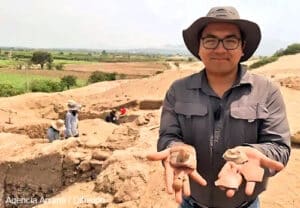
According to project director Feren Castillo, the scale and quality of the construction point to a residence built for someone of high status. Thick walls, fine plaster finishes, and the monumentality of the architecture all support the idea that this was an important elite complex within the Virú world.
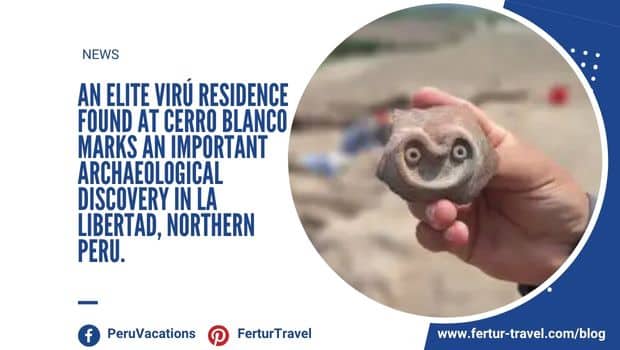
One of the most intriguing finds was a fragment of a clay model showing architectural details similar to those uncovered at the site. Castillo said the piece may help researchers better understand how the Virú planned and represented their buildings between A.D. 100 and 700.
The excavation could help resolve a long-running debate over the site’s cultural identity. Based on the materials and architectural evidence, the research team says the site belongs to the Virú period. That supports an earlier interpretation. It also rejects a later theory that linked the site to the Moche. Castillo also plans to submit a report to Peru’s Ministry of Culture. He is seeking formal recognition of the area as the Cerro Blanco Archaeological Site.
For travelers interested in Peru’s lesser-known ancient cultures, discoveries like this are a reminder that the country’s archaeological wealth extends far beyond its most famous landmarks. In time, Cerro Blanco may also strengthen the cultural tourism appeal of Virú province and the wider La Libertad region.

Related Posts


Comments (0)